
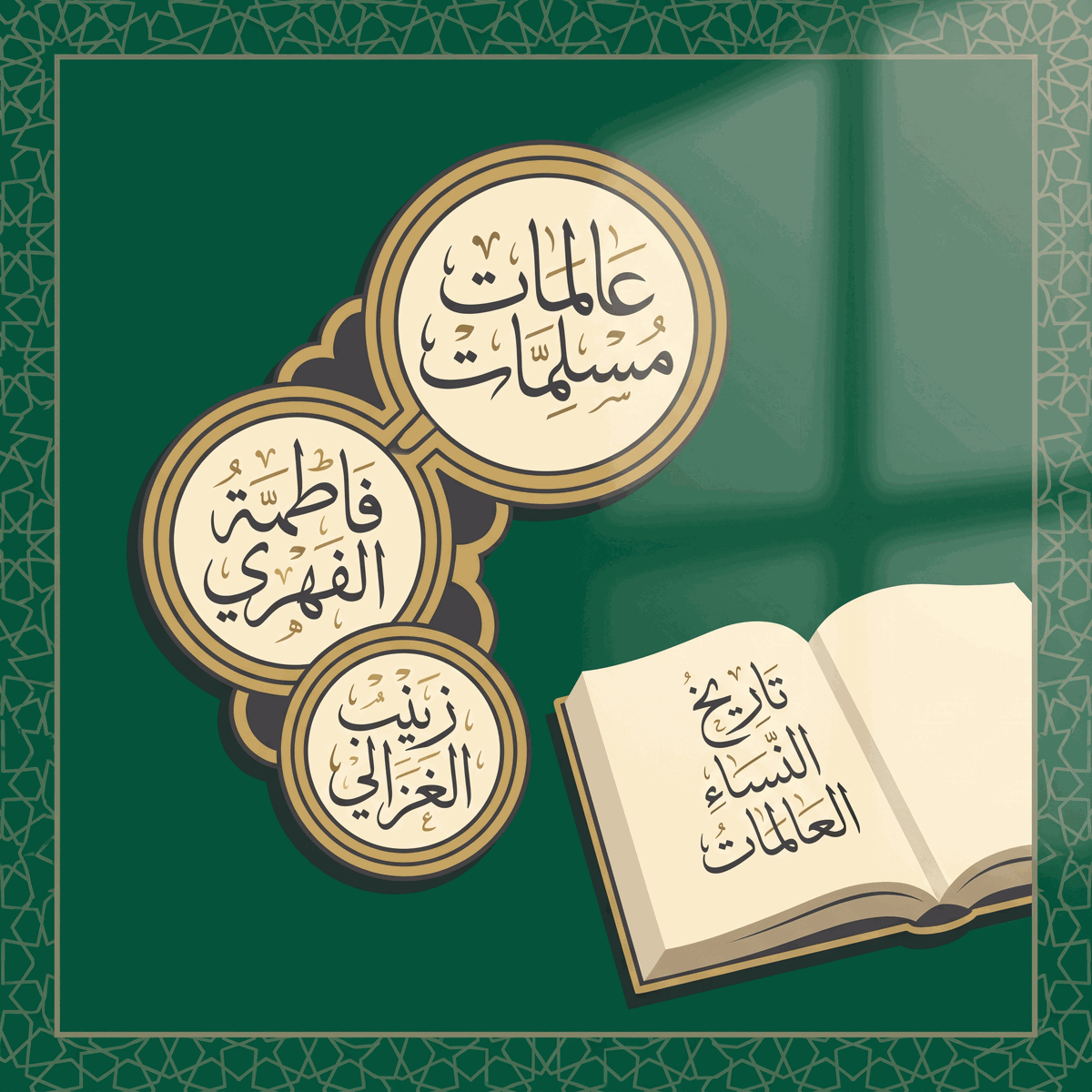
Many contemporary Muslims and seekers wonder about the historical role of women in shaping Islamic scholarship, education, and legal thought. Contrary to widespread misconceptions that relegate female participation to the margins, Islamic history features thousands of female scholars, jurists, founders, and teachers who educated both men and women. Reconnecting with this vibrant legacy reveals how integral women have always been to the preservation and transmission of Islam.
Sayyidatina Aisha bint Abi Bakr (RA): The Mother of the Believers and Premier Jurist
Among the most influential scholars in human history stands Sayyidatina Aisha bint Abi Bakr (RA), the beloved wife of the Prophet Muhammad (peace be upon him). Blessed with remarkable intellect, exceptional memory, and deep insight, Aisha (RA) became one of the primary authorities on Islamic law, Hadith, theology, medicine, and Arabic literature.
After the passing of the Prophet (peace be upon him), senior companions—including Abu Bakr, Umar, and Uthman (may Allah be pleased with them)—frequently consulted Aisha (RA) on complex legal matters. She narrated over 2,200 authentic traditions of the Prophet (peace be upon him) and was renowned for her precise critical analysis of narrations. Abu Musa al-Ash'ari (RA) noted that whenever the companions faced a difficult legal ruling, they asked Aisha (RA) and always found clear knowledge with her (Sunan at-Tirmidhi, Hadith 3883).
Her house in Madinah served as an active sanctuary of learning. She trained dozens of prominent scholars, including her nephew Urwah ibn al-Zubayr and the great jurist Amra bint Abd al-Rahman, cementing her position as a foundational pillar of Sunni jurisprudence.
Fatima al-Fihri: Visionary Founder of the World's Oldest University
In the 9th century CE (245 AH), a deeply pious young woman named Fatima al-Fihri established an institution that transformed higher education forever. Originating from Qayrawan (modern-day Tunisia), Fatima migrated with her family to Fez, Morocco. Upon inheriting a substantial fortune following the deaths of her father and husband, she resolved to dedicate her entire wealth to a spiritual and educational endowment (waqf).
Fatima founded the Al-Qarawiyyin Mosque and educational institution in 859 CE. Demonstrating profound devotion, she fasted continuously throughout the years of its construction until the building was completed and the first prayers were offered.
Al-Qarawiyyin developed into a world-renowned seat of learning, attracting scholars in Islamic jurisprudence, Arabic grammar, astronomy, mathematics, and medicine. Recognized by UNESCO and the Guinness World Records as the oldest continually operating university in the world, Al-Qarawiyyin stands as an enduring testament to the intellectual vision and philanthropic leadership of Muslim women.
Fatima al-Samarqandi and Sayyida Nafisa: Masters of Fiqh and Hadith
The history of Islamic jurisprudence (fiqh) highlights numerous female jurists who influenced major legal rulings and schools of thought. A prominent example within the Hanafi tradition is Fatima bint Muhammad al-Samarqandi (12th century CE). Daughter of the eminent Hanafi jurist Al-Ala' al-Samarqandi, Fatima mastered Hanafi jurisprudence and memorized her father's masterwork, Al-Tuhfa.
Fatima al-Samarqandi was so deeply versed in legal rulings that official legal decrees (fatawa) bore both her signature and her father's. She later married the great Hanafi scholar Ala' al-Din al-Kasani, author of the legal classic Bada'i al-Sana'i. Historical accounts note that if Imam al-Kasani ever encountered hesitation in issuing a legal verdict, his wife Fatima would clarify the correct legal reasoning for him.
Centuries earlier in Cairo, Sayyida Nafisa bint Al-Hasan (762–824 CE), the great-granddaughter of Imam al-Hasan (RA), attained renown for her profound knowledge of Hadith and ascetic devotion. Scholars traveled from far and wide to study under her. Most notably, Imam Muhammad ibn Idris al-Shafi'i, the founder of the Shafi'i school of thought, attended her circles of knowledge and requested that she pray over his funeral upon his passing.
Thousands of Female Muhaddithat: Preserving Sacred Knowledge
The legacy of female scholarship extends far beyond a few isolated figures. Recent academic research, most notably the landmark 40-volume biographical dictionary compiled by Shaykh Dr. Mohammad Akram Nadwi, has brought to light the biographies of over 8,000 female Hadith scholars (muhaddithat) throughout Islamic history.
These women served as reliable transmitters, evaluators of Hadith, and teachers in major intellectual hubs such as Damascus, Baghdad, Cairo, Mecca, and Medina. Eminent male scholars, including Ibn Hajar al-Asqalani, Imam al-Dhahabi, and Ibn Asakir, proudly listed female teachers among their primary authorities. For instance:
- Amra bint Abd al-Rahman (d. 724 CE): A top student of Aisha (RA) and leading authority on Madinan law, whose legal rulings were commissioned by Caliph Umar ibn Abd al-Aziz.
- Shuhdah al-Katibah (d. 1178 CE): Known as the "Pride of Women," she was a celebrated Hadith scholar and calligrapher in Baghdad who taught hundreds of students.
- Aisha bint Muhammad ibn Abd al-Hadi (d. 1413 CE): A master of Hadith in Damascus who held the highest chain of transmission (isnad) in Sahih al-Bukhari for her era, teaching many major scholars of the 15th century.
Allah Almighty confirms in the Holy Qur'an that both men and women receive full reward for their righteous deeds and intellectual contributions: "Whoever does righteousness, whether male or female, while he is a believer – We will surely cause them to live a good life" (Qur'an, An-Nahl 16:97).
Inspiration for Muslim Women and Communities Today
Rediscovering the contributions of women scholars in Islamic history provides essential clarity for contemporary Muslim communities. History demonstrates that Islamic tradition never viewed women's pursuit of sacred knowledge or educational institution-building as an innovation or anomaly, but rather as an essential religious duty.
For families and institutions in Mauritius and around the globe, this history offers a powerful framework. Supporting girls and women in Islamic studies, higher education, research, and community leadership directly honors the Sunnah of the Prophet (peace be upon him) and the practice of early generations (Salaf). By building educational environments grounded in faith and academic rigor, communities continue a proud tradition established over fourteen centuries ago.
Frequently Asked Questions
Did historical female scholars teach male students?
Yes. Throughout Islamic history, female scholars taught both male and female students. Eminent scholars such as Ibn Hajar al-Asqalani, Imam al-Shafi'i, and Ibn Asakir regularly attended lectures hosted by prominent female scholars of Hadith and legal sciences.
What role did women play in the Hanafi school of law?
Women played significant roles in the Hanafi legal tradition as jurists, teachers, and transcribers. Figures like Fatima al-Samarqandi authored commentaries, evaluated legal verdicts (fatawa), and guided leading Hanafi jurists in legal reasoning.
How were women scholars able to travel and teach historically?
Female scholars frequently traveled with their families, fathers, or husbands to acquire and teach Hadith across major Islamic cities. They held public lectures in major mosques, academic colleges (madrasas), and home sanctuaries, earning respect across the Islamic world.
Sources
- Qur'an, An-Nahl 16:97
- Qur'an, At-Tawbah 9:71
- Sunan at-Tirmidhi, Hadith 3883
- https://www.worldhistory.org/article/2662/fatima-al-fihri-and-al-qarawiyyin-university/
- https://archive.org/details/AlMuhaddithatTheWomenScholarsInIslamByShaykhMuhammadAkramNadvi