
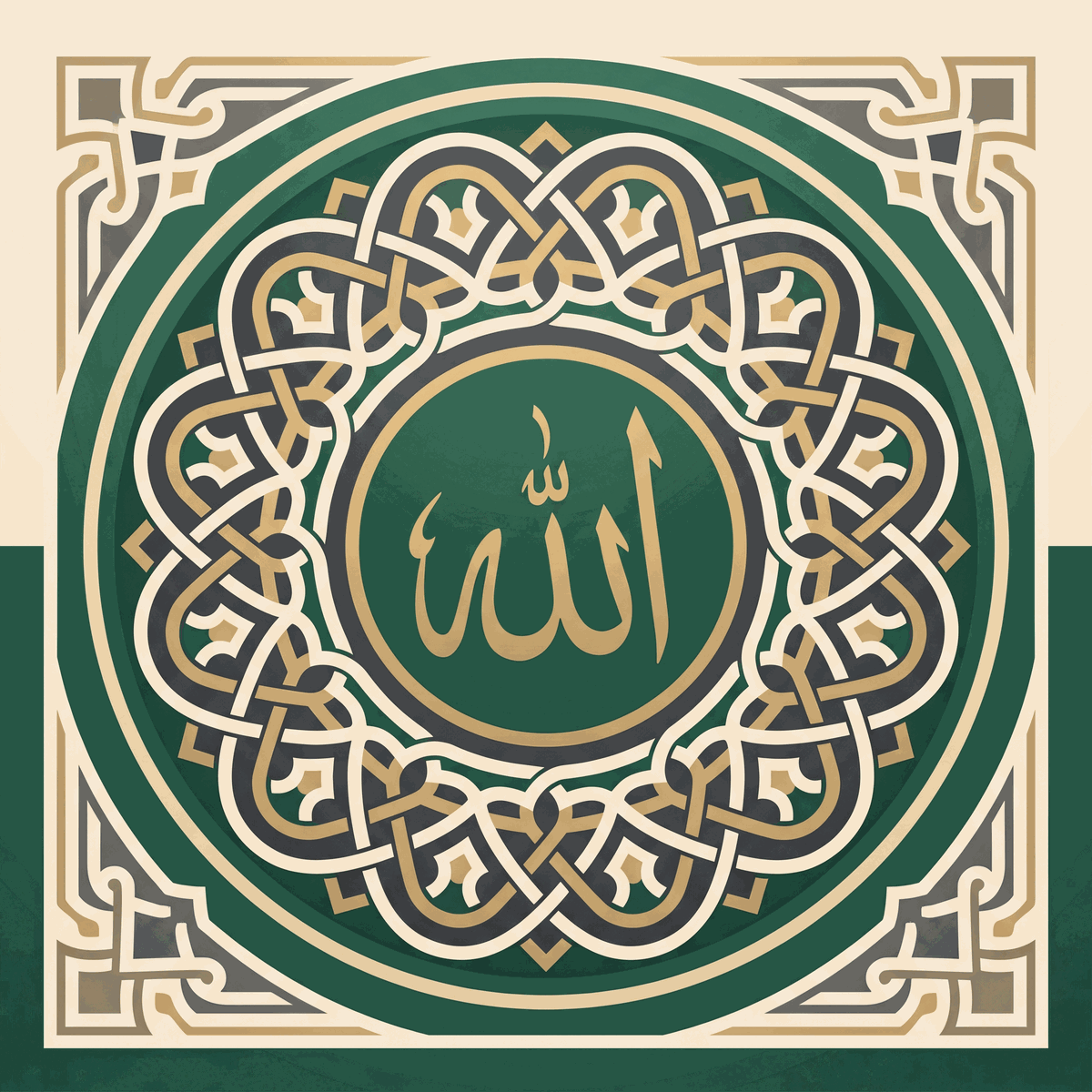
If you have ever paused to wonder about the purpose of creation or asked yourself who God really is, you are touching upon the most fundamental question in human existence. In Islam, knowing God begins with the sacred name "Allah" and the central concept of Tawheed—the absolute, pure monotheism that defines a Muslim's faith and worldview. Understanding who Allah is not only clarifies Islamic belief, but also deeply transforms how we pray, think, and find peace in daily life.
The Meaning of the Name 'Allah' and Pure Monotheism
In the Arabic language, the word Allah is the proper name for the Unique Creator of the universe. It is formed by joining al ("the") and ilah ("god" or "deity"), meaning "The One True God." Far from being an exclusive deity for a specific group, culture, or ethnic background, Allah is the same God worshipped by the Prophet Abraham, Moses, Jesus, and Muhammad (peace be upon them all). Arabic-speaking Christians and Jews have also used the name Allah for centuries when referring to the Supreme Being.
At the core of Islam lies Tawheed, an Arabic term derived from the root meaning "to make one" or "to assert oneness." Tawheed is not merely a philosophical theory; it is the living reality that Allah is uniquely One in His essence, His actions, His attributes, and His right to be worshipped. As the Prophet Muhammad (peace be upon him) explained, the foundation of Islamic faith rests upon testifying that there is no deity worthy of worship except Allah (Sahih al-Bukhari, Hadith 8). Without Tawheed, no worship or spiritual action carries true weight.
Surah Al-Ikhlas: The Definitive Description of Allah
When people asked the Prophet Muhammad (peace be upon him) to describe his Lord, Allah revealed a short four-verse chapter in the Qur'an known as Surah Al-Ikhlas (The Chapter of Sincerity). Islamic scholars regard this brief chapter as containing one-third of the Quran's core message because it distills the essence of divine theology.
Allah declares: "Say, He is Allah, [who is] One. Allah, the Eternal Refuge. He neither begets nor is born, nor is there to Him any equivalent" (Qur'an, Al-Ikhlas 112:1-4). This concise revelation sets clear boundaries for Islamic monotheism:
- He is One (Ahad): Allah is absolute, indivisible, and completely singular without partners, associates, or rivals.
- The Eternal Refuge (As-Samad): All created beings depend upon Him for every breath and need, while He depends upon no one.
- He neither begets nor is born: Allah has no parents, no offspring, and no physical lineage or offspring.
- None is equivalent to Him: Nothing in all of creation resembles Him in any aspect of His essence or majesty.
The Three Dimensions of Tawheed
Sunni scholars traditionally explain Tawheed by categorising its reality into three interwoven dimensions. This framework helps believers understand how divine oneness applies to God's actions, our personal devotion, and His holy names.
First is Tawheed ar-Rububiyyah (Oneness of Lordship). This is the firm conviction that Allah alone is the Creator, Owner, Sustainer, and Controller of everything in the universe. Not a single leaf falls without His knowledge, and no force in existence operates outside His permission.
Second is Tawheed al-Uluhiyyah (Oneness of Worship). Because Allah alone created and sustains humanity, He alone deserves all acts of devotion. A Muslim directs prayer (Salah), supplication (Dua), sacrifice, and ultimate trust (Tawakkul) exclusively to Allah, without relying on idols, saints, or created intermediaries.
Third is Tawheed al-Asma wa-s-Sifat (Oneness of Divine Names and Attributes). This means affirming all the beautiful names and perfect qualities Allah has revealed in the Qur'an and authentic Sunnah, without comparing Him to human beings or denying His attributes. The Qur'an summarizes this principle clearly: "There is nothing like unto Him, and He is the Hearing, the Seeing" (Qur'an, Ash-Shura 42:11).
How Tawheed Transforms Spiritual and Daily Life
Understanding Tawheed is far more than an academic exercise; it radically reshapes a believer's heart and practical conduct. When you realize that Allah is Al-Hayy (The Ever-Living) and Al-Qayyuum (The Sustainer of All), as described in Ayat al-Kursi (Qur'an, Al-Baqarah 2:255), overwhelming anxiety about the future begins to fade. You recognize that worldly powers, financial hardships, and material circumstances possess no ultimate power except what Allah permits.
This realization brings profound spiritual liberation. A person who lives by Tawheed bows only to the Almighty Creator, freeing themselves from the fear of creation and the pressure to seek validation from others. Furthermore, knowing that Allah is Ar-Rahman (The Most Compassionate) and Ar-Raheem (The Most Merciful) fills the heart with hope, encouraging sincere repentance whenever one stumbles.
In everyday life, whether managing career responsibilities, raising a family, or living peacefully in a multi-faith environment like Mauritius, Tawheed serves as an unshakeable anchor. It fosters humility, justice, and compassion toward all human beings, knowing that every person is created by and accountable to the same Supreme Lord.
Frequently Asked Questions About Allah and Tawheed
Does 'Allah' refer to the same God as the God of Abraham?
Yes. 'Allah' is the Arabic word for God, referring to the exact same Almighty Creator who guided Abraham, Moses, Jesus, and Muhammad (peace be upon them all). The Qur'an explicitly states that Muslims believe in the God of all divine messengers.
What is the difference between belief in God and Tawheed?
General belief in God may simply mean accepting that a higher power exists. Tawheed, however, requires acknowledging God's absolute oneness, directing worship solely to Him without partners, and affirming His unique attributes without comparing Him to created beings.
How can a beginner strengthen their understanding of Tawheed?
A beginner can strengthen their Tawheed by regularly reading the Qur'an with translation, learning the 99 Beautiful Names of Allah (Asma-ul-Husna), making sincere personal supplication (Dua), and reflecting upon the order and beauty found across creation.
At its heart, knowing Allah through Tawheed is the most fulfilling journey a human soul can undertake. By affirming His complete oneness, turning to Him directly in worship, and reflecting on His mercy, a believer discovers true purpose, inner tranquility, and a direct bond with the Creator.
Sources
- Qur'an, Al-Ikhlas 112:1-4
- Qur'an, Ash-Shura 42:11
- Qur'an, Al-Baqarah 2:255
- Sahih al-Bukhari, Hadith 8
- https://quran.com/112