
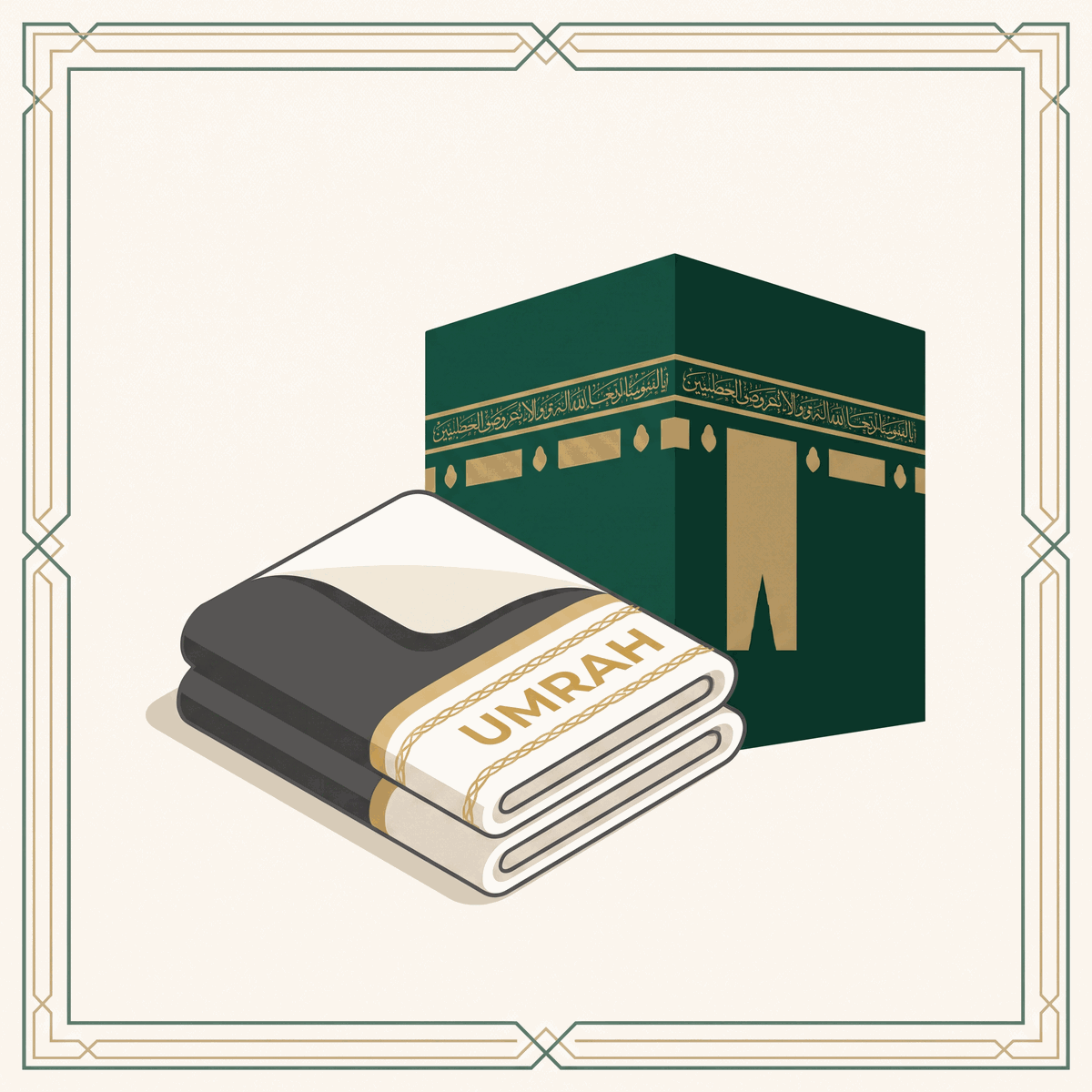
Are you preparing to perform Umrah, or seeking to understand the sacred rituals before embarking on this journey from Mauritius? Umrah is a deeply transformative pilgrimage that cleanses the heart, strengthens faith, and draws the believer closer to Allah. Knowing its essential rites, rulings, and key differences from Hajj helps every pilgrim execute their acts of worship with confidence and devotion.
Understanding Umrah: Meaning, Virtues, and Status
Linguistically, the word Umrah means "to visit a populated place." In Islamic terminology, it refers to visiting the Sacred House of Allah (the Holy Ka'bah) in Mecca to perform specific rites of worship under defined spiritual conditions.
In Hanafi jurisprudence, performing Umrah once in a lifetime for a person who possesses the financial and physical capability is classified as Sunnah Mu'akkadah (a strongly emphasized Sunnah). Other Sunni schools of thought, such as the Shafi'i and Hanbali madhhabs, consider Umrah to be Fard (obligatory) once in a lifetime, similar to Hajj.
The spiritual rewards of Umrah are immense. The Prophet Muhammad (peace be upon him) highlighted its power to erase past shortcomings, stating: "An 'Umrah to another 'Umrah is an expiation for whatever sins occurred between them, and an accepted Hajj brings no reward less than Paradise." (Sahih al-Bukhari, Hadith 1773; Sahih Muslim, Hadith 1349).
Performing Umrah during the holy month of Ramadan carries an extraordinary spiritual weight. The Messenger of Allah (peace be upon him) remarked: "An 'Umrah performed in Ramadan is equal to Hajj with me in reward." (Sahih al-Bukhari, Hadith 1782; Sahih Muslim, Hadith 1256). Scholars explain that while the spiritual reward equals Hajj, performing Umrah in Ramadan does not replace or discharge the mandatory pillar of Fard Hajj.
Step-by-Step Rites of Umrah in Hanafi Fiqh
According to the Hanafi school, Umrah consists of four primary rites structured around two Faradh (essential pillars) and two Wajib (compulsory) elements:
-
Ihram (Sacred State and Intention): Before crossing the designated geographic boundary called the Miqat, the pilgrim enters the state of Ihram. This involves physical purification through a ritual bath (ghusl) or ablution (wudu), putting on white unstitched sheets for men (women wear loose, modest clothing while keeping their faces uncovered), making the explicit intention (niyyah) for Umrah, and reciting the Talbiyah: "Labbayk Allahumma Labbayk..." In Hanafi fiqh, Ihram combined with the intention and Talbiyah forms the first essential pillar (Faradh).
-
Tawaf (Circumambulating the Ka'bah): After arriving at Al-Masjid al-Haram, pilgrims perform seven anti-clockwise circuits around the Holy Ka'bah, starting and ending at the Black Stone (Hajar al-Aswad). In Hanafi fiqh, the first four circuits constitute the second Faradh pillar, while completing the remaining three circuits is Wajib. After Tawaf, pilgrims offer two rakat of Wajib al-Tawaf prayer near Maqam Ibrahim if space permits, and drink blessed Zamzam water.
-
Sa'i (Walking Between Safa and Marwah): Pilgrims complete seven lap-traverses between the hills of Safa and Marwah, beginning at Safa and concluding at Marwah. Sa'i honors the devotion of Sayyidatina Hajar (peace be upon her) as she sought water for her son, Prophet Isma'il (peace be upon him). In the Hanafi madhhab, performing Sa'i is classified as a Wajib act.
-
Halq or Taqsir (Shaving or Trimming Hair): To conclude Umrah and exit the state of Ihram, male pilgrims either shave their entire head (Halq, which is more rewarded) or trim hair equally across the head (Taqsir). Female pilgrims cut a fingertip's length from the ends of their hair. Halq or Taqsir is Wajib, and once performed, all prohibitions of Ihram are lifted.
Umrah vs. Hajj: Key Differences Explained
While both Umrah and Hajj share the holy sanctuary of Mecca and rituals like Tawaf and Sa'i, they differ fundamentally in religious standing, complexity, timing, and requirements:
- Religious Status: Hajj is one of the five compulsory pillars of Islam (Fard 'Ayn), obligatory once in a lifetime for every Muslim who meets financial and physical criteria (Qur'an, Al-Imran 3:97). Umrah is Sunnah Mu'akkadah in Hanafi fiqh (and obligatory in Shafi'i and Hanbali schools).
- Prescribed Timing: Hajj can only be performed during specific days of the twelfth Islamic month, Dhul Hijjah (from the 8th to the 13th). Umrah can be performed at any time throughout the Islamic year, with special virtue attached to the month of Ramadan.
- Rites and Complexity: Umrah consists only of Ihram, Tawaf, Sa'i, and Halq/Taqsir, taking only a few hours to complete. Hajj is a multi-day journey that includes additional obligatory rites: standing at Arafat (Wuquf), staying overnight in Muzdalifah and Mina, pelting the Jamarat (stoning the pillars), and animal sacrifice (Hady).
- Core Pillar (Wuquf at Arafat): The Prophet (peace be upon him) declared that "Hajj is Arafat" (Sunan an-Nasa'i, Hadith 3016; graded sahih). Standing at Arafat on the 9th of Dhul Hijjah is the core cornerstone of Hajj, whereas Umrah has no standing at Arafat whatsoever.
Practical Guidance for Mauritian Pilgrims
For Muslims traveling from Mauritius, preparing for Umrah involves specific logistical and spiritual steps:
- Flight Routes and Miqat: Mauritian pilgrims usually travel from Sir Seewoosagur Ramgoolam International Airport in Plaisance. Most flights transit through Dubai, Jeddah, or Madinah. If flying directly to Jeddah, aircraft cross the Miqat line (such as Yalamlam or Qarn al-Manazil) while in mid-air. Male pilgrims should wear their Ihram garments before boarding or before reaching the Miqat boundary, declaring their intention in flight. If visiting Madinah first, Ihram is assumed at Dhul Hulayfah (Abyar Ali) before proceeding to Mecca.
- Visas and Logistics: Mauritian citizens can arrange Umrah visas electronically or via official platforms such as Nusuk. The Nusuk application is also required to secure permits for praying in the blessed Rawdah (Rawdah al-Mutahharah) in the Prophet's Mosque in Madinah.
- Spiritual Readiness: Beyond travel arrangements, pilgrims should focus on spiritual preparation by learning the supplications, seeking forgiveness from loved ones, and maintaining physical health for the walking required during Tawaf and Sa'i.
Umrah is a sublime opportunity to renew your relationship with Allah, ask for forgiveness, and experience the spiritual unity of the Ummah. By preparing with sincere intention and clear knowledge of Hanafi fiqh, pilgrims from Mauritius can maximize the immense blessings of this sacred journey.
Frequently Asked Questions
Is Umrah mandatory for every Muslim?
In the Hanafi school of jurisprudence, Umrah is classified as Sunnah Mu'akkadah (an emphasized Sunnah) once in a lifetime for those who are physically and financially capable. Other Sunni schools, including the Shafi'i and Hanbali madhhabs, view Umrah as obligatory (Fard) once in a lifetime under the same conditions.
Does performing Umrah during Ramadan satisfy the obligation of Hajj?
No. Although the Prophet (peace be upon him) taught that performing Umrah in Ramadan yields a reward equivalent to performing Hajj with him, it does not fulfill the mandatory pillar of Fard Hajj. Hajj remains an independent obligation that must be performed during Dhul Hijjah.
How should Mauritian pilgrims handle entering Ihram on direct flights to Jeddah?
Because direct or transit flights heading into Jeddah cross the Miqat boundary in mid-air, male pilgrims should put on their Ihram clothing prior to departure or in flight before the Miqat announcement. The intention (niyyah) and Talbiyah should be recited as the plane approaches the Miqat boundary. If your itinerary starts in Madinah, you enter Ihram at Dhul Hulayfah before traveling to Mecca.
Sources
- Qur'an, Al-Baqarah 2:196
- Sahih al-Bukhari, Hadith 1782
- Sahih Muslim, Hadith 1349
- Sunan an-Nasa'i, Hadith 3016
- https://islamqa.org/hanafi/muslimacoaching/158065/step-by-step-umrah-guide/