
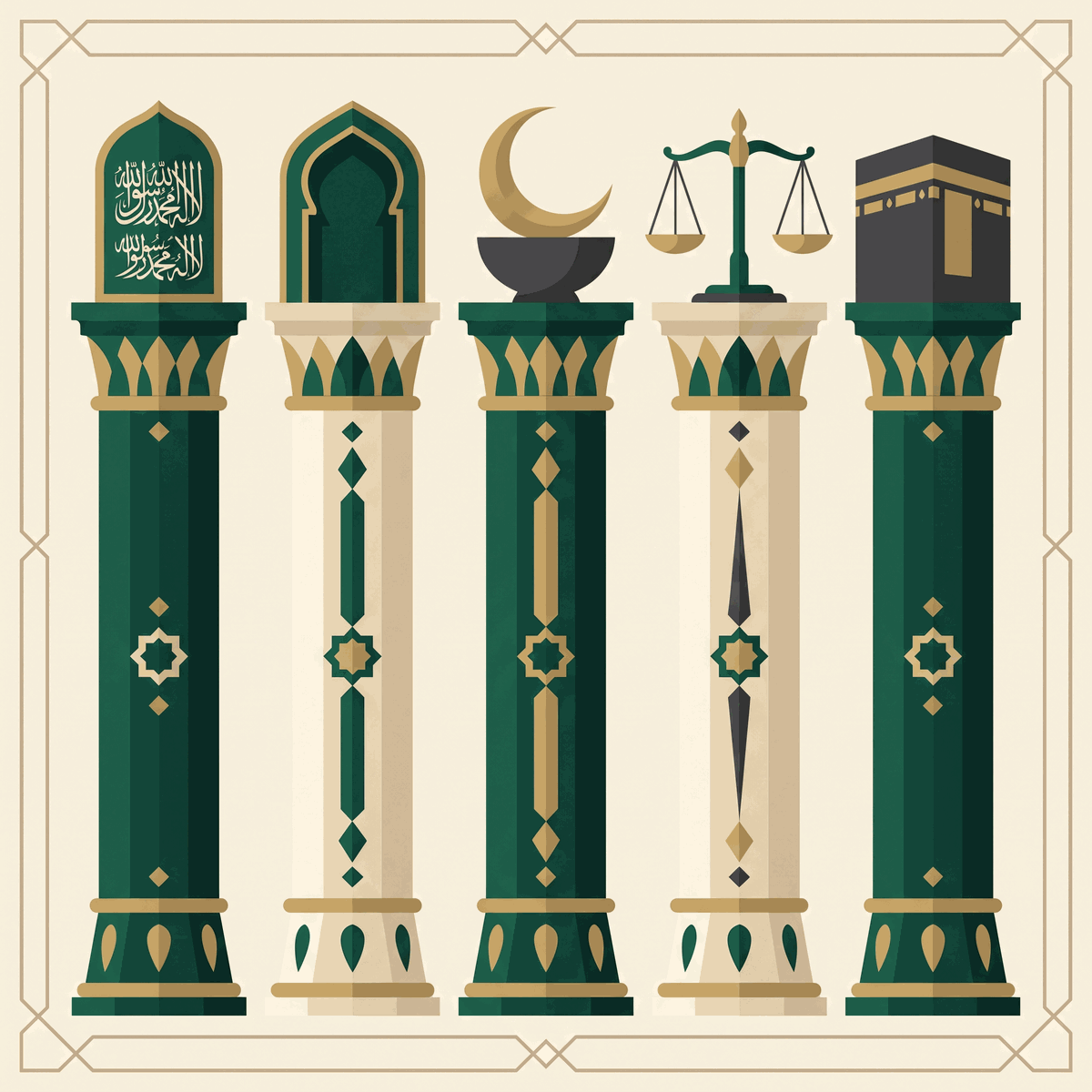
How does a believer build a balanced life anchored in purpose, peace, and spiritual growth? Millions of Muslims across the globe, including here in Mauritius, find their daily compass in the Five Pillars of Islam (Arkan al-Islam). Whether you are taking your first steps in learning about Islam or seeking to refresh your understanding of these core obligations, exploring the Five Pillars offers a profound roadmap for a meaningful life.
The Core Framework of Faith: Understanding Arkan al-Islam
Islam is not merely a set of passive beliefs; it is a complete way of life integrating inward faith (Iman) with outward action (Islam). The foundational structure of this spiritual path is captured in a famous teaching of the Prophet Muhammad (peace be upon him). On the authority of Abdullah ibn Umar (may Allah be pleased with him), the Messenger of Allah (peace be upon him) said: "Islam is built upon five pillars: testifying that there is no god worthy of worship except Allah and that Muhammad is the Messenger of Allah, establishing the prayer, paying the zakah, making the pilgrimage to the House, and fasting in Ramadan" (Sahih al-Bukhari, Hadith 8; Sahih Muslim, Hadith 16).
Just as a physical building requires sturdy columns to support its roof and withstand environmental storms, a Muslim’s spiritual life relies on these five pillars. They provide an enduring structure to our days, months, and years. In a fast-paced world—where work, family duties, and daily distractions can easily overwhelm our thoughts—the Five Pillars ground us in constant remembrance of our Creator (Dhikrullah).
In Islamic theology, particularly within the mainstream Sunni tradition (Ahlus Sunnah wal Jamaah), these five practices form the essential obligations (fard) required of every adult Muslim who possesses the capacity to perform them. While each pillar carries its own distinct rules and spiritual virtues, together they harmonize the personal, social, and economic dimensions of human life.
1. Shahadah: The Testimony of Faith and Monotheism
The first and most fundamental pillar of Islam is the Shahadah—the declaration of faith. It is expressed in the concise yet transformative Arabic statement: Ash-hadu an la ilaha illallah, wa ash-hadu anna Muhammadan 'abduhu wa rasuluh ("I bear witness that there is no deity worthy of worship except Allah, and I bear witness that Muhammad is His servant and Messenger").
The Shahadah consists of two core affirmations that define a Muslim's worldview:
- Uncompromising Monotheism (Tauhid): The absolute oneness and uniqueness of Allah. A Muslim affirms that Allah alone created the universe, sustains all life, and deserves absolute devotion and worship. The Qur'an states: "Know, therefore, that there is no deity worthy of worship except Allah" (Qur'an, Muhammad 47:19).
- Acceptance of Prophethood (Risalah): Recognizing Muhammad (peace be upon him) as the final Prophet and Messenger sent to guide humanity. Accepting his prophethood means striving to follow his teachings, emulate his noble character, and adopt his life (Sunnah) as our practical model.
The Shahadah is not just a phrase spoken once; it is the entry door into Islam and the continuous foundation of every act of worship. When a person sincerely pronounces the Shahadah with understanding and heart conviction, they enter the fold of Islam. In daily life, Muslims repeat this testimony during every call to prayer (Adhan), during the Tashahhud in ritual prayer, and in morning and evening supplications.
In our multicultural island context in Mauritius, where people of diverse religious backgrounds live side by side, living the Shahadah means demonstrating the beauty of pure monotheism through honesty, kindness, integrity, and upright character with neighbors and colleagues.
2. Salah: The Daily Connection and Spiritual Anchor
The second pillar of Islam is Salah—the prescribed ritual prayer performed five times throughout the day and night. While informal personal supplication (Du'a) can be made at any time in any language, Salah is a structured form of worship ordained directly by Allah during the miraculous Night Journey (Isra and Mi'raj).
The five daily prayers are scheduled at distinct times corresponding to the sun’s movement across the sky:
- Fajr: Performed before dawn, setting a pure intention for the day ahead.
- Dhuhr: Performed just after the sun passes its zenith, providing a peaceful spiritual pause during the workday.
- Asr: Performed in the late afternoon, reminding the heart of the fading day and the passage of time.
- Maghrib: Performed immediately after sunset, welcoming the evening with gratitude.
- Isha: Performed at night, closing the day with reflection and peace before sleep.
Allah commands believers in the Qur'an: "Recite what has been revealed to you of the Book and establish prayer. Indeed, prayer prohibits immorality and wrongdoing, and the remembrance of Allah is greater" (Qur'an, Al-Ankabut 29:45).
Salah serves as a spiritual sanctuary. Performing ritual ablution (Wudu) cleanses the body and mind, while standing before the Creator five times a day instills deep humility and mindfulness. It prevents spiritual fatigue and keeps the believer connected to Divine guidance amid daily life.
From a jurisprudence (Fiqh) perspective, the majority of Muslims in Mauritius follow the Hanafi school of thought. In the Hanafi school, prayer times are calculated with care and specific postures are maintained, such as placing the hands below the navel for men during standing posture. While subtle legal variations exist across the four recognized Sunni madhabs (Hanafi, Shafi'i, Maliki, and Hanbali), all scholars agree that the obligatory five daily prayers form the unbreakable backbone of a Muslim's faith. Praying in congregation (Jama'at) at local mosques across our towns—from Port Louis to Curepipe, Rose Hill, and Flacq—further unites the community in shared devotion.
3. Zakat: Purifying Wealth and Social Responsibility
The third pillar of Islam is Zakat—an obligatory charitable contribution paid annually by eligible Muslims. The Arabic word Zakat literally means "purification" and "growth." Far from being viewed as a mere tax or burden, Zakat purifies a Muslim's remaining wealth and purges the human heart from greed, selfishness, and excessive attachment to material goods.
The Qur'an regularly pairs prayer and Zakat in dozens of verses, emphasizing that spiritual devotion to God must be matched by active compassion toward humanity: "And establish prayer and give zakah, and whatever good you put forward for yourselves – you will find it with Allah" (Qur'an, Al-Baqarah 2:110).
How Zakat operates in practical terms:
- Minimum Threshold (Nisab): Zakat is due only when a Muslim’s qualifying net wealth reaches or exceeds a minimum threshold, known as Nisab (equivalent to the value of 87.48 grams of gold or 612.36 grams of silver).
- One Lunar Year (Hawl): The wealth must remain above the Nisab threshold for one complete Islamic lunar year.
- Percentage: The standard rate is 2.5% on accumulated wealth, cash savings, gold, silver, investments, and business inventory held for trade.
The Qur'an outlines eight distinct categories of eligible recipients for Zakat, including the poor (al-fuqara), the needy (al-masakin), those burdened with unpayable debt, and stranded travelers (Qur'an, At-Tawbah 9:60).
In Hanafi fiqh, Zakat is also payable on gold jewelry worn or kept by women if it reaches the Nisab threshold, whereas some other schools, such as the Shafi'i school, view personal customary jewelry as exempt. Both positions are valid interpretations grounded in Islamic jurisprudence. In Mauritius, local Islamic charitable trusts and social organizations collect and distribute Zakat systematically to assist needy families, fund youth education, and provide emergency relief, ensuring economic solidarity across society.
4. Sawm: Fasting the Blessed Month of Ramadan
The fourth pillar of Islam is Sawm—fasting during the sacred month of Ramadan, the ninth month of the Islamic lunar calendar. Fasting requires refraining completely from eating, drinking, smoking, and intimate marital relations from true dawn (Fajr) until sunset (Maghrib), accompanied by a clear intention (Niyyah).
Allah mandates this worship in the Qur'an: "O you who have believed, decreed upon you is fasting as it was decreed upon those before you that you may become righteous" (Qur'an, Al-Baqarah 2:183).
The spiritual goals of Sawm extend far beyond physical restraint:
- Developing Taqwa (God-consciousness): Abstaining voluntarily from lawful desires purely for Allah’s pleasure builds inner discipline, willpower, and spiritual focus.
- Empathy and Compassion: Feeling hunger and thirst firsthand inspires empathy for millions of people worldwide who experience poverty and hunger daily.
- Purification of Character: Fasting requires guarding the tongue and heart from anger, backbiting, lying, and conflict.
Ramadan is also celebrated as the month in which the Qur'an was revealed to Prophet Muhammad (peace be upon him). Across Mauritius, nights in Ramadan come alive with Taraweeh congregational prayers in local masajid, warm family Iftar gatherings, and increased charity.
For individuals who are unable to fast due to chronic illness, old age, pregnancy, or travel, Islamic law offers compassionate exemptions. Those with temporary illnesses or travel obligations make up their missed fasts later (Qada), while those with permanent health constraints feed a needy person for each day missed (Fidyah). Under Hanafi jurisprudence, the intention (Niyyah) for the daily fast during Ramadan can be made from sunset of the previous night up until before the Islamic midday (Dahwa al-Kubra), providing ease and flexibility for believers.
5. Hajj: The Sacred Pilgrimage to Makkah
The fifth pillar of Islam is Hajj—the sacred pilgrimage to the Holy City of Makkah in Saudi Arabia. Hajj is a mandatory duty once in a lifetime for every adult Muslim who possesses the physical health and financial means to undertake the journey (Istita'ah).
The Qur'an affirms this grand duty: "And pilgrimage to the House is a duty owed to Allah by people – upon whoever can find a way to it" (Qur'an, Ali 'Imran 3:97).
Taking place during the designated Islamic month of Dhul-Hijjah, Hajj commemorates the deep faith and devotion of Prophet Ibrahim (Abraham), his wife Hajar, and their son Prophet Ismail (peace be upon them), as taught and fulfilled by Prophet Muhammad (peace be upon him).
Essential rituals of Hajj include:
- Ihram: Entering a state of sacred purity, where men wear simple unstitched white garments and women wear modest clothing, removing all visible signs of wealth, rank, or ethnic distinction.
- Tawaf: Circling the holy Ka'bah seven times counterclockwise in prayer and praise.
- Sa'i: Walking seven times between the hills of Safa and Marwah, honoring Hajar’s desperate search for water for her infant son.
- Day of Arafat: Standing on the plain of Arafat in heartfelt prayer and repentance—the spiritual heart of the entire pilgrimage.
- Rami al-Jamarat: Symbolically casting pebbles at three pillars in Mina, representing rejection of evil and temptation.
Hajj is an unparalleled demonstration of human equality and universal brotherhood. Millions of pilgrims from every corner of the world—speaking hundreds of languages—stand side by side before Allah. For Mauritian pilgrims journeying across the ocean to the Holy Lands, Hajj is a life-altering experience that cleanses past sins and renews spiritual purpose.
Living the Five Pillars: Harmony in Daily Life
The Five Pillars of Islam are not isolated rituals to be ticked off a checklist; they form an interconnected, living framework for holistic human development. They touch every single aspect of human life:
- Shahadah grounds our mind and soul in unshakeable faith and purpose.
- Salah structures our day with daily mindfulness and divine connection.
- Zakat purifies our finances and builds social harmony within the community.
- Sawm trains our self-discipline and empathy every year.
- Hajj unites the global Ummah and crowns a lifetime of spiritual devotion.
When embraced together, the Five Pillars bring inner peace to the individual heart and foster compassion, justice, and solidarity across the wider community. They teach us that true success in this life and the Hereafter (Akhirah) lies in balancing our worship of Allah with our duties toward our fellow human beings.
Frequently Asked Questions (FAQ)
What happens if someone cannot perform a pillar due to poor health or financial difficulty?
Islamic law (Fiqh) is built upon divine mercy and practicality. If a person lacks sufficient wealth to meet the Nisab threshold, they are not required to pay Zakat. Similarly, if someone lacks physical health or financial funds, Hajj is not obligatory upon them. For fasting during Ramadan, individuals with acute illness or age-related frailty are given exemptions to either make up fasts later (Qada) or pay charity (Fidyah). Allah clearly states in the Qur'an: "Allah does not require of any soul more than what it can bear" (Qur'an, Al-Baqarah 2:286).
Do the four Sunni schools of thought differ on the Five Pillars?
All four recognized Sunni madhabs (Hanafi, Shafi'i, Maliki, and Hanbali) are in absolute agreement on the necessity and core structure of all Five Pillars. Minor variations exist only in practical execution (furu'), such as posture details in prayer, specific calculation rules for certain types of assets in Zakat, or specific legal conditions during Hajj rituals. These slight differences represent valid scholarly diversity (Ikhtilaf) and reflect the wisdom and flexibility of Islamic law.
Can a person become a Muslim simply by pronouncing the Shahadah?
Yes. Sincerely reciting the Shahadah with understanding and belief in its meaning is the sole formal requirement to enter Islam. Once a person declares their testimony of faith, they are welcomed as a Muslim brother or sister. From that moment, they begin learning and implementing the remaining pillars—Salah, Zakat, Sawm, and Hajj—step by step at a sustainable pace with community guidance and support.
By establishing these five foundational pillars in our personal and family lives, we create a strong, resilient sanctuary of faith that guides us through every season of life. May Allah grant us the knowledge, sincerity, and capability to fulfill these noble obligations with devotion and love.
Sources
- Sahih al-Bukhari, Hadith 8
- Sahih Muslim, Hadith 16
- Qur'an, Al-Baqarah 2:183
- Qur'an, Ali 'Imran 3:97
- https://www.islamic-relief.org.uk/resources/knowledge-base/five-pillars-of-islam/