
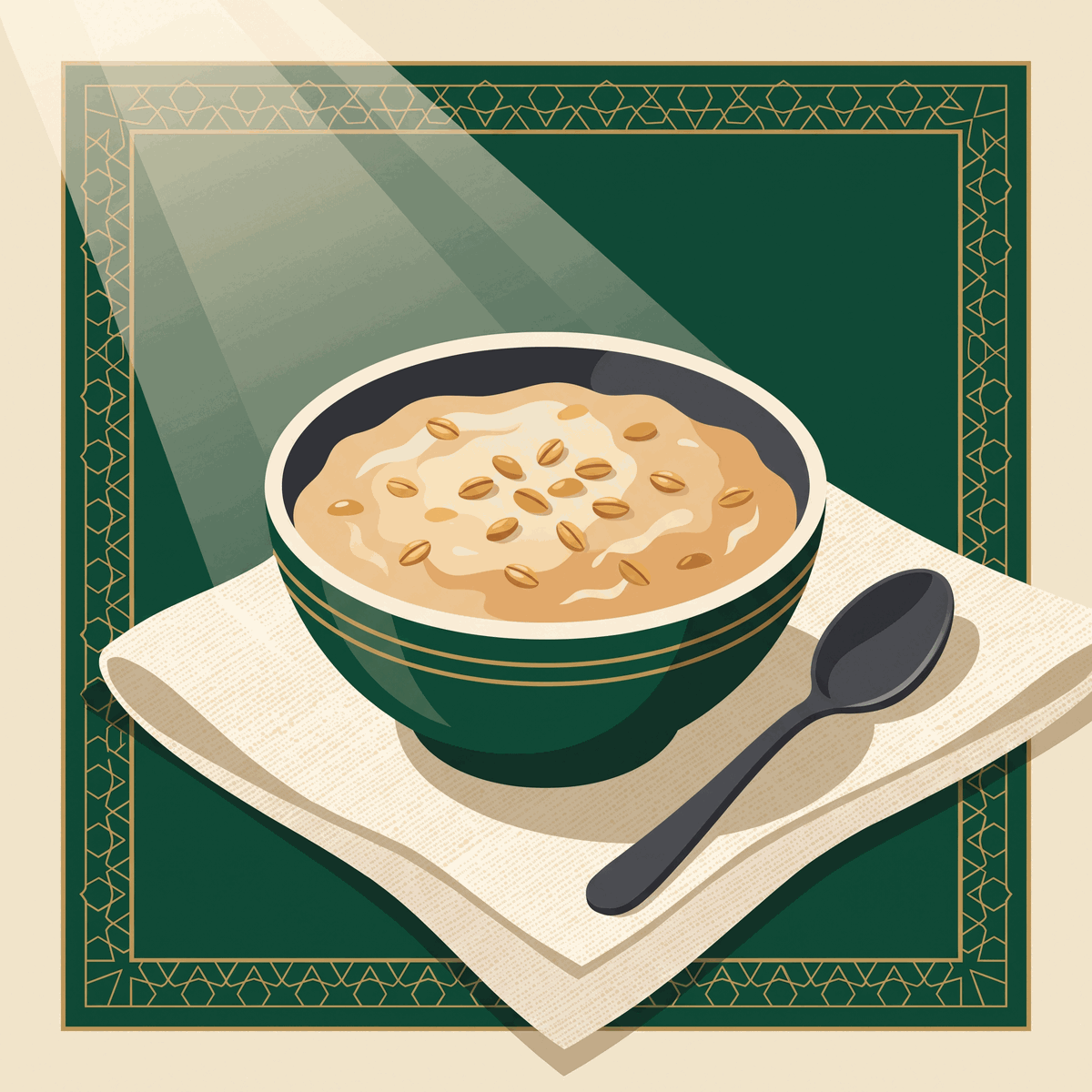
When facing moments of emotional distress, loss, or physical fatigue, many believers seek natural comfort that aligns with both physical well-being and spiritual wisdom. How can a simple, traditional meal restore tranquility to a heavy heart and nourish a weary body? The answer lies in Talbina, a warm, wholesome barley porridge deeply rooted in Prophetic tradition.
What Is Talbina? Understanding the Prophetic Barley Dish
Talbina is a traditional dish made from coarsely ground whole barley flour, cooked slowly in water or milk, and gently sweetened with natural honey or dates. The name Talbina derives from the Arabic word laban, which means milk, referring to its soft, creamy texture and milky white appearance when prepared. In the era of the Prophet Muhammad ﷺ, this humble meal was a staple in Medinan households, valued not only for its ease of preparation but also for its gentle effect on delicate stomachs.
Unlike processed modern grains, traditional Talbina utilizes whole barley grain containing the bran and germ. This preserves essential dietary fibers, mineral complex, and wholesome nutrients. Across Islamic history, classical scholars like Ibn Qayyim al-Jawziyya highlighted Talbina in their works on Prophetic medicine, noting that its broth-like nature provides immediate nourishment without burdening an already weakened digestive system. For Muslims today, preparing Talbina represents a meaningful connection to the daily life and practical guidance of the Messenger of Allah ﷺ.
Talbina in Sunnah and Hadith: Comfort for Sorrow and Sickness
In Islamic tradition, Talbina holds a special status as a comfort food specifically recommended during times of grief, bereavement, and physical illness. The Mother of the Believers, Aisha (may Allah be pleased with her), used to order Talbina to be cooked for sick family members and for those who were grieving after the loss of a loved one.
She narrated that the Prophet Muhammad ﷺ said: "Talbina gives rest to the heart of the patient and makes it active, and relieves some of his sorrow and grief" (Sahih al-Bukhari, Hadith 5689; Sahih Muslim, Hadith 2216).
In another narration, Aisha (may Allah be pleased with her) explained that whenever someone among her relatives passed away, the women would gather and then disperse, except for the family and close friends. She would then order that a pot of Talbina be cooked, followed by Tharid (a meat and bread dish), over which the Talbina was poured, and she would tell them: "Eat from it, for I heard the Messenger of Allah ﷺ say that Talbina soothes the heart of the sick and takes away some of the grief" (Sahih al-Bukhari, Hadith 5417).
These authentic narrations demonstrate that Islam addresses human emotional distress holistically. By offering a warm, light meal, the Sunnah acknowledges that emotional pain and bodily fatigue are deeply intertwined, and that comforting the body can help lighten the burden on the soul.
Nutritional Insights: How Barley, Milk, and Honey Support Wellness
Modern nutritional science sheds light on why a warm bowl of barley porridge can have such a grounding effect on human physiology. Barley is a complex carbohydrate rich in soluble fiber, particularly beta-glucan, which promotes slow glucose absorption and stable blood sugar levels. Sudden spikes and drops in blood sugar often aggravate mood swings, irritability, and anxiety; maintaining steady energy levels helps foster emotional stability during challenging times.
Furthermore, barley contains significant amounts of tryptophan, an essential amino acid that the human body uses to synthesize serotonin—the neurotransmitter responsible for regulating mood, sleep, and feelings of well-well-being. Barley is also abundant in magnesium and potassium, minerals that play a critical role in nerve function and muscle relaxation. When combined with milk and raw honey—a natural food described in the Holy Qur'an as containing healing for humanity (Qur'an, An-Nahl 16:69)—Talbina becomes a nutrient-dense, easy-to-digest comfort meal.
Please note that while Talbina is a revered Prophetic guidance and traditional practice, this article provides educational information and is not medical advice; readers experiencing physical illness, clinical depression, or severe anxiety should consult a qualified doctor before relying on dietary choices alone.
How to Prepare Authentic Talbina at Home
Preparing Talbina at home is straightforward and requires only a few basic, natural ingredients. It makes an excellent breakfast or a soothing evening meal for the whole family.
Recipe Ingredients:
- 2 to 3 tablespoons of fine whole barley flour (or ground pearl barley)
- 1.5 to 2 cups of milk (dairy or almond milk) or water
- 1 to 2 tablespoons of raw honey (to taste)
- Optional toppings: pinch of ground cinnamon, chopped dates, crushed almonds, or pistachios
Step-by-Step Preparation:
- Combine Ingredients: In a small saucepan, mix the barley flour into cold milk or water. Whisk thoroughly until the flour is completely dissolved without lumps.
- Cook Slowly: Place the saucepan over low-to-medium heat. Stir continuously with a wooden spoon or whisk as the mixture warms up.
- Simmer to Desired Thickness: Allow the mixture to simmer gently for 10 to 15 minutes. As the barley cooks, it will thicken into a smooth, porridge-like consistency.
- Sweeten and Serve: Remove from heat and allow it to cool slightly. Stir in raw honey to preserve its beneficial enzymes. Pour into a bowl and garnish with cinnamon, dates, or crushed nuts.
Serving warm Talbina in your home brings both physical nourishment and the spiritual blessings (barakah) of reviving a beloved Sunnah.
Frequently Asked Questions
Can I make Talbina using whole barley grains instead of flour?
Yes, you can use whole pearl barley, though it requires a longer cooking time. Boil the barley in water or milk until soft, then blend it lightly to achieve the traditional creamy texture associated with Talbina.
When is the best time to consume Talbina?
Talbina can be enjoyed at any time of day. It is particularly beneficial as a warm breakfast to sustain morning energy, or as a late evening meal to promote restful sleep and digestive ease.
Is Talbina safe for children and elderly family members?
Because Talbina is soft, warm, and gentle on the stomach, it is well-suited for elderly individuals, young children, and anyone recovering from physical illness, provided they have no specific barley or dairy allergies.
A Wholesome Sunnah for Heart and Body
Talbina stands as a beautiful testament to the practical wisdom of Prophetic guidance. By combining the physical benefits of whole barley, milk, and honey with the intention of following the Sunnah, believers find a simple yet powerful way to care for their physical health and emotional well-well-being. Whether you are seeking solace during a period of hardship or simply wishing to incorporate healthy, traditional Sunnah foods into your daily routine, a warm bowl of Talbina offers timeless comfort for the body and heart.
Sources
- Sahih al-Bukhari, Hadith 5689
- Sahih Muslim, Hadith 2216
- Ibn Qayyim al-Jawziyya, Zad al-Ma'ad (Healing with the Medicine of the Prophet)
- PMC Article PMC3593710 - Effect of Talbinah on mood
- https://pmc.ncbi.nlm.nih.gov/articles/PMC3593710/