
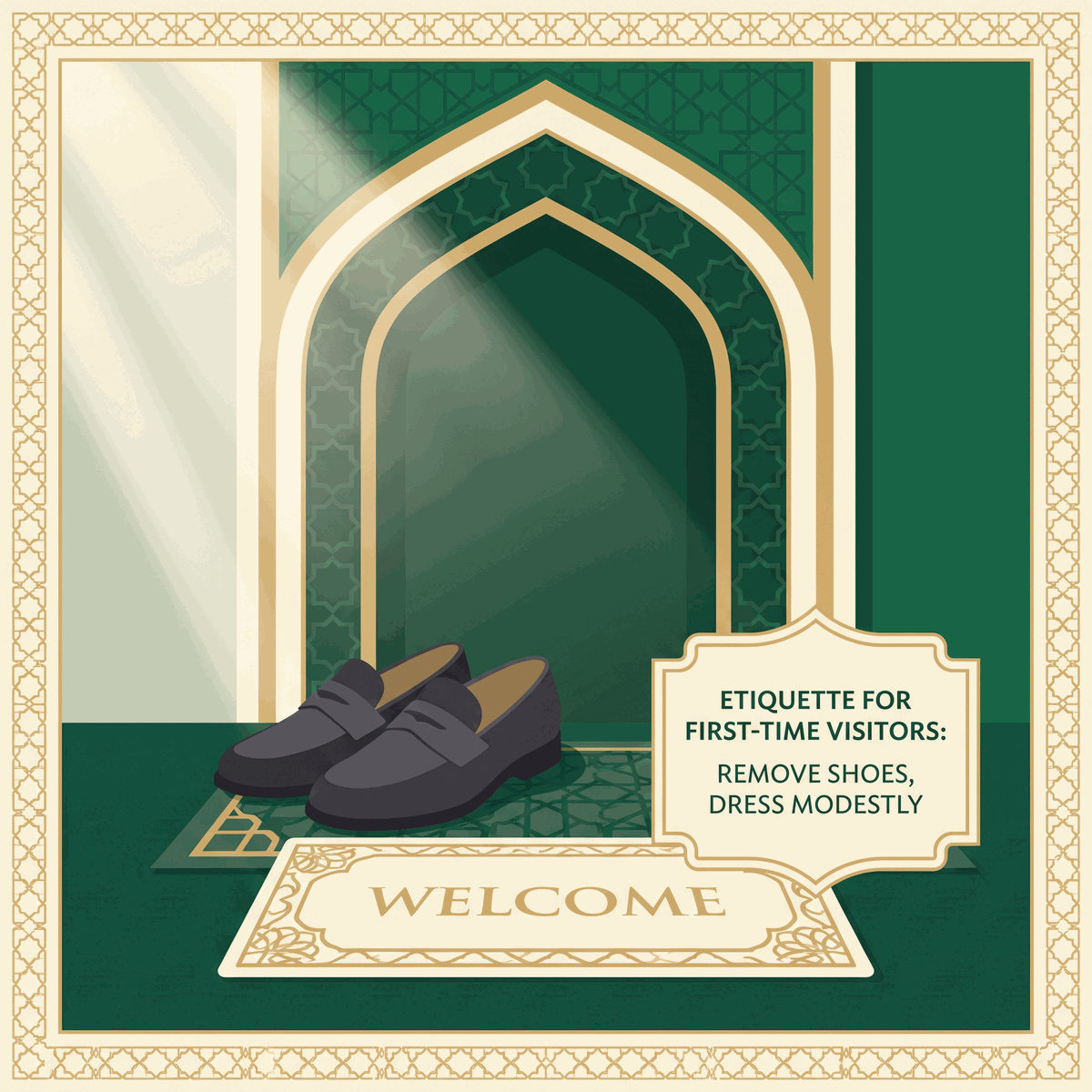
Walking into a mosque for the very first time can raise many practical questions about dress codes, entry customs, and appropriate behavior inside the sanctuary. Whether you are a non-Muslim guest exploring Islamic culture, a tourist visiting a historic landmark like the Jummah Mosque in Mauritius, or a new Muslim attending congregational prayer, understanding basic etiquette ensures a confident and respectful experience. Islamic tradition places great emphasis on adab (refined manners and courtesy), viewing the mosque as a sacred sanctuary of peace, worship, and community connection.
Dress Code and Personal Cleanliness
Respecting the sanctity of a mosque begins with dressing modestly and maintaining personal cleanliness. The Qur'an highlights the spiritual and physical beauty of preparing for prayer, stating, "O Children of Adam, take your adornment [by wearing clean clothes] at every mosque" (Qur'an, Al-A'raf 7:31). Both men and women are expected to wear loose, non-revealing clothing that covers the body appropriately.
For men, clothing should cover from the shoulders down past the knees, with loose trousers and a full-length shirt or traditional shirt being ideal. For women, attire should cover the arms to the wrists and legs to the ankles, along with a modest headscarf covering the hair. In many mosques that regularly welcome visitors, clean scarves or abayas are available near the entrance for guests who may need them.
Personal hygiene is equally emphasized in Islamic teaching. Visitors are encouraged to ensure they are clean and free of strong, unpleasant odors. Prophet Muhammad ﷺ instructed believers to avoid entering the congregation after consuming pungent foods like raw garlic or onions, so as not to disturb fellow worshippers (Sahih al-Bukhari, Hadith 855). For Muslims preparing to pray, performing wudu (ritual ablution) before entering the main prayer carpet is an essential spiritual requirement.
Arriving and Entering the Mosque
When you arrive at a mosque, the first physical requirement is removing your footwear before stepping onto the carpeted prayer hall. Shoe racks or cubbies are provided near the main entry doors. Walking barefoot or in clean socks preserves the ritual purity and hygiene of the carpets where worshippers place their faces during prostration.
By sunnah (the practice of Prophet Muhammad ﷺ), it is recommended to step into the mosque with your right foot first. Muslims entering the sanctuary often recite a short supplication asking for God's grace: "In the name of Allah, O Allah open for me the doors of Your mercy" (Sunan Abi Dawud, Hadith 465).
When greeting people inside or near the entrance, a warm handshake between members of the same gender accompanied by the traditional Islamic greeting "As-salamu 'alaykum" (Peace be upon you) is customary. If you are unsure of local customs, a gentle smile and a respectful nod are always appreciated.
Mindful Conduct Inside the Main Prayer Hall
The main hall of a mosque, known as the musalla, is designed for quiet reflection, Qur'anic recitation, and congregational prayer (Salah). To maintain a serene environment, visitors should keep conversation quiet and switch mobile phones to silent mode.
Key guidelines for navigating the prayer space include:
- Do not walk in front of someone praying: Worshippers in active prayer maintain a sacred space directly in front of them. If someone is standing or prostrating, pass behind them or wait until they finish.
- Respect gender-designated areas: Most mosques maintain separate prayer spaces or designated sections for men and women to ensure privacy and focus during worship. Visitors should pay attention to directional signage or ask a host for guidance.
- Seek permission before photographing: Photography or videography is often allowed outside prayer times, but you should always ask permission before taking photos inside, and avoid filming individuals who are praying.
- Performing greeting prayers: Muslim visitors entering the mosque before sitting down are encouraged to perform two short cycles of voluntary prayer known as Tahiyyat al-Masjid (greeting the mosque), following the instruction of Prophet Muhammad ﷺ (Sahih al-Bukhari, Hadith 444).
Understanding Prayer Times and Sacred Boundaries
Mosques operate around the five daily Islamic prayers: Fajr (dawn), Dhuhr (midday), Asr (afternoon), Maghrib (sunset), and Isha (night). Additionally, the Friday congregational prayer (Jumu'ah) takes place around midday and draws larger crowds.
If you visit during a congregational prayer, you are welcome to observe quietly from the back or side of the hall. Standing behind the final row or seated quietly against a back wall allows you to witness the prayer without disrupting the lines of worshippers. In Mauritius, mosques serve as vibrant centers for spiritual development, charitable work, and community gatherings, welcoming all who enter with sincerity and respect (Qur'an, An-Nur 24:36).
Frequently Asked Questions
Can non-Muslims visit a mosque?
Yes, non-Muslims are welcome to visit most mosques outside of active congregational prayer times. Many historic and community mosques offer guided tours or open house events. Visitors are simply asked to follow dress code guidelines and remove their shoes upon entry.
What should I do if I arrive while people are praying?
If congregational prayer is in progress, enter quietly, remove your shoes, and take a seat near the back or side wall. Avoid walking between the imam (prayer leader) and the congregation, and wait until the prayer concludes before asking questions or walking across the room.
Do I need to bring anything special when visiting a mosque?
You do not need to bring any special items. Women may wish to carry a lightweight headscarf to cover their hair. Wearing shoes that are easy to slip off and on will make your arrival and departure smooth and comfortable.
Embracing Hospitality and Respect
Visiting a mosque is a meaningful opportunity to experience Islamic worship, architecture, and hospitality firsthand. By following these simple guidelines of modest dress, cleanliness, and quiet respect, you can feel confident and comfortable during your visit. Whether attending daily prayers or touring a local sanctuary, mindful adab opens the door to genuine understanding and warm community connection.
Sources
- Sahih al-Bukhari, Hadith 444
- Sahih al-Bukhari, Hadith 855
- Sunan Abi Dawud, Hadith 465
- https://seekersguidance.org/articles/featured-articles/the-etiquette-adab-of-the-visitation-ziyara-of-the-prophet-%EF%B7%BA-dr-hisham-a-hellyer/
- https://lifewithallah.com/articles/other/etiquettes-of-the-masjid/