
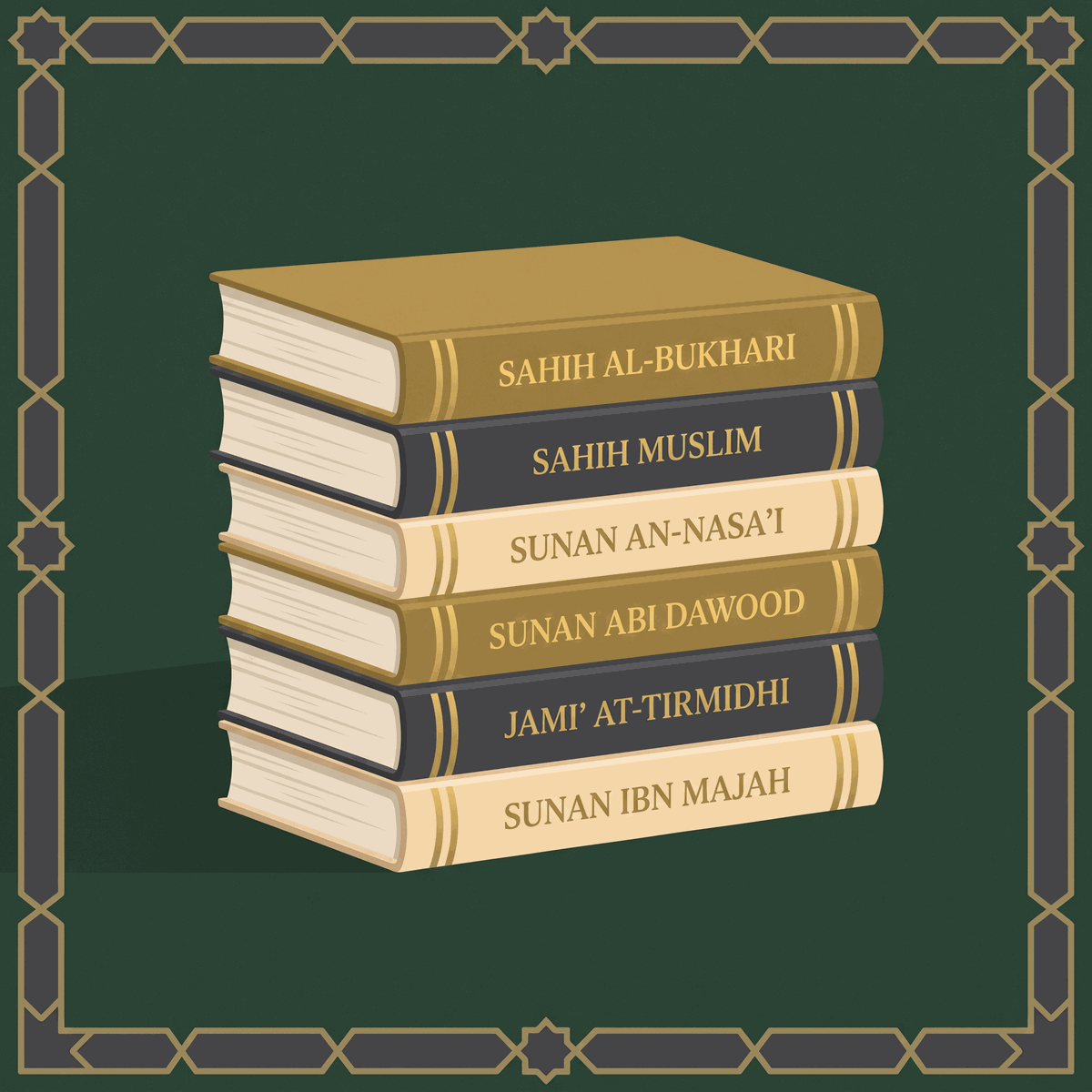
Have you ever wondered how the sayings, actions, and approvals of Prophet Muhammad ﷺ were preserved, verified, and organized for future generations? For Muslims seeking to follow the Sunnah in daily life, understanding the major hadith collections provides clarity and deep appreciation for Islamic sacred history. Among the rich ocean of Islamic literature, six primary compilations—known collectively as Al-Kutub al-Sittah (The Six Books)—stand as the cornerstone of Sunni hadith scholarship.
What Are the Six Canonical Books (Al-Kutub al-Sittah)?
The term Al-Kutub al-Sittah refers to the six major hadith compilations assembled during the golden age of hadith methodology in the third century of Islam (ninth century CE). These masterworks were compiled by dedicated traditionists who traveled thousands of miles across Hijaz, Iraq, Syria, Khurasan, and Egypt to collect, verify, and document the oral and written traditions of the Prophet.
For Sunni Muslims (Ahlus Sunnah wal Jamaah), these six works represent the primary references for understanding the Sunnah. The canon comprises two Sahih collections—works strictly devoted to authentic narrations—and four Sunan collections, which are organized according to legal themes such as ritual purity, prayer, business transactions, and family law.
While earlier foundational compilations such as Al-Muwatta by Imam Malik (d. 179 AH) and Musnad by Imam Ahmad ibn Hanbal (d. 241 AH) provided indispensable scholarship, the Six Books became the standard reference across all four Sunni schools of jurisprudence, including the Hanafi school. The Qur'an emphasizes the divine mandate to follow the Prophet's guidance: "Indeed, in the Messenger of Allah you have an excellent example for whoever has hope in Allah and the Last Day" (Qur'an, Al-Ahzab 33:21). The scholars who gathered these collections dedicated their lives to preserving that example with rigorous precision.
The Two Primary Authenticated Books: Sahih al-Bukhari and Sahih Muslim
Among the six compilations, two books enjoy unique preeminence due to their unmatched standards for verifying narrators and chains of transmission (isnad). Together, they are known as Al-Sahihayn (The Two Sahihs).
1. Sahih al-Bukhari
Compiled by Imam Muhammad ibn Ismail al-Bukhari (194–256 AH / 810–870 CE), this monument of Islamic scholarship is universally revered as the most authentic book after the Holy Qur'an. Imam al-Bukhari spent sixteen years examining over 600,000 narrations, carefully selecting approximately 7,275 hadiths (including thematic repetitions) that met his stringent conditions of narrator reliability and continuous transmission. His work is celebrated not only for authenticity but also for its insightful chapter headings (tarjamah), which demonstrate his jurisprudential acuity. For example, the famous tradition on sincere intention opens his book: "Actions are judged by intentions, and every person will get what they intended" (Sahih al-Bukhari, Hadith 1).
2. Sahih Muslim
Compiled by Imam Muslim ibn al-Hajjaj (206–261 AH / 821–875 CE), a student of Imam al-Bukhari, Sahih Muslim contains approximately 7,500 narrations (including repetitions) chosen from hundreds of thousands of traditions. Scholars praise Imam Muslim for his exceptional organization: he placed all variant chains and text variations of a given hadith in a single section, making it straightforward to compare chains without splitting narrations across multiple chapters.
The Four Sunan Collections: Practical Guidance for Daily Life
While the Sahihayn prioritized stringent criteria for absolute authenticity, the authors of the four Sunan books focused on compiling narrations required by legal scholars (fuqaha) to derive rulings for worship, ethics, and civil life.
3. Sunan Abi Dawud
Compiled by Imam Abu Dawud al-Sijistani (202–275 AH / 817–889 CE), this collection contains 5,274 hadiths focused primarily on legal jurisprudence (fiqh). Imam Abu Dawud arranged his book specifically to assist jurists in finding textual evidence for practical rulings. Scholars across the Hanafi, Maliki, Shafi'i, and Hanbali schools rely heavily on Sunan Abi Dawud when examining legal precedents.
4. Jami' at-Tirmidhi
Compiled by Imam Abu 'Isa at-Tirmidhi (209–279 AH / 824–892 CE), this collection is renowned for its analytical approach. Imam at-Tirmidhi was the first scholar to systematically categorize hadith gradings into sahih (authentic), hasan (good), and da'if (weak). Furthermore, he recorded the positions of early jurists following each tradition, turning his book into an invaluable comparative legal resource.
5. Sunan an-Nasa'i (Al-Mujtaba)
Compiled by Imam Ahmad ibn Shu'ayb an-Nasa'i (215–303 AH / 829–915 CE), this collection features the strictest narrator evaluation among the four Sunan works. Imam an-Nasa'i focused meticulously on acts of daily worship (ibadah), personal character, and spiritual refinement.
6. Sunan Ibn Majah
Compiled by Imam Ibn Majah al-Qazwini (209–273 AH / 824–887 CE), this work contains over 4,300 hadiths organized into 37 books. It is widely admired for its logical chapter structure and for preserving unique traditions (zawa'id) not recorded in the other five collections.
How Scholars Utilized the Six Books
It is essential for believers to understand that the Six Books served as comprehensive repositories of recorded prophetic traditions rather than self-service legal manuals. Scholars of the Hanafi and other Sunni schools evaluated hadiths through a systematic legal methodology (usul al-fiqh), contextualizing narrations alongside Quranic principles and the practice of the Prophet's Companions.
As Allah instructs in the Qur'an: "So ask the people of knowledge if you do not know" (Qur'an, An-Nahl 16:43). Reading hadith collections under the guidance of qualified local scholars (ulema) ensures that believers gain a deep, accurate, and balanced understanding of the Sunnah.
Understanding the history and structure of Al-Kutub al-Sittah connects us directly to the preserved legacy of Allah's Messenger ﷺ. These six collections remain a beacon of guidance, reflecting the devotion of generations of scholars who guarded the prophetic teachings for the ummah.
Frequently Asked Questions
Are all narrations in the Six Books completely authentic?
No. While Sahih al-Bukhari and Sahih Muslim contain exclusively authentic (sahih) hadiths, the four Sunan books (Abi Dawud, at-Tirmidhi, an-Nasa'i, and Ibn Majah) include authentic (sahih), good (hasan), and occasionally weak (da'if) narrations. The authors included these narrations alongside scholarly commentary to assist legal experts in analyzing evidence.
Why is Imam Malik's Al-Muwatta not included in the Six Books?
Imam Malik's Al-Muwatta was compiled earlier in the second century of Islam and combines prophetic hadiths with the living practice (amal) of Madinah. Although deeply revered and highly authoritative, later scholars formalized the list of Al-Kutub al-Sittah to emphasize third-century thematic compilations. Historically, some scholars included Al-Muwatta in place of Sunan Ibn Majah.
How should a beginner start studying hadith?
Beginners are encouraged to start with curated compilations that focus on foundational principles and daily ethics, such as Imam an-Nawawi's Forty Hadith or Riyad as-Saliheen. Studying these texts with a qualified teacher ensures correct context, application, and understanding.
Sources
- https://en.wikipedia.org/wiki/Kutub_al-Sittah
- Sahih al-Bukhari (Translated by M. Muhsin Khan)
- Sahih Muslim (Translated by Abdul Hamid Siddiqui)
- An Introduction to the Science of Hadith (Suhaib Hasan)
- https://iokseminary.neolms.com/visitor_catalog_class/show/882524/The-%E1%B8%A4ad%C4%ABth-Canon-Its-Compilers-and-their-Methodology