
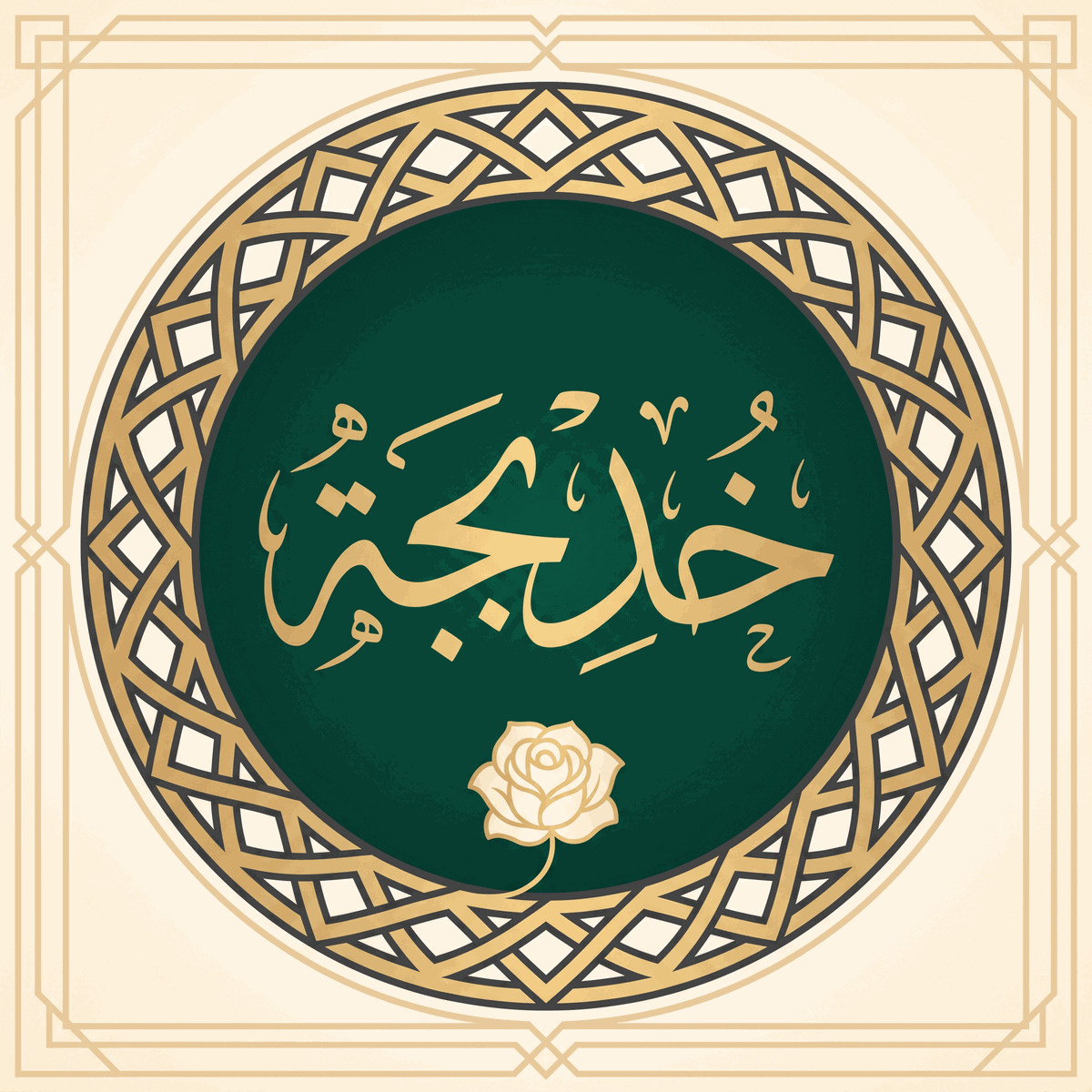
Who was Khadijah bint Khuwaylid (RA), and why does her legacy hold such a foundational place in Islamic history? As the first person to embrace Islam, the beloved wife of Prophet Muhammad ﷺ, and a revered businesswoman of Makkah, her life exemplifies spiritual strength, wisdom, and selfless sacrifice. Understanding her story reveals how faith, character, and devotion can transform the trajectory of human history.
Early Life and Noble Character in Makkah
Khadijah bint Khuwaylid (RA) was born into the prominent Banu Asad clan of the Quraysh tribe in Makkah. Long before the dawn of Islam, she was widely respected throughout the Arabian Peninsula for her exceptional virtue, dignity, and intellect. In a society where women often faced severe social disadvantages, she earned the honorable title At-Tahirah, meaning "The Pure One," due to her exemplary moral conduct.
She was also an extraordinarily successful independent businesswoman. Having inherited trade assets from her father, Khuwaylid ibn Asad, she expanded the enterprise into one of the most prominent merchant operations in Makkah. She employed trade managers to conduct merchant caravans to Syria and Yemen, insisting on strict standards of honesty, fairness, and excellence in all commercial dealings.
Her business acumen led her to hear about a young man in Makkah known for his unmatched integrity and truthfulness: Muhammad ibn Abdullah. She hired him to lead a commercial caravan to Syria, sending her trusted assistant Maysarah along. Upon their return, Maysarah reported not only remarkable financial success but also the extraordinary honesty, modesty, and noble character of Muhammad. Deeply impressed by his virtues, Khadijah (RA) realized that his moral excellence set him apart from all other men of Makkah.
Marriage to Prophet Muhammad ﷺ
Recognizing his unique character, Khadijah (RA) sent her close friend, Nafisah bint Umayyah, to convey a proposal of marriage. Muhammad ﷺ accepted, and their marriage was celebrated with the blessing of both families. At the time of their marriage, historical reports state that Prophet Muhammad ﷺ was twenty-five years old, while historians note that Khadijah (RA) was around forty years old, though some classical biographical accounts suggest she may have been younger.
Their union proved to be a sanctuary of peace, deep love, and mutual respect. For over twenty-four years, they shared a profound bond that remained unbroken until her passing. During her lifetime, Prophet Muhammad ﷺ did not take any other wives, dedicating himself entirely to her and their family.
Allah blessed their marriage with six children: two sons, Al-Qasim and Abdullah (both of whom passed away in early childhood), and four daughters: Zaynab, Ruqayyah, Umm Kulthum, and Fatimah (RA). Their home was renowned for its warmth, generosity, and hospitality, serving as a sanctuary for the needy and a beacon of upright conduct in pre-Islamic Makkah.
The First Believer and Unwavering Pillar of Islam
When Prophet Muhammad ﷺ received the first divine revelation in the Cave of Hira, he was deeply overwhelmed by the experience. Returning home with a trembling heart, he sought solace with Khadijah (RA), asking her to cover him with blankets. In that pivotal moment, Khadijah (RA) provided the calm wisdom and unwavering reassurance that saved him from despair.
She spoke words that remain immortalized in Islamic tradition: "Never! By Allah, Allah will never disgrace you. You maintain family ties, carry the burden of the weak, give to the needy, honor guests, and assist those afflicted by hardship" (Sahih al-Bukhari, Hadith 3). She immediately took him to her elderly cousin, Waraqah ibn Nawfal, a scholar learned in earlier scriptures, who confirmed that the angel Jibril (AS) had visited him just as he had visited Musa (AS).
Khadijah (RA) accepted Islam immediately, becoming the very first person—man or woman—to declare belief in Allah and His Messenger ﷺ. She did not hesitate, request signs, or express doubt. Her immediate affirmation provided Prophet Muhammad ﷺ with indispensable emotional and spiritual backing at the dawn of his prophetic mission.
Sacrifice, Boycott, and Heavenly Honors
As the early Muslim community faced intense persecution from the leaders of Makkah, Khadijah (RA) placed her vast financial fortune entirely at the service of Islam. She funded the relief of persecuted believers, helped buy freedom for enslaved converts, and sustained the growing community. When the Quraysh imposed a brutal three-year social and economic boycott against Banu Hashim, forcing the Muslims into the barren valley of Shi'b Abi Talib, Khadijah (RA) chose to share in their suffering.
Despite her advanced age and former wealth, she endured severe food shortages and extreme heat alongside her husband and fellow believers. The hardships of the boycott severely weakened her health. Shortly after the blockade was lifted, in the tenth year of Prophethood, Khadijah (RA) passed away. Her death, occurring in the same year as the Prophet’s protective uncle Abu Talib, left Prophet Muhammad ﷺ in deep sorrow, leading scholars to refer to this period as Am al-Huzn (the Year of Sorrow).
Her unmatched devotion earned her unique tidings directly from the Divine. The Prophet ﷺ related that the angel Jibril (AS) once visited him and said: "O Messenger of Allah, here is Khadijah coming with a vessel of food or drink. When she reaches you, convey to her peace (Salam) from her Lord and from me, and give her glad tidings of a palace in Paradise made of hollowed pearls, wherein there is no noise or fatigue" (Sahih al-Bukhari, Hadith 3820).
Years after her passing, Prophet Muhammad ﷺ continued to honor her memory, often praising her generosity and sending gifts to her former friends. When asked about his enduring love for her, he replied: "She believed in me when people disbelieved, she affirmed my truth when people rejected me, she shared her wealth with me when people deprived me, and Allah granted me children through her" (Musnad Ahmad, Hadith 24864).
Legacy: An Enduring Model for Every Generation
Sayyidatina Khadijah al-Kubra (RA) remains an eternal icon of righteousness, intellect, and courage for all Muslims. The Prophet ﷺ described her as one of the greatest women in human history, stating: "The best of women in her lifetime was Maryam, daughter of Imran, and the best of women in her lifetime was Khadijah, daughter of Khuwaylid" (Sahih al-Bukhari, Hadith 3815).
Her legacy as Umm al-Mu'minin (Mother of the Believers) offers timeless lessons:
- Moral Integrity in Business: She demonstrated that economic success and professional ambition can exist in full harmony with piety, ethics, and social responsibility.
- Supportive Companionship: She modeled how unconditional trust, emotional warmth, and wisdom can sustain loved ones through their greatest trials.
- Uncompromising Faith: She showed that true faith manifests in active sacrifice, standing firmly for truth regardless of personal cost.
For Muslims across the globe and within our vibrant community in Mauritius, Khadijah (RA) shines as a timeless exemplar of faith, dignity, and leadership. Her life stands as a testament that true greatness lies in dedicating one's gifts, fortune, and heart to the service of Allah and His Messenger ﷺ.
Sources
- Sahih al-Bukhari, Hadith 3
- Sahih al-Bukhari, Hadith 3815
- Sahih al-Bukhari, Hadith 3820
- Musnad Ahmad, Hadith 24864
- https://sunnah.com/bukhari:3815
- https://sunnah.com/bukhari:3