
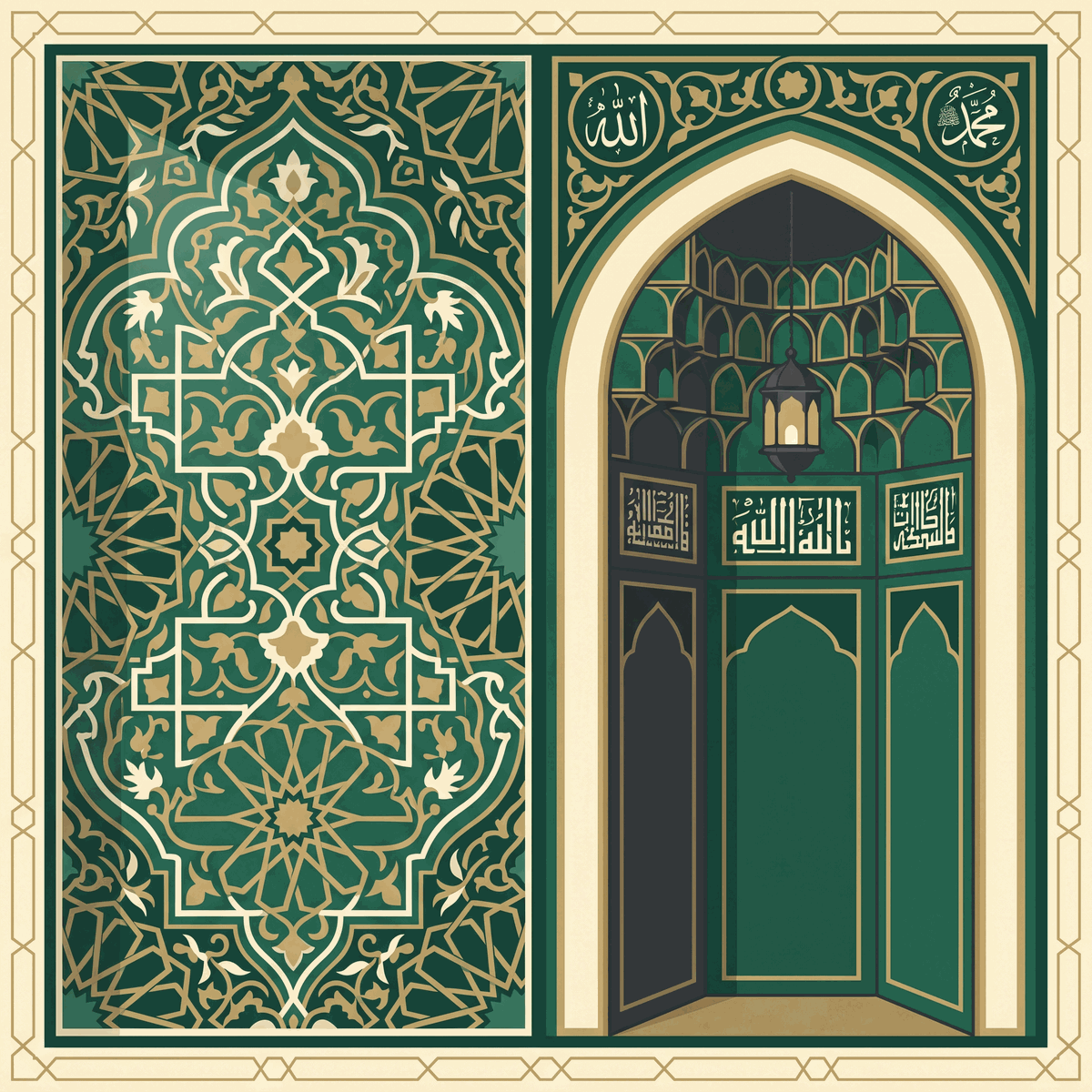
When walking through the streets of Port Louis, Phoenix, or Rose Hill, Muslims and visitors alike often admire the distinctive beauty of Mauritius' local masjids. Have you ever wondered how these sacred spaces balance centuries of global Islamic artistic traditions with our island's unique tropical environment and colonial history? Understanding the architecture of Mauritian mosques offers a fascinating window into our heritage, spiritual devotion, and artistic ingenuity.
A Historic Blend: Indo-Islamic, Moorish, and Creole Traditions
The history of Islamic architecture in Mauritius is deeply tied to the arrival of Muslim traders, sailors, and laborers during the 18th and 19th centuries. The earliest established place of worship, the Camp des Lascars Mosque (now known as Al-Aqsa Mosque in Plaine Verte, Port Louis), was founded around 1805 by Indian Muslim mariners. As South Asian Muslim merchants from Gujarat, Surat, and Kutch settled on the island throughout the 1800s, they brought rich artistic influences inspired by Mughal court architecture and Western Indian Islamic craft.
When these master builders and local artisans constructed mosques like the grand Jummah Mosque in Port Louis, they created a unique fusion. They combined Mughal onion domes and Moorish horseshoe arches with local Creole building techniques. Thick volcanic basalt foundations were laid to withstand severe tropical cyclones, while wide open verandas and louvered wooden windows were designed to allow cross-breezes during hot summer months.
This harmonious blending shows how early Mauritian Muslims preserved their cultural identity while adapting gracefully to their new island home. The result is a distinct regional aesthetic that feels both internationally authentic and unmistakably Mauritian.
Iconic Features: Domes, Minarets, and Horseshoe Arches
Every element in classical Islamic architecture serves both a functional and a symbolic purpose, and Mauritian mosques are no exception. The most visible features on our island skyline are the domes and minarets that top local masjids.
Domes represent the vastness of the heavens and the overarching unity of Allah's creation (Tawhid). In prominent Mauritian mosques, domes are often scalloped or onion-shaped, finished in bright white or soft green plaster that reflects the tropical sun. Directly beneath the dome, the acoustics of the main prayer hall are amplified, allowing the imam's voice to resonate smoothly throughout the sanctuary without complex sound systems.
Minarets, the tall towers soaring above mosque roofs, historically served as elevated platforms from which the muezzin called believers to prayer (adhan). Today, they stand as elegant vertical anchors that give neighborhoods their visual identity. Surrounding these towers and framing main entryways are horseshoe and multifoil arches, an artistic signature borrowed from Andalusian and North African Moorish design. These arches create a sense of transition, inviting worshippers to leave the noisy outer world behind and step into a peaceful, sacred space.
As Allah mentions in the Holy Qur'an: "In houses [of worship] which Allah has ordered to be raised and that His name be mentioned therein; exalting Him therein in the mornings and the evenings" (Qur'an, An-Nur 24:36).
Ornamental Masterpieces: Geometry, Calligraphy, and Tilework
In accordance with Sunni Islamic traditions, mosque decor avoids figurative representations of human or animal forms to preserve pure monotheism. Instead, Mauritian craftspeople and artisans focused their talents on intricate geometric patterns, floral motifs (arabesques), and sacred calligraphy.
Geometric art symbolises infinite order, balance, and divine perfection. In many Mauritian prayer halls, complex star polygons and interlocking patterns grace ceilings, carved wooden pulpits (minbar), and window grilles. Alongside geometry, Arabic calligraphy holds pride of place. Verses from the Holy Qur'an, the Shahada (declaration of faith), and the beautiful names of Allah (Asma-ul-Husna) are carefully sculpted or painted in styles such as Thuluth and Naskh.
These calligraphic panels often encircle the mihrab (the niche indicating the direction of the Qibla toward Makkah), reminding worshippers of Allah's guidance during daily prayers. Glazed ceramic tiles—frequently in cool tones of emerald green, azure blue, and crisp white—line the lower walls, offering both visual elegance and surface durability against tropical humidity. Polished marble and terrazzo flooring complete the interior, giving worshippers a cool, smooth surface for prostration (sujud).
Tropical Courtyards and the Harmony of Nature
One of the most delightful aspects of mosque architecture in Mauritius is the seamless integration of outdoor courtyards (sahn) into the worship environment. Because of our island's warm climate, central courtyards act as natural air shafts, drawing fresh air into adjoining prayer halls.
At the heart of these courtyards sits the wudhu (ablution) area. Fountains and running water pools provide a clean, soothing environment for worshippers to perform physical purification before standing before Allah in prayer. The sound of trickling water establishes a serene atmosphere that calms the mind before worship.
The most famous example of tropical integration is found in the main courtyard of the Jummah Mosque in Port Louis. Here, a magnificent Indian almond tree (badamier), planted in the 1850s, stretches its broad green canopy over the central stone courtyard. This living emblem of nature provides natural shade to hundreds of worshippers during Friday prayers (Jummah), perfectly demonstrating how Islamic architecture embraces the natural environment.
Building and maintaining these beautiful houses of Allah is a noble deed cherished by Muslims throughout history. The Prophet Muhammad (peace be upon him) said: "Whoever builds a mosque for Allah, Allah will build for him a house like it in Paradise" (Sahih al-Bukhari, Hadith 450).
Summary: A Heritage to Cherish and Preserve
Mauritius' mosques are far more than stone and mortar; they are vibrant sanctuaries of faith, community life, and artistic expression. By blending Indo-Islamic elegance, Moorish details, and tropical Creole practicality, our ancestors built enduring spaces where generations of Mauritian Muslims continue to gather in unity and devotion.
Frequently Asked Questions
What is the oldest mosque in Mauritius?
The oldest mosque in Mauritius is the Al-Aqsa Mosque located in Plaine Verte, Port Louis. Originally established as the Camp des Lascars Mosque around 1805 by Indian Muslim mariners, it laid the historic foundation for Islamic institutions on the island.
What architectural style is the Jummah Mosque in Port Louis?
The Jummah Mosque combines Indo-Islamic (Mughal), Moorish, and Indian regional styles with practical Creole colonial construction features, such as thick stone masonry and open verandas suited for tropical weather.
Why are green and white colors so common in Mauritian mosque architecture?
Green is traditionally associated with peace, life, and the gardens of Paradise in Islamic heritage, while white symbolizes purity and cleanliness. Practically, white surfaces also reflect strong tropical sunlight, keeping the building interior cooler.
Sources
- https://www.gpsmycity.com/attractions/jummah-mosque-33762.html
- https://www.lemauricien.com/le-mauricien/new-book-launching-the-history-of-the-lascar-muslims-of-plaine-verte-by-assad-bhuglah/452630/
- https://vintagemauritius.org/port-louis/port-louis-royal-street-jummah-mosque-1960s/
- Islamic Cultural Centre Mauritius Historical Records