
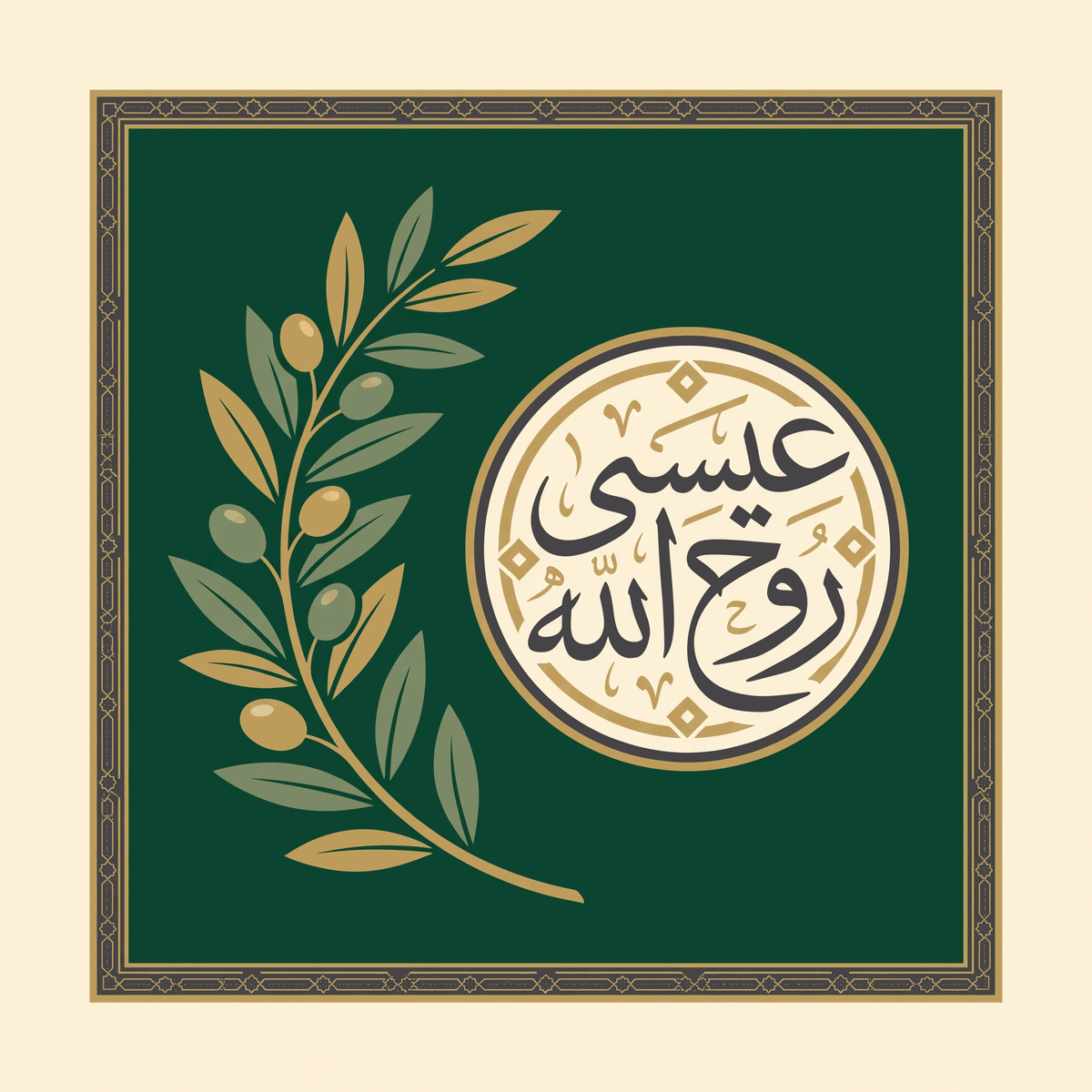
Many Muslims, especially when living in a multi-faith country like Mauritius, are asked by Christian neighbours, co-workers, or friends what Islam teaches about Jesus (peace be upon him). Non-Muslims are often surprised to learn that Jesus—known in Arabic as Prophet Isa al-Masih (peace be upon him)—holds a deeply revered and mandatory place in Islamic faith. A person cannot be a Muslim without believing in Isa (AS) as a noble messenger of God.
Understanding who Prophet Isa (AS) is in mainstream Sunni Islam (Ahlus Sunnah wal Jamaah) opens the door to fruitful, warm conversations with our neighbours. It provides clarity on shared historical roots while honoring the distinctive monotheistic creed (Tawhid) that defines Islamic theology.
Prophet Isa (AS) in the Qur'an: Miraculous Birth and High Honor
Prophet Isa (AS) is mentioned by name 25 times in the Qur'an, far more frequently than many other messengers. In addition, his holy mother Maryam (Mary, peace be upon her) is the only woman mentioned by name in the Qur'an, having an entire chapter named in her honor (Surah Maryam).
Islamic belief upholds the miraculous virgin birth of Isa (AS) without a human father. Allah created Isa (AS) through His divine command, just as He created the first human being, Adam (AS), without father or mother. The Qur'an states:
"Indeed, the example of Jesus to Allah is like that of Adam. He created him from dust; then He said to him, 'Be,' and he was." (Qur'an, Ali 'Imran 3:59)
When Maryam (AS) was questioned by her people regarding her newborn baby, Allah granted Isa (AS) the miracle of speaking from the cradle to defend his mother's purity and proclaim his divine mission:
"He [Jesus] said, 'Indeed, I am the servant of Allah. He has given me the Scripture and made me a prophet.'" (Qur'an, Maryam 19:30)
In the Qur'an, Isa (AS) is given noble titles including Al-Masih (the Messiah), Ayatullah (a Sign of Allah), and Ruhun Minhu (a Spirit from Him). Scholars of Sunni commentary (tafsir) explain that calling Isa a "Spirit from Allah" is an expression of honor and creation, similar to calling the Ka'bah the "House of Allah," rather than an indication of divine nature.
The Miracles and Divine Message of Isa (AS)
Throughout his ministry to the Children of Israel (Bani Isra'il), Prophet Isa (AS) was blessed with magnificent miracles. Sunni Islam teaches that all miracles (mu'jizāt) performed by prophets occur solely by the permission and power of Allah (bi-idhnillah).
By Allah's permission, Isa (AS) spoke in infancy, fashioned birds out of clay and breathed life into them, healed the blind and the leper, brought the dead back to life, and revealed what people hid inside their homes (Qur'an, Al-Ma'idah 5:110). These signs served to authenticate his prophethood.
His core message was identical to that of all preceding prophets: pure monotheism (Tawhid). He called his people to worship the One Creator without partners and confirmed the Torah (Tawrat) revealed before him, while bringing the Gospel (Injeel) as guidance and light.
As recorded in the Qur'an, Isa (AS) proclaimed:
"Indeed, Allah is my Lord and your Lord, so worship Him. That is the straight path." (Qur'an, Ali 'Imran 3:51)
Core Differences and Points of Respectful Alignment
When engaging in interfaith discussions, it is helpful to appreciate both our common ground with Christians and our essential theological differences.
Points of Alignment
- High reverence for Jesus (AS) and Maryam (AS).
- Affirmation of the virgin birth and miraculous works.
- Belief in his ascension and his return before the Day of Judgment.
Essential Theological Distinctions
-
Servant, Not Divine: Islam strictly rejects the doctrine of the Trinity and the divine sonship of Jesus. Isa (AS) is a created human being and an elite messenger (Ulul 'Azm), not God or the Son of God.
"O People of the Scripture, do not exceed limits in your religion... The Messiah, Jesus, the son of Mary, was but a messenger of Allah..." (Qur'an, An-Nisa 4:171)
-
Saved from Crucifixion: In Islamic belief, Allah spared Isa (AS) from the humiliation and execution intended by his enemies. Another person was made to resemble him, while Allah raised Isa (AS) bodily to the heavens.
"And they did not kill him, nor did they crucify him; but [another] was made to resemble him to them... Rather, Allah raised him to Himself." (Qur'an, An-Nisa 4:157-158)
The Return of Isa (AS) in Sunni Creed
A fundamental belief in mainstream Sunni orthodoxy (Ahlus Sunnah) is the physical descent of Prophet Isa (AS) near the End of Times. This event is counted among the major signs of the Final Hour (Ashrat as-Sa'ah).
When Isa (AS) returns, he will not establish a new law or scripture. Instead, he will rule as a follower of the final revelation sent to Prophet Muhammad (peace and blessings be upon him). He will restore justice, break the cross, defeat the False Messiah (Ad-Dajjal), and usher in an era of peace, abundance, and unified faith.
Prophet Muhammad (peace and blessings be upon him) said:
"By Him in Whose Hand my soul is, surely the son of Maryam will soon descend among you as a just judge..." (Sahih al-Bukhari, Hadith 3448)
After fulfilling his earthly mission, Isa (AS) will complete a natural life, pass away, and be buried alongside Prophet Muhammad (peace and blessings be upon him) in Medina, awaiting the Day of Resurrection.
Sharing Islamic Beliefs Respectfully in Mauritius
In Mauritius, where Muslims live peacefully alongside Christian, Hindu, and Sino-Mauritian neighbors in towns like Port Louis, Rose Hill, Quatre Bornes, Curepipe, and Vacoas, discussions about faith occur naturally in daily life. Whether chatting with colleagues over tea or speaking with neighbors during festival seasons, explaining Islam's love for Prophet Isa (AS) is a powerful bridge-builder.
When sharing these beliefs, Muslims are instructed by the Qur'an to maintain grace, warm manners, and wisdom:
"And do not argue with the People of the Scripture except in a way that is best..." (Qur'an, Al-Ankabut 29:46)
By highlighting our deep love for Prophet Isa (AS) as a holy messenger while humbly clarifying our commitment to Tawhid, we foster mutual understanding and reflect the beautiful character taught by Islam.
Understanding Prophet Isa (AS) deepens our appreciation of Islamic history and connects us to the unified chain of divine guidance. By honoring him as a messenger of peace, mercy, and monotheism, Muslims uphold a essential pillar of faith while nurturing peaceful relations across our island nation.
FAQ: Common Questions About Jesus in Islam
Do Muslims believe Jesus was a Christian?
No. In Islam, all prophets—including Ibrahim, Musa, Isa, and Muhammad (peace be upon them all)—taught submission to the One God, which is the literal definition of the Arabic word Islam. Isa (AS) was a devout monotheistic prophet sent to the Children of Israel.
Is the Gospel (Injeel) mentioned in the Qur'an the same as the modern New Testament?
Islam teaches that the original Injeel was the divine revelation given directly to Prophet Isa (AS). While the modern New Testament contains historical accounts and teachings attributed to Jesus and his followers, Muslims believe the original divine book revealed to Isa (AS) was separate and preserved in essence within the Qur'anic message.
Can a Muslim show disrespect toward Isa (AS)?
No. Disrespecting Prophet Isa (AS) or denying his prophethood removes a person from the fold of Islam. Loving and honoring Isa (AS) as a noble messenger of Allah is an indispensable requirement of Islamic belief.
Sources
- Qur'an (Surah Ali 'Imran 3:59, Surah Maryam 19:30, Surah An-Nisa 4:157-171)
- Sahih al-Bukhari (Hadith 3448)
- https://seekersguidance.org/answers/islamic-belief/what-do-muslims-believe-about-jesus/