
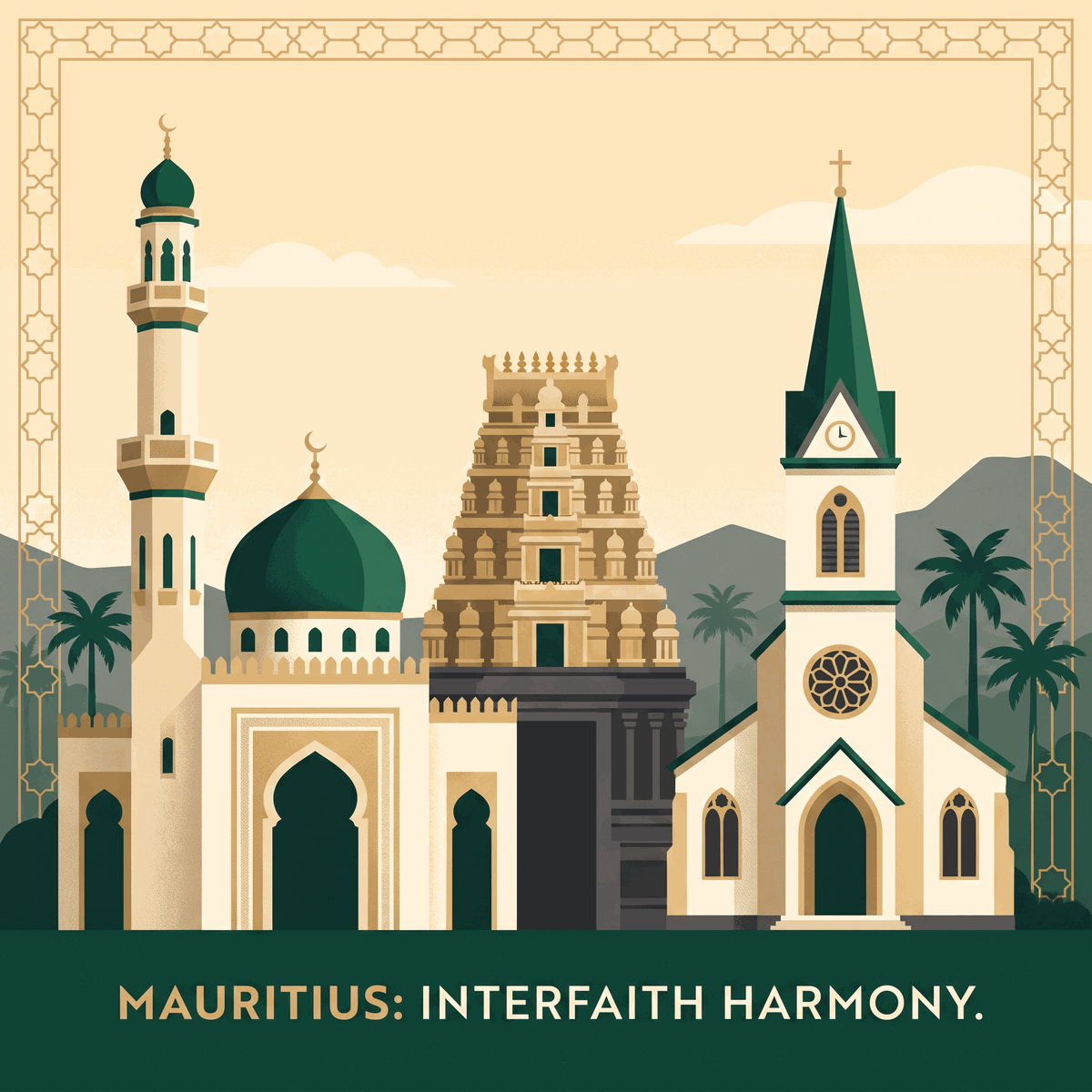
How do Mauritian Muslims live peacefully and respectfully alongside neighbours of different faiths while keeping firm to their Islamic identity? In a vibrant island nation where mosques, temples, and churches often stand on the same streets, understanding the Islamic principles that foster interfaith harmony is essential for everyday life. By turning to the Qur'an and the Sunnah of Prophet Muhammad ﷺ, Mauritian Muslims find clear guidance on building compassionate, fair, and constructive relationships with all fellow citizens.
A Unique Tapestry of Faiths in the Indian Ocean
Mauritius is widely recognized across the globe as a model of multi-religious harmony. Home to vibrant Hindu, Christian, Muslim, and Chinese communities, the island nation thrives on mutual respect and shared civic life. Rather than living in isolation, Mauritians of diverse backgrounds work side by side in workplaces, attend the same schools, and participate together in public life.
This religious diversity is officially recognized through national public holidays that honor major religious observances across different traditions. Celebrations such as Eid ul-Fitr, Maha Shivaratri, Christmas, Thaipoosam Cavadee, Diwali, and the Chinese Spring Festival reflect the multi-faith character of Mauritian society. For Muslims living in Mauritius, this pluralistic environment provides a daily opportunity to display the beauty of Islamic manners (akhlaq) through kindness, honesty, and civic responsibility.
Quranic Foundations for Peaceful Coexistence
Islamic teachings emphasize that living in harmony with people of other faiths is not merely a social convenience, but a spiritual duty rooted in divine revelation. Allah Almighty reminds humanity that cultural and religious diversity is part of the divine design, intended to foster mutual understanding rather than division or conflict. As the Qur'an states: "O humanity! Indeed, We created you from a male and a female, and made you into peoples and tribes so that you may know one another" (Qur'an, Al-Hujurat 49:13).
Furthermore, the Qur'an provides explicit guidance regarding treatment toward non-Muslim neighbours who live peacefully alongside believers. Allah commands fairness, generosity, and goodwill toward all peaceful members of society: "Allah does not forbid you from being good and just to those who have not fought you because of religion and have not expelled you from your homes. Indeed, Allah loves those who act justly" (Qur'an, Al-Mumtahanah 60:8). This divine command serves as the cornerstone of interfaith relations for Muslims in Mauritius.
Prophetic Guidance on Fulfilling Neighborly Rights
The Sunnah of Prophet Muhammad ﷺ offers concrete examples of how believers should treat non-Muslim neighbours and community members. Throughout his life in Madinah, the Prophet ﷺ maintained diplomatic relations, engaged in fair commercial trade, and established covenants protecting the rights of non-Muslim citizens. He emphasized that the rights of neighbours are sacred, regardless of their religious affiliation.
In a well-known teaching, the Prophet ﷺ emphasized the rights of neighbours so strongly that his companions thought neighbours would be given inheritance rights: "Jibril kept advising me to treat the neighbour kindly until I thought he would assign him a share of inheritance" (Sahih al-Bukhari, Hadith 6014). Classical scholars, including those of the Hanafi school, affirm that this command applies to all neighbours, whether Muslim or non-Muslim. Additionally, the Prophet ﷺ strictly prohibited mistreating non-Muslim citizens under peaceful agreements, warning: "Beware! Whoever oppresses a non-Muslim citizen, or curtails his rights, or burdens him beyond his capacity, or takes something from him without his consent, I will be his adversary on the Day of Resurrection" (Sunan Abi Dawud, Hadith 3052).
Practical Harmony in Everyday Mauritian Life
In the day-to-day life of Mauritius, these Islamic values express themselves through warm neighbourly interactions and civic cooperation. During Eid ul-Fitr, it is a longstanding customary practice for Mauritian Muslim families to share festive dishes such as biryani and traditional sweet treats with their non-Muslim neighbours, colleagues, and friends. Similarly, Muslims show courtesy and respect toward their neighbours during major celebrations of other communities.
Mauritian Muslims also engage in formal interfaith initiatives through platforms like the Council of Religions in Mauritius, where representatives from different faiths meet to address common social challenges, promote national unity, and prevent misunderstandings. In local workplaces, street markets, and community associations, Muslims are encouraged to reflect the teachings of Islam by demonstrating integrity in business, helping those in need, and speaking with gentle speech. Fulfilling one's obligations as a good citizen and a reliable neighbour is one of the most effective ways to represent Islam authentically.
Frequently Asked Questions
How does Islam view non-Muslim neighbours and fellow citizens?
Islam views non-Muslim neighbours with respect, dignity, and compassion. Muslim scripture and prophetic traditions command believers to treat all peaceful neighbours fairly, honor their rights, protect their safety, and offer assistance in times of need (Qur'an, Al-Mumtahanah 60:8).
Is it permissible in Islam to share food and gifts with non-Muslim neighbours in Mauritius?
Yes, sharing food, sweets, and gifts with non-Muslim neighbours—especially during festive times or occasions of personal joy—is permitted and recommended as a gesture of goodwill, kindness, and building positive community bonds, provided the food itself is halal.
How can Mauritian Muslims contribute positively to interfaith harmony while preserving their faith?
Mauritian Muslims can promote harmony by displaying excellent character (akhlaq), practicing honesty in daily dealings, engaging in community service, and participating respectfully in national civic life while holding firmly to their Islamic beliefs and religious obligations.
A Lasting Commitment to Peace and Brotherhood
Living as part of Mauritius's multi-faith family is both a blessing and a responsibility for the Muslim community. By anchoring daily interactions in the wisdom of the Qur'an and Sunnah, Mauritian Muslims can continue to nurture peaceful coexistence, contribute to the nation's social stability, and showcase the true, compassionate spirit of Islam to all.
Sources
- Qur'an (Surah Al-Mumtahanah 60:8)
- Qur'an (Surah Al-Hujurat 49:13)
- Sahih al-Bukhari, Hadith 6014
- Sunan Abi Dawud, Hadith 3052
- https://www.uri.org/who-we-are/cooperation-circle/council-religions-mauritius