
In the vibrant cultural landscape of Mauritius—where temple bells, cathedral chimes, and the Muslim call to prayer sound across towns and coastal villages alike—it is entirely natural to feel curious about the spiritual lives of your neighbors. For someone outside the Islamic faith, stepping into a mosque (masjid, the Arabic word for a place of worship, literally meaning "a place of prostration") for the first time can feel a little intimidating. This hesitation rarely comes from fear, but rather from a genuine desire to be respectful and avoid making an accidental social or religious misstep. Whether you have walked past the historic Jummah Mosque in Port Louis and wondered what the interior looks like, or you simply wish to ask a direct question to better understand a Muslim coworker, neighbor, or classmate, you are far from alone. In Mauritius, where interfaith harmony, shared celebrations, and mutual warmth are deeply woven into everyday life, mosques and Muslim community members generally welcome polite, curious visitors. This practical guide walks you through mosque etiquette, optimal visiting times, and low-pressure ways to ask questions so that your experience is comfortable, enlightening, and warm.
Welcoming Guests: Understanding the Purpose of the Mosque
To feel completely at ease when approaching a mosque, it helps to understand what the building represents to the local Muslim community. In Islam, a mosque is primarily a sanctuary set aside for the worship of God (Allah, which is simply the standard Arabic word for the One God, used by Arabic-speaking Christians and Muslims alike). The Quran highlights these places of worship as elevated spaces of spiritual light, stating: "In houses [of worship] which Allah has ordered to be raised and that His name be mentioned therein; exalting Him therein in the mornings and the evenings" (Quran 24:36). Beyond serving as a house of prayer, a mosque functions as a gathering place for learning, community welfare, and hospitality.
The Islamic tradition places a strong emphasis on welcoming guests with warmth and generosity. The Prophet Muhammad (peace be upon him) taught his followers: "Whoever believes in God and the Last Day should honor his guest" (Sahih al-Bukhari 6135). In Mauritius, this hospitality reflects both religious mandate and island culture. Just as a Hindu Kovil or Mandir, a Christian Church, or a Chinese Pagoda in Mauritius welcomes thoughtful visitors who approach with sincere respect, a mosque opens its doors to those seeking knowledge or genuine connection. Understanding that you are received as a guest rather than an intruder can help ease any initial hesitation.
When you enter a mosque, you will notice that the central area, known as the musalla (the main prayer hall), is usually an open carpeted space without pews, chairs, or imagery. This open design allows worshippers to stand side-by-side in straight rows during Salah (the five daily obligatory prayers) and bow down in humility together. There are no altars, statues, or icons inside, as Islamic theology strictly emphasizes the direct, unmediated worship of God alone. Recognizing this minimal, focused setting helps visitors appreciate the quiet serenity that characterizes a mosque's interior atmosphere.
Essential Mosque Etiquette: What to Expect and How to Prepare
Visiting a mosque does not require elaborate technical knowledge, but observing a few straightforward courtesies will ensure your visit is smooth and respectful. Think of mosque etiquette much like the natural considerations you would show when visiting a friend's home or attending a formal cultural ceremony in Mauritius—it centers on modesty, cleanliness, and gentle behavior.
1. Dress Modestly and Comfortably
Modesty is the primary dress code for entering any Islamic house of worship, applying to both men and women. The clothing should be clean, loose-fitting, and comfortable.
- For Men: Shirts should cover the shoulders and chest completely, and trousers should cover the knees at a minimum. Long pants and a short-sleeved or long-sleeved shirt are ideal. Sleeveless shirts, tank tops, or short shorts should be avoided.
- For Women: Clothing should cover the arms down to the wrists and the legs down to the ankles. Loose trousers, a full-length skirt, or a long dress are appropriate choices. Women are also generally asked to bring a light headscarf or shawl to cover their hair prior to entering the prayer sanctuary. This practice reflects the traditional reverence maintained inside sacred spaces across many world religions, similar to customs observed in traditional Hindu temples or historic Christian churches.
2. Remove Your Shoes Before Entering
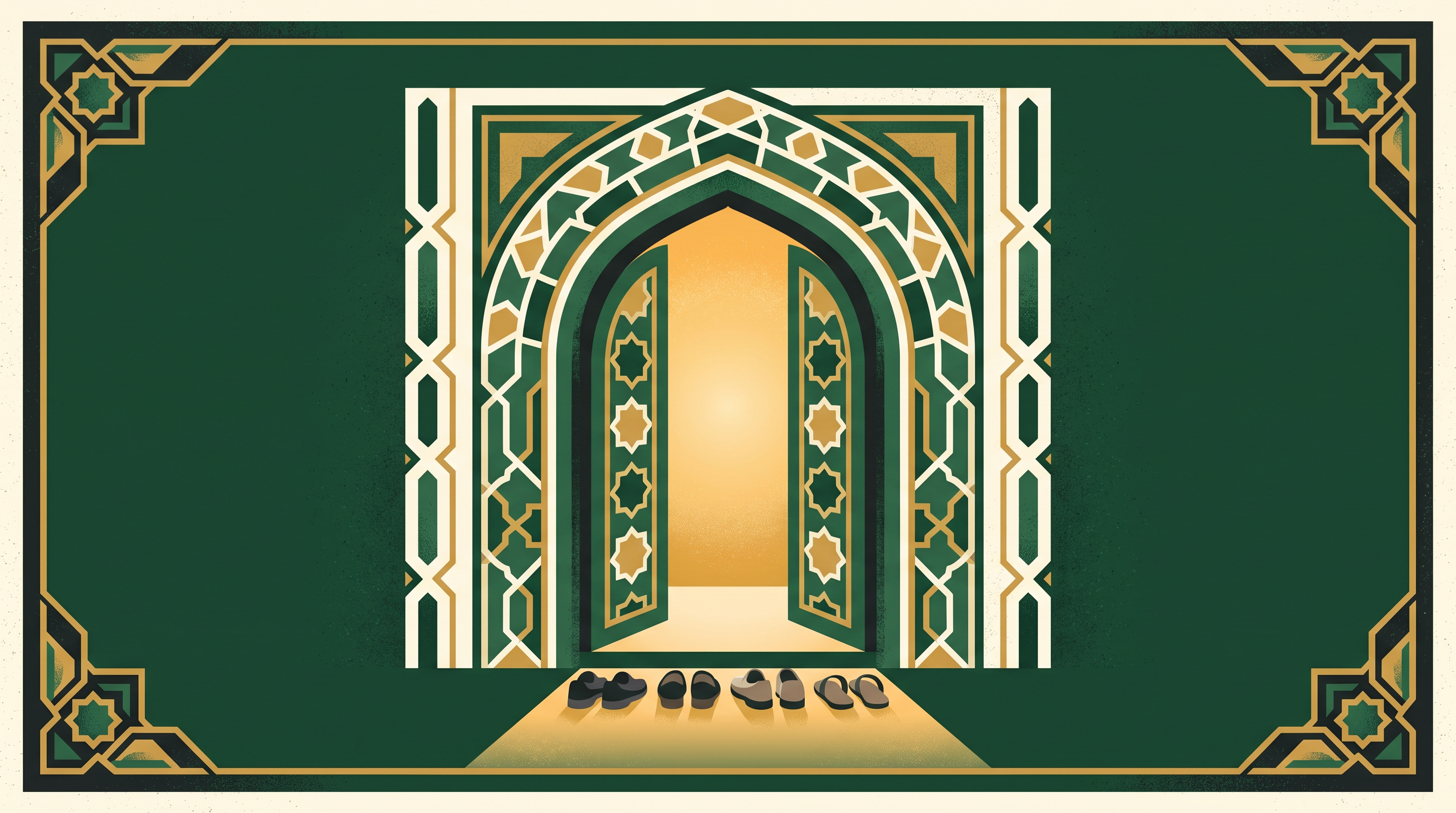
Before stepping onto the carpeted prayer floor of the musalla, all visitors and worshippers must remove their shoes. You will see dedicated shoe racks or shelves near the main entrance or entryway. Leaving your footwear outside the carpeted area is both a matter of physical cleanliness and spiritual tradition. Because Muslims place their foreheads directly onto the carpet during prayer after performing Wudu (a symbolic ritual washing of hands, face, arms, and feet), keeping the carpet free from outside dust and dirt is essential. You may walk barefoot or wear clean socks inside.
3. Seek Permission Courtesy First
Rather than simply walking deep into an unfamiliar building on your own, it is best practice to pause near the entrance or courtyard and speak with someone on site first. Look for a mosque administrator, caretaker, or the Imam (the community leader who leads prayers and offers guidance). A simple, friendly greeting such as, "Hello, I am a visitor interested in learning more—is it alright if I look inside?" goes a long way. The staff or attendees will gladly guide you to the appropriate entrance, explain where to leave your shoes, and point out designated areas for visitors.
4. General Behavior Inside
Inside the sanctuary, maintain a peaceful and calm demeanor:
- Keep Noise Levels Low: Speak in soft, conversational tones to maintain the calm, meditative atmosphere. Turn your mobile phone to silent mode before entering.
- Respect People at Prayer: If you see individuals engaged in personal or group prayer, avoid walking directly in front of them. In Islamic etiquette, a person praying is engaged in personal conversation with God; passing directly across their line of sight is considered disrespectful. Walk around or behind them instead.
- Ask Before Taking Photographs: While many historic mosques feature beautiful architecture, Arabic calligraphy, and woodwork, always ask for explicit permission before taking photographs. Never photograph individuals while they are praying or performing ritual washing without their clear consent.
Timing Your Visit for the Best Experience
Knowing when to visit a mosque can make a significant difference in how relaxed and informative your experience will be. Islamic prayer follows a daily rhythm divided into five specific time windows distributed from dawn until nightfall.
The five daily prayers (Salah) take place at specific intervals throughout the day:
- Fajr: Pre-dawn prayer before sunrise.
- Dhuhr: Early afternoon prayer, just after midday.
- Asr: Late afternoon prayer.
- Maghrib: Evening prayer, immediately after sunset.
- Isha: Nighttime prayer.
Each prayer session lasts roughly 15 to 30 minutes, during which local worshippers gather in rows behind the Imam.
The Best Windows for Visitors
The most ideal time for a casual visitor or student to drop by is in the quieter intervals between these official prayer windows. For example, mid-morning (between Fajr and Dhuhr) or late afternoon (between Asr and Maghrib) are typically peaceful times. During these hours, the mosque is quiet, caretakers or community members are available to chat without distraction, and you can walk through the space at a comfortable pace.
Navigating the Friday Congregational Prayer (Jumu'ah)
Every Friday around early afternoon, Muslims gather for Jumu'ah, the mandatory weekly congregational prayer that includes a sermon (Khutbah). In Mauritius, Friday lunchtimes see local mosques filled to capacity with workers, businessmen, students, and community members.
Because space is limited and attendees arrive specifically for the sermon and prayer, Friday early afternoon is generally not recommended for a casual first-time walk-in visit or for asking detailed questions. However, if you are explicitly invited by a Muslim friend or host to observe the Jumu'ah service, it can be a deeply moving cultural and spiritual experience. In that case, your host will ensure you arrive early, find a suitable seat toward the back or in a designated gallery, and guide you through the flow of the afternoon.
Low-Pressure Ways to Learn: Friends, Directory, and Contact
You do not necessarily have to step inside a physical building to ask questions about Islam. In fact, many of the most meaningful conversations take place over a cup of tea or during lunch at work. Here are three accessible, low-pressure ways to seek information and connect with the local Muslim community in Mauritius:
1. Talk to a Muslim Friend, Neighbor, or Colleague
Mauritian society thrives on open, friendly social interaction across lines of community. If you have a Muslim friend, neighbor, or colleague, asking them a direct, genuine question is often the easiest and warmest approach. Most Muslims are happy to share their personal experiences, explain daily practices, or answer questions about their faith when approached with sincere curiosity. You do not need complex terminology—simply asking, "Can you explain what happens during prayer?" or "What does Ramadan mean to your family?" is a great conversation starter.
2. Locate a Local Mosque via the Online Directory
If you do prefer to visit a mosque in person—whether it is an iconic landmark like the historic Jummah Mosque in Port Louis or a neighborhood mosque in Curepipe, Quatre Bornes, Rose Hill, Flacq, or Mahebourg—you can easily find location details through islam.mu's own interactive Mosque Directory. The directory provides addresses and information for local mosques across all districts of Mauritius, helping you identify a convenient place nearby.
3. Reach Out Online for Private Questions
If you feel hesitant to ask questions in person, or if you have specific, sensitive, or detailed inquiries about Islamic belief, ethics, or history, you can reach out online. Through islam.mu's dedicated Contact Page, you can submit your questions directly and confidentially. Local educators and community representatives respond with clear, thoughtful, non-judgmental information tailored to non-Muslim readers, allowing you to learn at your own pace without any pressure or obligation.
Building bridges of understanding in a multi-faith nation like Mauritius begins with small steps of honest curiosity. Whether you choose to read, ask a friend, write online, or step through the doors of a mosque, taking the time to learn about your neighbor's spiritual tradition enriches our shared community and strengthens the mutual respect that makes island life unique.
Frequently Asked Questions
Do I need to be a Muslim to visit a mosque in Mauritius?
No, you do not need to be a Muslim to visit a mosque in Mauritius. Non-Muslim visitors are welcome in the vast majority of mosques across the island, provided they observe basic guidelines regarding modest dress, shoe removal, and respectful behavior. Historic landmarks like the Jummah Mosque in Port Louis regularly welcome visitors from all cultural and religious backgrounds.
Can women visit mosques, and what specific rules apply to female visitors?
Yes, women can visit mosques. Female visitors should wear modest, loose-fitting clothing covering their arms to the wrists and legs to the ankles, and bring a headscarf or shawl to cover their hair before entering the prayer hall. Most larger mosques in Mauritius have designated visitor spaces or women's sections where visitors can comfortably observe or speak with community members.
What should I do if I don't know Arabic or Islamic terms when asking a question?
You do not need any knowledge of Arabic or specialized Islamic terminology to ask a question. Local Imams, caretakers, and Muslim community members in Mauritius speak Creole, French, and English fluently. Simply ask your question in everyday language; people will appreciate your genuine interest and explain concepts clearly without expecting prior background knowledge.
Sources
- The Noble Quran — English Translation of Surah An-Nur (24:36) regarding houses of worship: https://quran.com/an-nur/36
- Sahih al-Bukhari — Collection of Prophetic Traditions, Book of Good Manners (Hadith 6135 on hospitality to guests): https://sunnah.com/bukhari:6135
- Islamic Relief Worldwide — General Guide to Mosque Visitors and Etiquette: https://www.islamic-relief.org.uk/resources/islamic-vocabulary/mosque-etiquette/
- Jummah Mosque Mauritius — Historic Port Louis Landmark & Visitor Information: https://www.jummahmosque.org/