
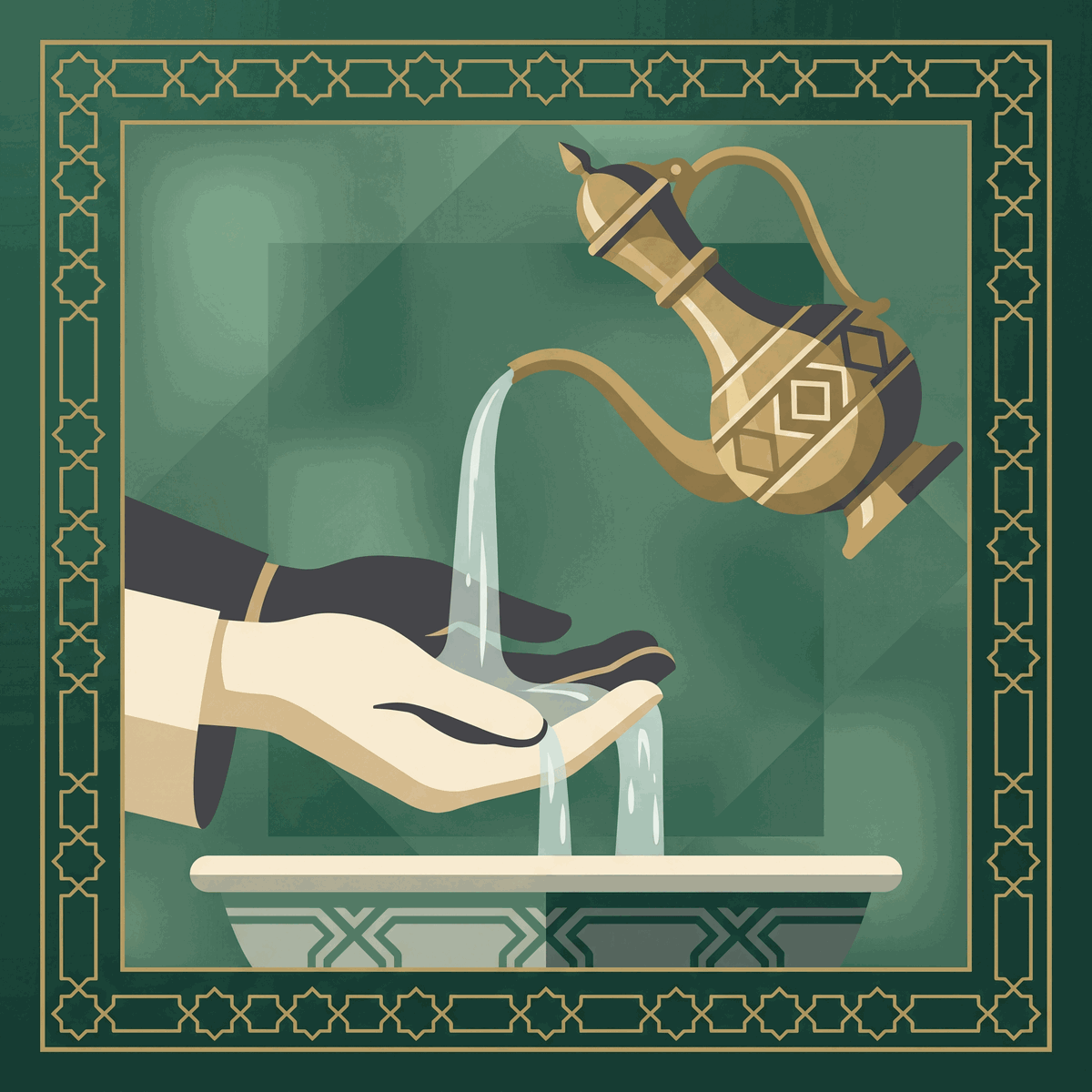
Whether preparing for Fajr before sunrise in Rose Hill or getting ready for Zuhr during a busy workday in Port Louis, performing wudu (ablution) is the spiritual gateway to every prayer. This sacred act purifies the body, washes away minor sins, and prepares the heart to stand before Allah subhanahu wa ta'ala. Learning how to perform wudu correctly—incorporating both its Quranic obligations and the beautiful Sunnah order—ensures your worship is valid, disciplined, and spiritually rewarding.
The Obligatory (Fard) Acts of Wudu in the Qur'an
The core obligation of wudu is established directly in the Holy Qur'an, where Allah subhanahu wa ta'ala outlines the essential steps required for ritual purity:
"O you who believe! When you stand up for prayer, wash your faces and your hands (and arms) to the elbows, wipe over your heads, and wash your feet to the ankles." (Qur'an, Al-Ma'idah 5:6)
From this verse, Islamic jurisprudence identifies four indispensable obligatory (fard) acts. In the Hanafi school of thought, which is widely followed across Muslim communities in Mauritius, fulfilling these four acts is mandatory for the validity of wudu:
- Washing the entire face once, from the top of the forehead to below the chin, and from earlobe to earlobe.
- Washing both forearms up to and including the elbows once.
- Wiping at least one-quarter of the head with wet hands (masah).
- Washing both feet up to and including the ankles once.
If any of these four acts is omitted or incomplete, the wudu is invalid. Other Sunni schools of jurisprudence—such as the Shafi'i, Maliki, and Hanbali madhhabs—also consider formulating the intention (niyyah) and performing the steps in sequence (tartib) or without long delay (muwalat) as obligatory requirements. However, according to all mainstream Sunni scholars, incorporating the complete Sunnah method provides the greatest blessing and spiritual completeness.
Step-by-Step Sunnah Order of Performing Wudu
Following the precise sequence practiced by the Prophet Muhammad ﷺ enhances your ablution from a simple physical washing into an act of profound devotion. As narrated by Humran, the freed slave of Uthman ibn Affan, the Prophet ﷺ demonstrated the complete step-by-step method of wudu for his companions (Sahih al-Bukhari, Hadith 159).
- Form the Intention (Niyyah) and Say Bismillah: Begin by making a sincere intention in your heart to perform wudu for the sake of Allah and ritual cleanliness. Say "Bismillah" (In the name of Allah) before turning on the water tap.
- Wash Both Hands to the Wrists Three Times: Start with the right hand, then the left, washing thoroughly between the fingers up to the wrists three times.
- Rinse the Mouth (Madmadah) Three Times: Take a small handful of water into your mouth using your right hand, rinse thoroughly, and spit it out three times. Using a miswak or toothbrush beforehand is highly recommended in the Sunnah.
- Sniff Water into the Nose (Istinshaq) Three Times: Gently inhale water into your nostrils using your right hand, then blow it out using your left hand three times to cleanse the nasal passages.
- Wash the Entire Face Three Times: Wash the face from the hairline at the top of the forehead down to the chin, and from earlobe to earlobe, three times. Ensure water touches every part of the skin.
- Wash Both Arms up to the Elbows Three Times: Wash the right forearm from the fingertips up to and including the elbow three times, ensuring no dry spot remains. Repeat three times for the left arm.
- Wipe the Head and Ears (Masah): Wet both hands with fresh water and wipe them over the top of the head from front to back. Then, use your index fingers to clean the inner contours of the ears and your thumbs to wipe behind the earlobes.
- Wash Both Feet up to the Ankles Three Times: Wash the right foot thoroughly, including between the toes and around the ankle, three times. Repeat three times for the left foot, using the left pinky finger to pass between the toes (khilal).
Upon completing the washing, turn towards the Qiblah if convenient and recite the recommended Sunnah supplication: "Ash-hadu alla ilaha illallah, wa ash-hadu anna Muhammadan 'abduhu wa rasuluh" (Sahih Muslim, Hadith 234).
What Invalidates Your Wudu (Nawaqid al-Wudu)
To maintain ritual purity throughout the day, it is essential to know what breaks your wudu. The common nullifiers recognized across Sunni jurisprudence include:
- Natural Bodily Discharges: Passing wind, urine, or stool immediately breaks wudu (Sahih al-Bukhari, Hadith 137).
- Deep Sleep or Loss of Consciousness: Sleeping while lying down or leaning heavily against a support where muscle control is lost invalidates wudu. Fainting or loss of consciousness also breaks purity.
- Bleeding or Discharge of Impurity (Hanafi School): In the Hanafi school, any blood, pus, or serum flowing from a wound or body opening breaks wudu. In the Shafi'i school, minor bleeding does not break wudu unless accompanied by other nullifiers, illustrating the flexibility within authentic Sunni scholarship.
- Vomiting: In the Hanafi view, vomiting a mouthful of liquid or food breaks wudu.
If any of these nullifiers occur, you simply perform a fresh wudu before offering your next prayer or touching the Mus-haf.
Etiquette and Practical Tips for Daily Wudu in Mauritius
Muslims in Mauritius perform wudu multiple times daily at home, in workplace ablution facilities, or at local masajid in towns like Plaine Verte, Phoenix, Quatre Bornes, and Grand Baie. Keeping a few practical etiquettes in mind ensures your daily purification remains respectful and eco-friendly:
- Avoid Wasting Water (Israf): The Prophet Muhammad ﷺ emphasized using water sparingly, even when making wudu beside a running river (Sunan Ibn Majah, Hadith 425). Avoid leaving taps running at full force at home or in public ablution facilities.
- Maintain Cleanliness in Public Spaces: Keep community wudu areas dry and neat after use. Store your footwear neatly upon entering mosque ablution halls.
- Workplace Adaptation: If you need to make wudu during office hours, use a gentle tap flow to avoid splashing water over shared sink areas, keeping facilities tidy for everyone.
Final Takeaway
Mastering wudu is more than learning a physical routine; it is a spiritual reset that brings peace, clarity, and readiness before standing in prayer. By fulfilling the four obligatory acts taught in the Qur'an and decorating them with the gentle Sunnah order of the Prophet ﷺ, you cultivate a daily habit of outer cleanliness and inner light.
Frequently Asked Questions
Is my prayer valid if I only perform the four obligatory (fard) acts of wudu?
Yes, if you correctly complete the four mandatory acts—washing the face, washing the arms up to the elbows, wiping the head, and washing the feet to the ankles—your wudu is valid and your prayer is accepted. However, omitting the Sunnah acts deprives you of the immense blessings of following the Prophet's ﷺ exact practice.
Does bleeding from a small cut invalidate wudu in the Hanafi school?
In the Hanafi madhhab, wudu is invalidated if blood or pus flows from a wound beyond its point of origin. If a tiny drop of blood appears on the skin but does not flow or spread, the wudu remains intact. According to the Shafi'i school, bleeding does not invalidate wudu.
Can I wipe over socks (masah) instead of washing my feet?
Wiping over leather socks (khuffayn) or specialized thick, water-resistant socks is permitted in the Sunnah under specific conditions: you must have put them on while in a state of full wudu, and the validity lasts 24 hours for a resident and 72 hours for a traveler. Standard thin cotton or nylon dress socks generally do not meet the traditional conditions for masah in mainstream Sunni jurisprudence, so washing the feet remains the default requirement.
Sources
- Qur'an, Surah Al-Ma'idah 5:6
- Sahih al-Bukhari, Hadith 159
- Sahih Muslim, Hadith 234
- Sunan Ibn Majah, Hadith 425