
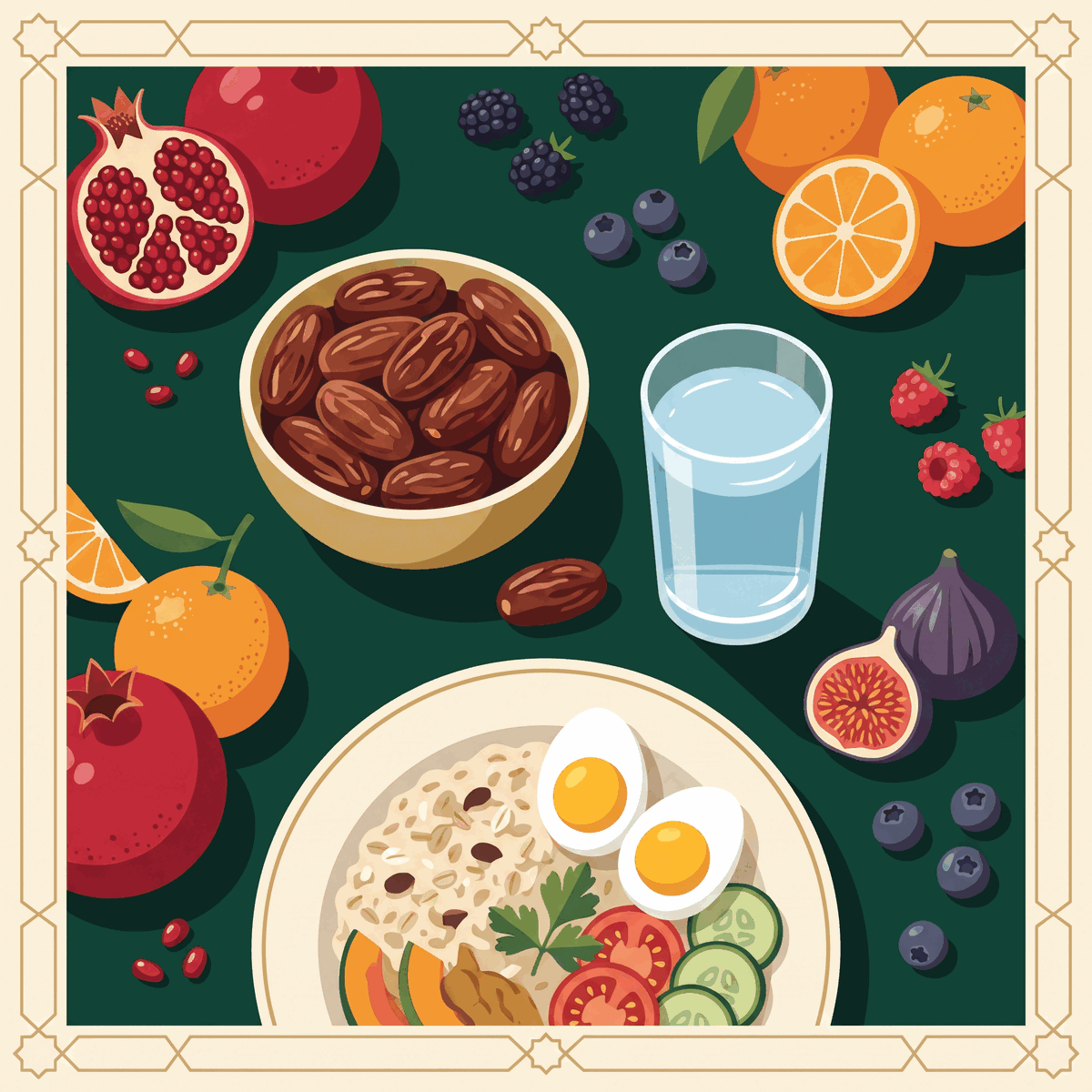
How can Muslims maintain steady energy, mental focus, and spiritual devotion throughout Ramadan without feeling sluggish, excessively thirsty, or bloated? Fasting during Ramadan is a profound spiritual journey, but physical vitality depends heavily on how we nourish our bodies at pre-dawn (suhoor) and sunset (iftar). By aligning modern nutritional science with the timeless Sunnah of Prophet Muhammad (ﷺ), you can transform your daily meals into sources of lasting stamina and physical wellness.
Medical Disclaimer: The nutritional tips in this article are provided for educational and spiritual guidance only and do not replace professional medical advice. Individuals with chronic health conditions—such as diabetes, hypertension, or gastrointestinal issues—should consult a qualified healthcare provider before modifying their Ramadan diet or fasting routine.
The Spiritual and Physical Blessing of Suhoor
Suhoor is far more than an early breakfast; it is an act of worship packed with spiritual blessings and physical wisdom. Prophet Muhammad (ﷺ) emphasized its importance, stating: "Take Suhur as there is a blessing in it" (Sahih al-Bukhari 1923). Delaying suhoor until close to the dawn prayer (Fajr) is also a recommended Sunnah practice that naturally reduces the hours of fasting.
Nutritional science confirms that a well-composed pre-dawn meal prevents dramatic blood sugar crashes and mid-day fatigue. The key is prioritizing complex carbohydrates, lean protein, and healthy fats that digest slowly:
- Slow-release carbohydrates: Whole grains such as oats, brown rice, wholewheat bread or roti, and quinoa release glucose gradually into the bloodstream.
- Quality proteins & fats: Eggs, Greek yogurt, lentils (dal), almonds, and avocados keep you satiated for longer hours.
- Hydrating additions: Fresh fruits like apples, bananas, and berries provide natural fibers and micronutrients.
In tropical environments like Mauritius, it is best to limit salty, heavily processed foods or deep-fried savouries (such as leftover samosas) during suhoor. High sodium levels draw fluid from your cells, leading to intense thirst early in the day.
Sunnah Practices and Balanced Choices for Iftar
When sunset arrives, the Sunnah encourages hastening to break the fast without unnecessary delay. The Prophet (ﷺ) said: "The people will continue in goodness as long as they hasten to break their fast" (Sahih al-Bukhari 1957).
Prophet Muhammad (ﷺ) traditionally broke his fast with fresh or dry dates and a sips of water before praying Maghrib (Sunan Abi Dawud 2356). Fasting physiology shows why this Sunnah is ideal: dates provide natural fructose to quickly restore depleted blood sugar levels, while water hydrates the body without overwhelming a resting digestive system.
To keep your post-iftar energy high, avoid the common trap of filling up on heavy fried snacks—such as gato pima, pakoras, or sugar-laden alouda beverages—immediately upon breaking the fast. Instead, follow a structured two-stage iftar:
- Immediate Iftar: 1–3 dates and a full glass of room-temperature water. Perform your Maghrib prayer.
- Main Meal: A balanced plate consisting of one-half non-starchy vegetables or salad, one-quarter lean protein (grilled fish, chicken, or legumes), and one-quarter complex carbohydrates (sweet potato, basmati rice, or wholewheat breads).
The Prophetic Rule of Moderation and Digestive Health
Overeating at iftar is one of the main causes of indigestion, acid reflux, and drowsiness during Tarawih night prayers. Islam strongly advocates moderation in eating, reminding us that food is a means to sustain life and worship, not an end in itself.
Allah commands in the Holy Qur'an: "...and eat and drink, but be not excessive. Indeed, He likes not those who commit excess" (Qur'an, Al-A'raf 7:31).
This divine principle is complemented by the famous guidance of the Prophet (ﷺ): "The son of Adam cannot fill a vessel worse than his stomach. It is sufficient for a human being to eat a few mouthfuls to keep his spine straight. But if he must fill it, then one-third for food, one-third for drink, and one-third for air" (Sunan al-Tirmidhi 2380).
Practicing the "one-third rule" allows your stomach room to contract and digest food efficiently. Eating slowly and chewing mindfully gives your brain the 20 minutes it needs to recognize satiety signals, preventing post-meal lethargy.
Hydration Strategies for Fasting in Warm Climates
Maintaining adequate hydration is often the biggest challenge during long fasts, especially in warm coastal climates. Proper fluid balance prevents headaches, brain fog, and muscle cramps.
To optimize hydration throughout the night:
- Space your water intake: Instead of gulping excessive amounts of water at suhoor or iftar, sip water regularly between Maghrib and Bedtime.
- Incorporate hydrating foods: Eat fluid-dense fruits and vegetables like watermelon, cucumber, tomatoes, oranges, and light vegetable soups.
- Limit caffeine and sugary drinks: Strong tea, coffee, and sodas act as mild diuretics and can accelerate fluid loss. Opt instead for coconut water, mint-infused water, or herbal teas.
By treating your body as an amanah (sacred trust) and nourishing it intentionally, you can experience a spiritually uplifting and physically energizing Ramadan.
May Allah accept your fasting, grant barakah in your meals, and give you strength throughout the blessed month.
Frequently Asked Questions
What should I eat at Suhoor to avoid feeling thirsty during the day?
Focus on potassium-rich and hydrating foods like bananas, dates, yogurt, and cucumbers, accompanied by steady sips of plain water. Avoid sodium-heavy foods, salty canned meats, deep-fried snacks, and excessive tea or coffee at pre-dawn, as these pull water from your body cells and trigger thirst.
Is it healthy to eat fried foods every day at Iftar?
While deep-fried savouries are popular cultural foods during Ramadan, consuming them daily can cause indigestion, acidity, and sudden fatigue. It is better to treat fried items as occasional treats in small portions, replacing them mostly with grilled, baked, or fresh food items.
How can I stop feeling sleepy during Tarawih prayers after Iftar?
To avoid drowsiness during night prayers, break your fast lightly with dates and water, pray Maghrib, and eat a moderate meal containing lean protein and vegetables. Avoid heavy, oily dishes and sugary drinks, and strictly follow the Prophetic principle of leaving one-third of your stomach empty.
Sources
- Qur'an 7:31
- Sahih al-Bukhari 1923
- Sahih al-Bukhari 1957
- Sunan al-Tirmidhi 2380
- https://sunnah.com/bukhari:1923
- https://sunnah.com/tirmidhi:2380