
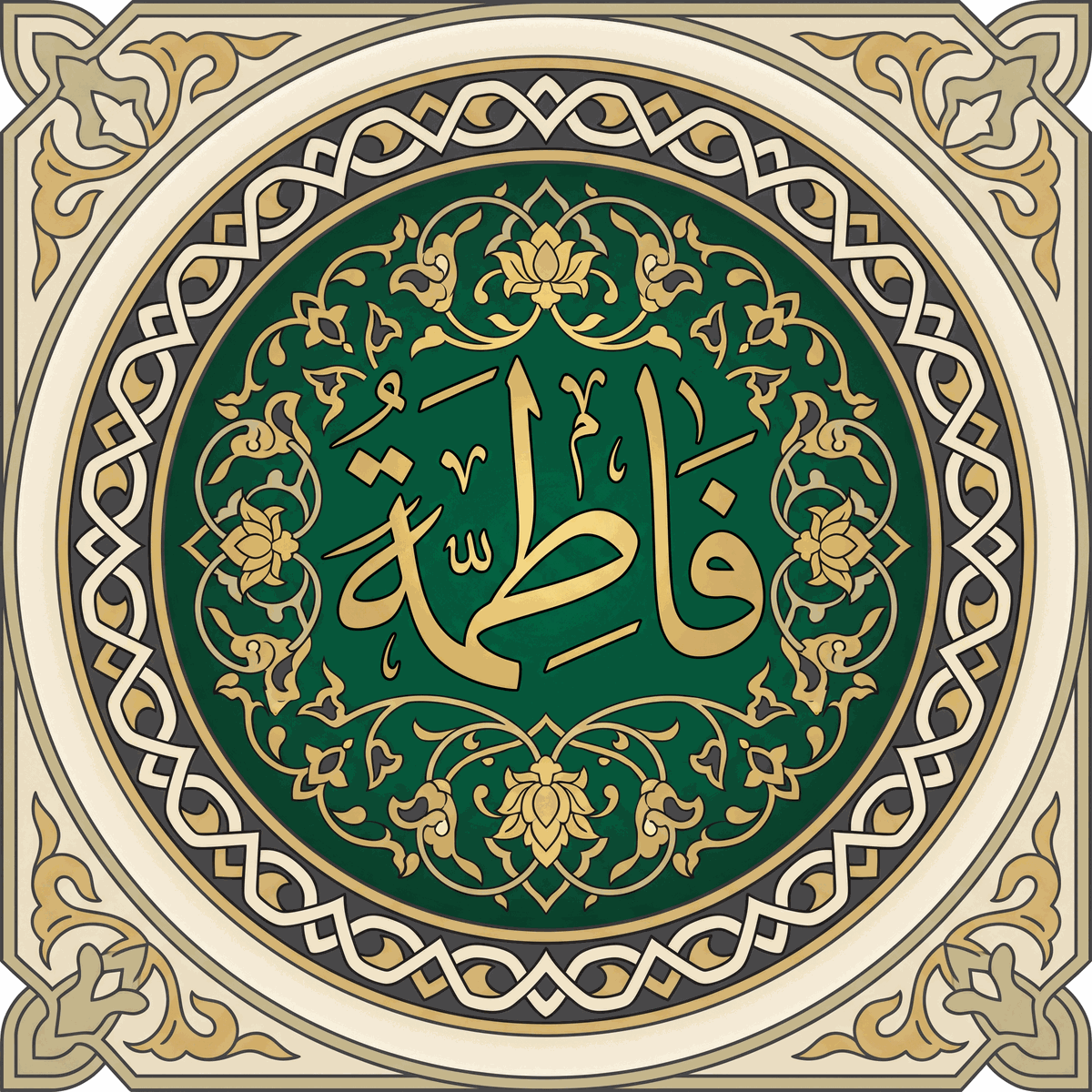
How did the youngest daughter of Prophet Muhammad ﷺ earn the elevated title of leader of the women of Paradise? Sayyidatina Fatimah (RA) occupied a unique and deeply revered place in Islamic history as a devoted daughter, resilient wife, nurturing mother, and exemplar of righteous living. Her life provides believers with timeless guidance in modesty, spiritual devotion, patience, and profound love for Allah SWT and His Messenger ﷺ.
Early Life in Mecca and Devotion to Her Father
Sayyidatina Fatimah (RA) was born in Mecca to Prophet Muhammad ﷺ and his noble wife, Sayyidatina Khadijah (RA), during a period when her father was already known throughout the city for his exceptional truthfulness and moral integrity. She spent her childhood in the shadow of early Islamic trials, witnessing firsthand the severe persecution faced by the first Muslims in Mecca. Despite her young age, Fatimah (RA) displayed extraordinary courage, maturity, and fierce loyalty toward her father.
One well-documented event in early seerah highlights her deep devotion to the Messenger of Allah ﷺ. While the Prophet ﷺ was prostrating in prayer near the Ka'bah, several hostile leaders of Quraish placed the bloody filth of a slaughtered camel upon his noble back. While others hesitated out of fear, young Fatimah (RA) rushed to the scene, removed the heavy filth with her own hands, and openly confronted the tormentors (Sahih al-Bukhari, Hadith 240).
Her early years were further marked by intense hardship during the three-year economic and social boycott imposed on Banu Hashim in the valley of She'eb Abi Talib. Shortly after the boycott ended, she suffered the heartbreaking loss of her beloved mother, Khadijah (RA). In the face of these immense trials, Fatimah (RA) stepped forward to care for her grieving father with such tender affection and steadfastness that she earned the cherished honorific Ummu Abiha, meaning "the mother of her father."
Marriage to 'Ali (RA) and Life in Madinah
Following the Migration (Hijrah) to Madinah, Sayyidatina Fatimah (RA) married 'Ali ibn Abi Talib (RA), the cousin and close companion of the Prophet ﷺ. Their marriage was rooted in deep spiritual alignment, simplicity, and mutual respect rather than material extravagance. Their household was modest, operating with minimal material wealth, yet it became a sanctuary of faith, knowledge, and generosity.
Together, Fatimah (RA) and 'Ali (RA) raised four children who would play foundational roles in the history of the Ummah: Al-Hasan (RA), Al-Husayn (RA), Zaynab (RA), and Umm Kulthum (RA). Prophet Muhammad ﷺ expressed boundless love for his grandchildren and family, frequently inviting them into his presence and praying for Allah SWT to shower His blessings upon them and purify them completely (Sahih Muslim, Hadith 2424).
Life in Madinah required intense manual labor from both spouses. Fatimah (RA) ground wheat and barley with a heavy handmill until her palms became calloused and blistered, carried water skins until her shoulder bore marks, and swept her home until her garments were covered in dust. Despite these physical demands, her household remained a model of hospitality, frequently giving away their meager food to the poor, orphans, and captives.
The Gift of Remembrance: Tasbih Fatimi
As the daily physical strain grew heavier, 'Ali (RA) suggested that Fatimah (RA) visit her father to request a helper from among the captives brought to Madinah. Fatimah (RA) went to the Prophet ﷺ, but out of profound shyness and respect, she was unable to voice her request directly. Later, when the Prophet ﷺ visited their home and learned of her exhaustion, he responded with guidance that prioritized spiritual strength over physical comfort.
The Prophet ﷺ explained that he could not grant them a domestic helper while many impoverished companions known as Ahl al-Suffah were in need of basic food and support. Instead, he offered her a timeless remedy for fatigue and hardship. He asked: "Shall I not teach you something better than what you asked for? When you go to bed, recite SubhanAllah (Glory be to Allah) thirty-three times, Alhamdulillah (Praise be to Allah) thirty-three times, and Allahu Akbar (Allah is the Greatest) thirty-four times" (Sahih al-Bukhari, Hadith 5362; Sahih Muslim, Hadith 2727).
This supplication, famously known across the Muslim world as Tasbih Fatimi, became an indispensable part of her nightly routine. 'Ali (RA) later remarked that he never abandoned this practice a single night after hearing it from the Prophet ﷺ. This exchange illustrates a core Islamic principle: spiritual remembrance (dhikr) grants the believer internal fortitude, patience, and barakah that far exceed worldly assistance.
Character, Virtues, and Station as Leader of Paradise
Sayyidatina Fatimah (RA) was renowned for her radiant character, modesty (haya'), and profound piety, earning the title Az-Zahra (the Luminous). Her bond with the Prophet ﷺ was exceptionally close and affectionate. Aisha (RA) narrated that whenever Fatimah (RA) entered the room, the Messenger of Allah ﷺ would stand up, welcome her warmly, take her hand, kiss it, and seat her in his own spot—a profound demonstration of fatherly love and respect (Sunan Abi Dawud, Hadith 5217; graded sahih).
The Prophet ﷺ explicitly affirmed her spiritual preeminence in numerous narrations. He stated: "Fatimah is a part of me; whoever angers her angers me, and whoever pleases her pleases me" (Sahih al-Bukhari, Hadith 3714). He also foretold her noble status in the Hereafter, declaring that she is the leader of the women of Paradise (Sayyidatu Nisa’ Ahl al-Jannah) alongside Maryam bint 'Imran, Khadijah bint Khuwaylid, and Asiyah bint Muzahim (Sahih al-Bukhari, Hadith 3623).
During the final illness of Prophet Muhammad ﷺ, he called Fatimah (RA) to his side and whispered to her secretly twice. At first, she wept, and then she smiled. Aisha (RA) later inquired about this moment, and Fatimah (RA) revealed that her father first informed her that his death was near, which brought her to tears. He then whispered that she would be the first member of his family to rejoin him in the Hereafter and that she was the chief of the believing women, which brought her comfort and joy (Sahih al-Bukhari, Hadith 3624). True to his word, Sayyidatina Fatimah (RA) passed away approximately six months after the Prophet ﷺ in Madinah.
Legacy of Sayyidatina Fatimah (RA) for Believers
The life of Sayyidatina Fatimah (RA) offers enduring lessons for Muslims seeking dignity, spiritual strength, and moral perfection in their daily lives. In an era where material luxury and outward status are frequently glamorized, her choice of simplicity and contentment (qana'ah) serves as a humbling reminder of what truly matters before Allah SWT.
Her life illustrates that true honor is found in devotion to Allah SWT, honoring one's parents, maintaining family ties, and bearing life's trials with grace and patience. As the mother of the noble lineage of the Prophet ﷺ through Hasan and Husayn (RA), her legacy continues to inspire millions across generations to cultivate sincerity, modesty, and unyielding love for Allah SWT and His Messenger ﷺ.
Sources
- Sahih al-Bukhari, Hadith 3714
- Sahih Muslim, Hadith 2727
- Sahih al-Bukhari, Hadith 3623
- https://sunnah.com/bukhari:3714
- https://sunnah.com/muslim:2727