
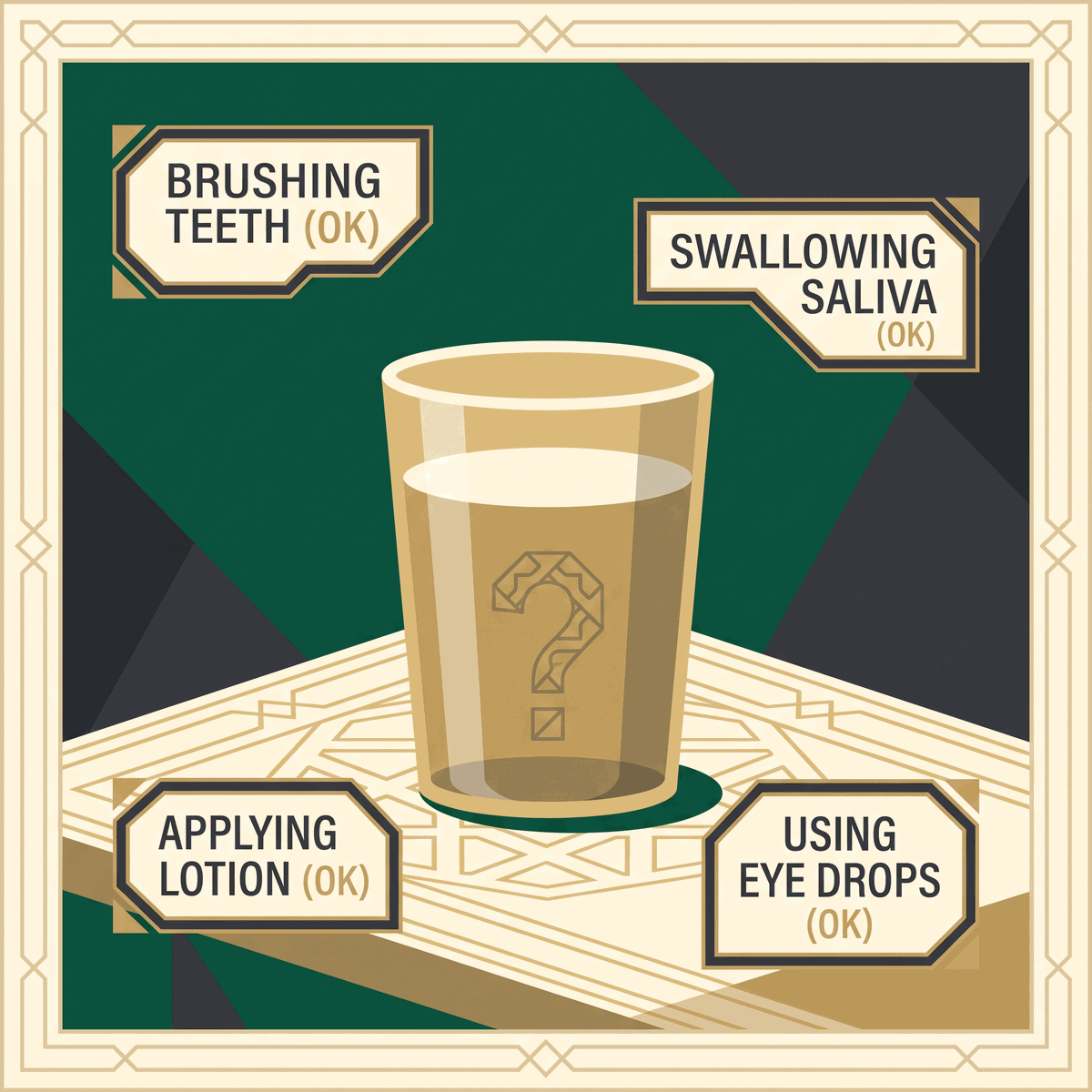
During the holy month of Ramadan, many believers experience sudden moments of panic. You might absentmindedly take a sip of water, apply eye drops, or swallow saliva, only to immediately worry whether your fast has been invalidated.
Understanding the legal principles (fiqh) of fasting brings immense peace of mind. Islamic jurisprudence clearly distinguishes between deliberate invalidation and innocent mistakes, unavoidable body reactions, or routine personal care. Grounded in Hanafi jurisprudence while respecting broader Sunni scholarly consensus, this guide clarifies everyday fasting worries so you can focus on devotion without unnecessary distress.
1. Accidental and Forgetful Eating or Drinking
One of the most common worries during Ramadan is absentmindedly eating or drinking. If you eat or drink because you genuinely forgot you were fasting (nisyan), your fast remains completely valid.
The Prophet Muhammad (peace be upon him) offered clear reassurance regarding this situation:
"If anyone forgets that he is fasting and eats or drinks, he should complete his fast, for Allah has fed him and given him drink." (Sahih al-Bukhari, Hadith 1933; Sahih Muslim, Hadith 1155)
The moment you remember you are fasting, you must immediately stop eating or drinking and spit out anything remaining in your mouth. As long as you cease immediately, your fast is 100% intact. You do not need to make up the day (qada), nor do you owe any expiation (kaffarah).
It is helpful to note a legal distinction in Hanafi fiqh between forgetfulness (nisyan) and an accidental mistake (khata). Forgetfulness means your mind was completely unaware of the fast. An accidental mistake occurs when you are fully aware you are fasting, but accidentally ingest something—for instance, accidentally swallowing water while gargling during wudu. In the Hanafi school, accidentally swallowing water while conscious of fasting breaks the fast and requires a single makeup day (qada) after Ramadan, though no penalty (kaffarah) is required. Other schools, such as the Shafi'i madhab, consider unintended accidental swallowing during normal wudu as forgiven. To be safe, avoid excessive gargling while rinsing your mouth.
2. Personal Care: Miswak, Toothpaste, Eye Drops, and Perfume
Maintaining hygiene and personal care while fasting often raises practical questions for Muslims in daily life.
- Using a Miswak or Toothbrush: Using a dry miswak (seewak) or a clean toothbrush without paste is Sunnah and completely permissible throughout the day (Sahih al-Bukhari, Hadith 887). It does not break the fast.
- Using Toothpaste: Using toothpaste is considered makruh (disliked) by classical Hanafi jurists because of the high risk of swallowing paste or flavor residue down the throat. However, if toothpaste is used carefully and absolutely nothing passes down the throat, the fast remains valid.
- Eye Drops, Ear Drops, and Kohl: Applying eye drops, ear drops, or eye cosmetics (kohl or surma) does not break the fast according to the dominant Hanafi and Shafi'i views. Even if you experience the taste of the eye drops in your throat, the fast is not invalidated because the eye is not considered an open, direct pathway (manfadh maftuh) to the stomach.
- Perfumes and Scents: Applying perfume (attar), wearing scented lotion, or smelling flowers and ambient scents does not break the fast. Only deliberately inhaling dense incense smoke (bakhoor) directly into the nostrils and throat breaks the fast.
3. Medical Treatments: Injections, Inhalers, and Blood Tests
Health conditions during Ramadan can lead to concerns about medical procedures.
- Routine Injections: Non-nutritive medical injections—such as insulin for diabetes, vaccines, pain relievers, or local anesthetics—do not invalidate the fast according to the overwhelming majority of contemporary Sunni jurists and Hanafi scholars. Because these medications enter through muscles or veins rather than the digestive system (jawf), they do not count as food or drink.
- Blood Tests and Blood Extraction: Having blood drawn for routine medical analysis or giving a small blood sample does not break the fast. The Prophet (peace be upon him) underwent cupping (hijamah) while fasting (Sahih al-Bukhari, Hadith 1936). While donating large quantities of blood is disliked (makruh) if it leaves you excessively weak, it does not void the fast itself.
- Asthma Inhalers: Asthma inhalers release fine airborne liquid particles into the lungs and throat. Classical Hanafi scholars note that inhaling liquid mist breaks the fast, requiring a makeup day when health permits. However, many contemporary scholars permit emergency inhalers for individuals with severe chronic asthma who cannot fast without them. If you rely on an inhaler, consult a trusted local scholar regarding your specific health needs.
4. Involuntary Bodily Reactions: Vomiting, Saliva, and Mucus
Our bodies experience natural, involuntary functions during the day that believers often fear might ruin their worship.
- Involuntary Vomiting: Overcoming by sudden, involuntary vomiting does not break the fast, regardless of the amount. The Prophet (peace be upon him) explicitly stated:
"Whoever is overcome by vomiting does not have to make up the fast, but whoever causes himself to vomit deliberately must make it up." (Sunan Abu Dawud, Hadith 2380; Sunan al-Tirmidhi, Hadith 720)
- Swallowing Saliva and Mucus: Swallowing natural saliva present in your mouth does not break your fast. Similarly, nasal mucus or phlegm that flows naturally into the back of the throat does not invalidate the fast in Hanafi jurisprudence. However, gathering a large amount of saliva intentionally in your mouth to swallow it is disliked (makruh).
- Wet Dreams (Ihtilam): Having a wet dream while sleeping during the day does not break the fast because it happens without voluntary control. You simply perform ghusl (ritual bath) when you wake up and continue your fast as normal.
Reassurance in Divine Ease
Islam is built upon mercy and practicality. Allah Almighty reminds us in the Holy Qur'an:
"Allah intends for you ease and does not intend for you hardship." (Qur'an, Al-Baqarah 2:185)
Knowing what does and does not break your fast frees your heart from scrupulosity (waswasah) and allows you to experience Ramadan with joy, mindfulness, and spiritual focus.
FAQ
What should I do if I see another fasting Muslim accidentally eating or drinking?
If the person is elderly, weak, or visibly in need of nourishment, scholars state it is a act of mercy to let them finish, as Allah has provided for them. However, if the person is young and healthy, you should gently remind them that they are fasting so they can stop immediately.
Does getting a flu shot or vaccine break my fast?
No. Non-nutritive injections administered into the muscle or under the skin (such as flu shots, insulin, or vaccines) do not pass through the digestive tract and do not provide food nourishment, so they do not break your fast.
Does applying lip balm or lipstick break the fast?
Applying lip balm or petroleum jelly to dry lips does not break the fast, provided you do not lick your lips and swallow the product. To be safe, use unflavored lip balm during fasting hours.