Have you ever wondered why cupping, or Hijama, remains one of the most widely discussed wellness practices across the Muslim world? Many believers seek to align their physical well-being with the Sunnah of the Prophet Muhammad ﷺ while ensuring their health routines remain safe, effective, and hygienic. This comprehensive guide explains the origins of Hijama, what authentic Islamic traditions say about it, and how to approach it responsibly in the modern world.
What Is Hijama? Understanding the Traditional Practice
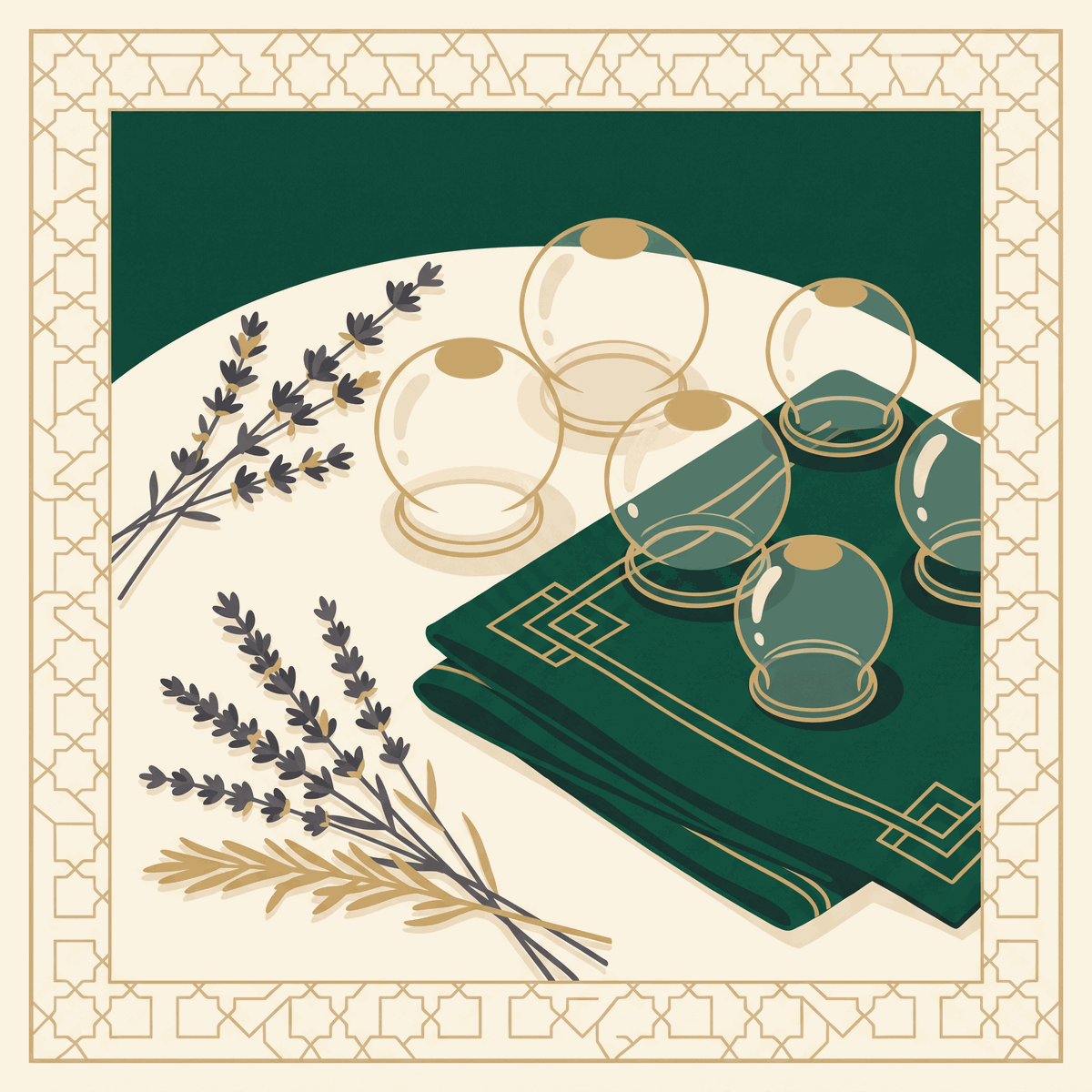
The term Hijama originates from the Arabic root word hajam, which means "to suction" or "to draw out." It refers to an ancient therapeutic technique where specialized cups are applied to specific areas of the body—most commonly the back, shoulders, and neck—to create a gentle vacuum on the skin. While cupping was practiced across ancient Egyptian, Chinese, and Greek civilizations long before the advent of Islam, the Islamic tradition elevated and refined the practice as a recommended form of physical wellness.
In contemporary practice, cupping is generally divided into two main types: dry cupping and wet cupping.
- Dry Cupping: This method involves applying a suction cup directly to the skin to pull tissue upward into the cup. It increases blood circulation to localized muscles, relieves tightness, and promotes relaxation without puncturing or piercing the skin.
- Wet Cupping (Hijama Proper): This traditional technique begins with a brief session of dry suction to draw blood toward the skin's surface. The practitioner then removes the cup and makes minute, superficial micro-incisions on the top layer of skin before re-applying the suction. This allows a small quantity of stagnant dermal blood and cellular fluid to collect in the cup.
Understanding this distinction helps believers appreciate both the physical mechanism of cupping and the precise context in which it has been handed down through classical Islamic literature.
Hijama in the Sunnah: Hadith and Prophetic Guidance
Within Islamic theology, Hijama holds an honored place as a recommended Prophetic tradition (Sunnah Mustahabbah). The Prophet Muhammad ﷺ recognized cupping as a valuable method for maintaining physical health and managing discomfort.
Several authentic narrations recorded in classical hadith literature highlight the esteem in which Hijama was held:
- General Recommendation: Anas ibn Malik reported that the Messenger of Allah ﷺ said, "The best of treatments you use is cupping" (Sahih al-Bukhari, Hadith 5696).
- Modes of Healing: In another famous narration, Jabir ibn Abdullah reported that the Prophet ﷺ mentioned healing in three things: a drink of honey, a cup of cupping, and cauterization, though he advised against unnecessary cauterization (Sahih al-Bukhari, Hadith 5680).
- Recommended Lunar Timing: Hadith compilations also note specific days of the lunar month that are especially auspicious for elective cupping. According to a narration in Sunan Ibn Majah, the Prophet ﷺ encouraged performing Hijama on the 17th, 19th, and 21st days of the Islamic lunar calendar (Sunan Ibn Majah, Hadith 3486; graded hasan).
Islamic scholars explain that while the 17th, 19th, and 21st days of the Hijri month are preferred for general preventative maintenance, therapeutic cupping needed for acute pain or specific medical reasons may be performed on any day of the week or month.
Modern Scientific Interest and Health Observations
In recent decades, integrative health researchers and physiological scientists have shown increasing interest in the mechanisms underlying cupping therapy. While traditional practices focus on balancing bodily fluids and energy, modern observational studies examine how local suction affects blood vessels, connective tissue, and the nervous system.
Preliminary research suggests that cupping may offer several physiological benefits:
- Enhanced Local Blood Circulation: The vacuum created by cupping expands local capillaries, boosting oxygen delivery and micro-vascular circulation in tight or fatigued muscle tissues.
- Pain Relief and Muscle Relaxation: By stimulating cutaneous mechanoreceptors, cupping can help block pain signals and relieve deep tissue tension in the upper back, shoulders, and lumbar region.
- Reduction of Inflammation: Some research indicates that cupping triggers an immune response that accelerates tissue repair and reduces localized inflammatory markers.
Despite these promising observations, it is crucial to maintain a clear and responsible perspective. Please note that Hijama is a Prophetic guidance and traditional wellness practice, not medical advice, and readers should consult a qualified doctor before use—especially for Hijama and any underlying health conditions. Believers should never view Hijama as a substitute for professional medical care, emergency treatment, or prescribed pharmaceutical therapies.
Important Guidelines for Safe and Hygienic Practice
Because wet cupping involves breaking the surface of the skin, strict safety, hygiene, and clinical standards must be maintained at all times. Performing Hijama in an unsanitary environment or using improper techniques carries significant risks of infection or injury.
To ensure your session is both safe and spiritually fulfilling, keep the following guidelines in mind:
- Insist on Single-Use Equipment: The practitioner must use pre-sterilized, single-use disposable cups, surgical blades, and gloves for every patient. Never allow a practitioner to reuse equipment.
- Verify Practitioner Credentials: Choose a qualified therapist who understands human anatomy, infection control protocols, and basic emergency procedures alongside traditional Hijama techniques.
- Be Aware of Medical Contraindications: Individuals taking blood thinners (anticoagulants), those with hemophilia or bleeding disorders, pregnant women, severely anemic individuals, or people with skin conditions such as eczema or psoriasis on the treatment site should avoid wet cupping or seek clearance from their physician first.
- Follow Proper Aftercare: Keep the treated areas clean, hydrated, and covered for at least 24 to 48 hours after a session. Avoid hot baths, strenuous exercise, and swimming immediately following Hijama to allow skin micro-incisions to heal cleanly.
Closing Takeaway
Hijama represents a meaningful convergence of spiritual tradition, historical wisdom, and holistic self-care. When practiced responsibly—with sincere intentions, qualified practitioners, and strict adherence to modern health standards—it offers a comforting way to engage with the Sunnah while supporting physical well-being.
Frequently Asked Questions
Is Hijama permitted while fasting during Ramadan?
According to the Hanafi school and the majority of Islamic scholars, undergoing Hijama while fasting does not break or invalidate the fast. However, if cupping is likely to make a person physically weak or dehydrated, it is recommended to postpone the procedure until after sunset or outside of fasting hours.
How often should someone perform Hijama?
For general preventive maintenance, many traditional practitioners recommend undergoing Hijama once every few months or during the recommended Sunnah lunar dates (17th, 19th, or 21st). However, the ideal frequency depends entirely on individual health goals and advice from a medical professional.
What is the difference between wet cupping and dry cupping?
Dry cupping relies solely on suction to draw skin and muscle tissue upward, improving blood circulation without breaking the skin. Wet cupping (Hijama) involves making tiny, shallow micro-scratch marks on the skin prior to suction, allowing a small amount of stagnant fluid and superficial blood to be drawn into the cup.
Sources
- Sahih al-Bukhari, Hadith 5696
- Sunan Ibn Majah, Hadith 3486
- Journal of British Islamic Medical Association (jbima.com)
- Wiley Online Library: Hijama Evidence Review