
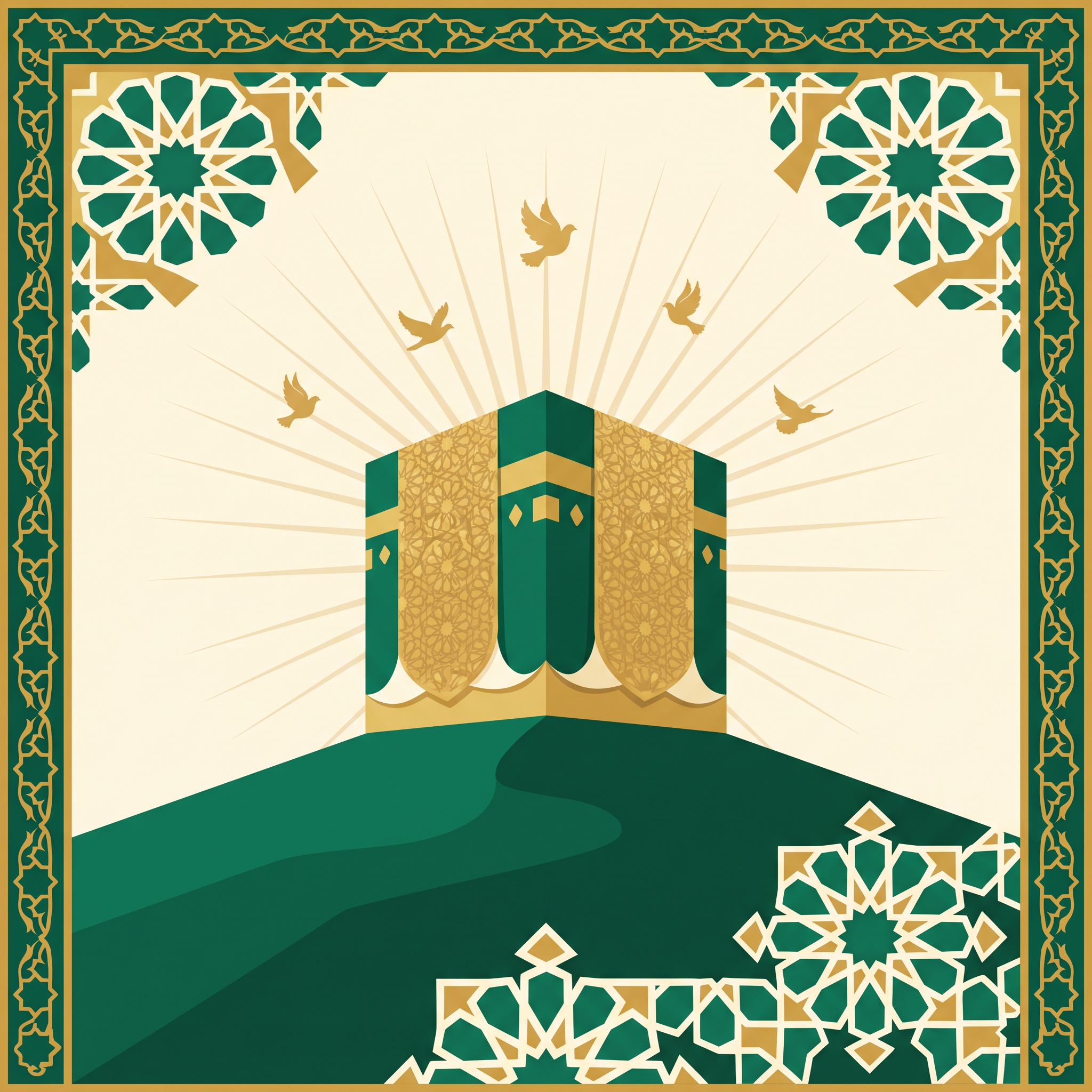
A Turning Point in Sacred History
In January 630 CE (Ramadan 8 AH), eight years after fleeing intense persecution in Mecca to establish a sanctuary in Medina, the Prophet Muhammad ﷺ returned to his birthplace at the head of ten thousand followers. Known in Islamic tradition as Fath Makkah (the Opening of Mecca), this moment stands as one of the most remarkable milestones in world history. Rather than a campaign marked by plunder, retaliation, or structural devastation, the conquest unfolded as an extraordinary triumph of restraint, rededication, and unprecedented magnanimity. Within hours of entering the city, the ancient sanctuary of the Kaaba was restored to monotheism, and a general amnesty was extended to citizens who had spent two decades opposing the early faith.
The Broken Truce: The Path to Mecca
The catalyst for the march on Mecca was the breach of the Treaty of Hudaybiyyah, a non-aggression pact signed two years earlier in 628 CE (6 AH) between the Muslim state in Medina and the Quraysh tribe of Mecca. The treaty had established a ten-year truce and allowed neutral Arabian tribes to align with either party. Under these provisions, the tribe of Banu Khuza'ah formed an alliance with Medina, while their long-standing rivals, the Banu Bakr, aligned with the Quraysh.
In late 629 CE, the truce broke down when Banu Bakr launched a night attack against Banu Khuza'ah at a watering place called al-Watir. Crucially, several prominent Quraysh leaders secretly assisted Banu Bakr by supplying weapons and fighters. Facing slaughter, survivors from Banu Khuza'ah sent a delegation led by Amr ibn Salim al-Khuza'i to Medina, where he recited a moving poem pleading for protection.
Recognizing that the core terms of Hudaybiyyah had been violated, the Muslim leadership in Medina prepared a response. Realizing the strategic gravity of the breach, the senior Quraysh leader Abu Sufyan ibn Harb traveled personally to Medina to seek a renewal of the treaty. However, his efforts were rebuffed. As recorded by early classical biographer Ibn Hisham in Sirat Rasul Allah, the Prophet organized a massive march toward Mecca in total secrecy. The objective was clear: to mobilize an overwhelming force that would compel Mecca’s surrender without triggering a bloody siege or violent clash in the sacred territory.
A Peaceful Entry into the Sacred Sanctuary
In Ramadan 8 AH, an army of ten thousand marchers advanced toward Mecca. Reaching Marr al-Zahran, a short distance outside the valley of Mecca, the army pitched camp and lit ten thousand campfires across the hills. The sight of the massive, disciplined force illuminated against the night sky signaled to the Meccan leadership that armed resistance would be futile.
During the night, Abu Sufyan ventured outside Mecca to assess the situation and was brought before the Prophet. Recognizing the shifting tide, Abu Sufyan accepted Islam and returned to Mecca to urge his fellow citizens against armed resistance. To prevent panic and ensure maximum public safety, the Prophet declared three universal guarantees of amnesty: anyone who remained inside their own home with doors closed, anyone who gathered within the precinct of the Kaaba, or anyone who sought refuge in the house of Abu Sufyan would be completely safe.
The Muslim army entered Mecca from four different directions. Orders were strictly given to avoid armed engagement unless fired upon. As noted by British academic historian W. Montgomery Watt in Muhammad at Medina, only one minor confrontation took place on the outskirts of the city, where a small faction led by Ikrimah ibn Abi Jahl briefly engaged a column led by Khalid ibn al-Walid. The skirmish was quickly contained with minimal casualties, while the overwhelming majority of the city opened its gates without firing an arrow or drawing a sword.
Cleansing the Kaaba and the General Amnesty
Upon entering the sacred sanctuary, the Prophet proceeded directly to the Kaaba, the ancient cubic structure which, according to Islamic tradition, was originally built by the Prophets Abraham and Ishmael for the worship of the One God. Over centuries of pre-Islamic practice, the sanctuary had become surrounded and filled with 360 idols. Encircling the Kaaba, the Prophet systematically overturned the idols, reciting the Quranic verse: "Truth has come, and falsehood has departed. Indeed is falsehood, [by nature], bound to depart" (Surah Al-Isra 17:81). The sanctuary was swept clean and rededicated exclusively to the worship of God alone (Tawhid).
Following the cleansing of the Kaaba, the gathered citizens of Mecca—who had spent twenty years mocking, torturing, exiling, and waging brutal warfare against the early Muslims—assembled in the courtyard, expecting severe retribution. The Prophet addressed them, asking: "O Quraysh, what do you think I am about to do with you?" They answered humbly: "Good. You are a noble brother, the son of a noble brother."
In a decision that echoed across human history, the Prophet responded with the forgiving words of the Prophet Joseph (Yusuf) to his brothers: "No blame shall rest upon you today. Go, for you are free" (Ithhabu fa-antum al-tulaqa'). The general amnesty pardoned nearly the entire population, transforming former mortal enemies into protected citizens. Shortly thereafter, Bilal ibn Rabah, an Abyssinian former slave who had suffered brutal torture under Meccan masters for his early faith, climbed to the roof of the Kaaba and called the adhan (call to prayer), resounding monotheism over the sacred valley.
Historical Significance and Future Legacy
The peaceful return to Mecca fundamentally altered the trajectory of the Arabian Peninsula. By choosing reconciliation over revenge, the event dismantled centuries of tribal blood-feuds and established a new social order built on faith, law, and brotherhood. As documented in Al-Tabari’s History of the Prophets and Kings and modern entries in Encyclopaedia Britannica, the fall of Mecca without widespread destruction impelled tribes across Arabia to send envoys to Medina over the following year—known as the Year of Delegations (630–631 CE)—unifying the region under Islam.
The Conquest of Mecca remains an enduring moral blueprint in Islamic history. It demonstrated that true victory lies not in the subjugation of enemies, but in the conquest of hearts through justice, humility, and unconditional mercy.
Sources
- Ibn Hisham — Sirat Rasul Allah (The Life of Muhammad), the earliest surviving comprehensive biography of the Prophet Muhammad, providing primary historical accounts of the 8 AH expedition.
- W. Montgomery Watt — Muhammad at Medina (Oxford University Press), a foundational modern academic study analyzing the political, diplomatic, and military history of the early Islamic community.
- Al-Tabari — Tarikh al-Rusul wa al-Muluk (History of the Prophets and Kings), a monumental classical Arabic chronicle recording the breach of the Hudaybiyyah treaty and the march to Mecca.
- Encyclopaedia Britannica — Muhammad and the Conquest of Mecca, an authoritative modern reference covering the major historical timelines of 630 CE.
Sources
- Ibn Hisham — Sirat Rasul Allah (The Life of Muhammad), foundational classical Arabic biography detailing the events of 8 AH.
- W. Montgomery Watt — Muhammad at Medina (Oxford University Press), authoritative academic study on early Islamic political and military history.
- Al-Tabari — Tarikh al-Rusul wa al-Muluk (History of the Prophets and Kings), landmark classical historical chronicle.
- Encyclopaedia Britannica — Entry on Muhammad and the Conquest of Mecca (630 CE), peer-reviewed general historical reference.