
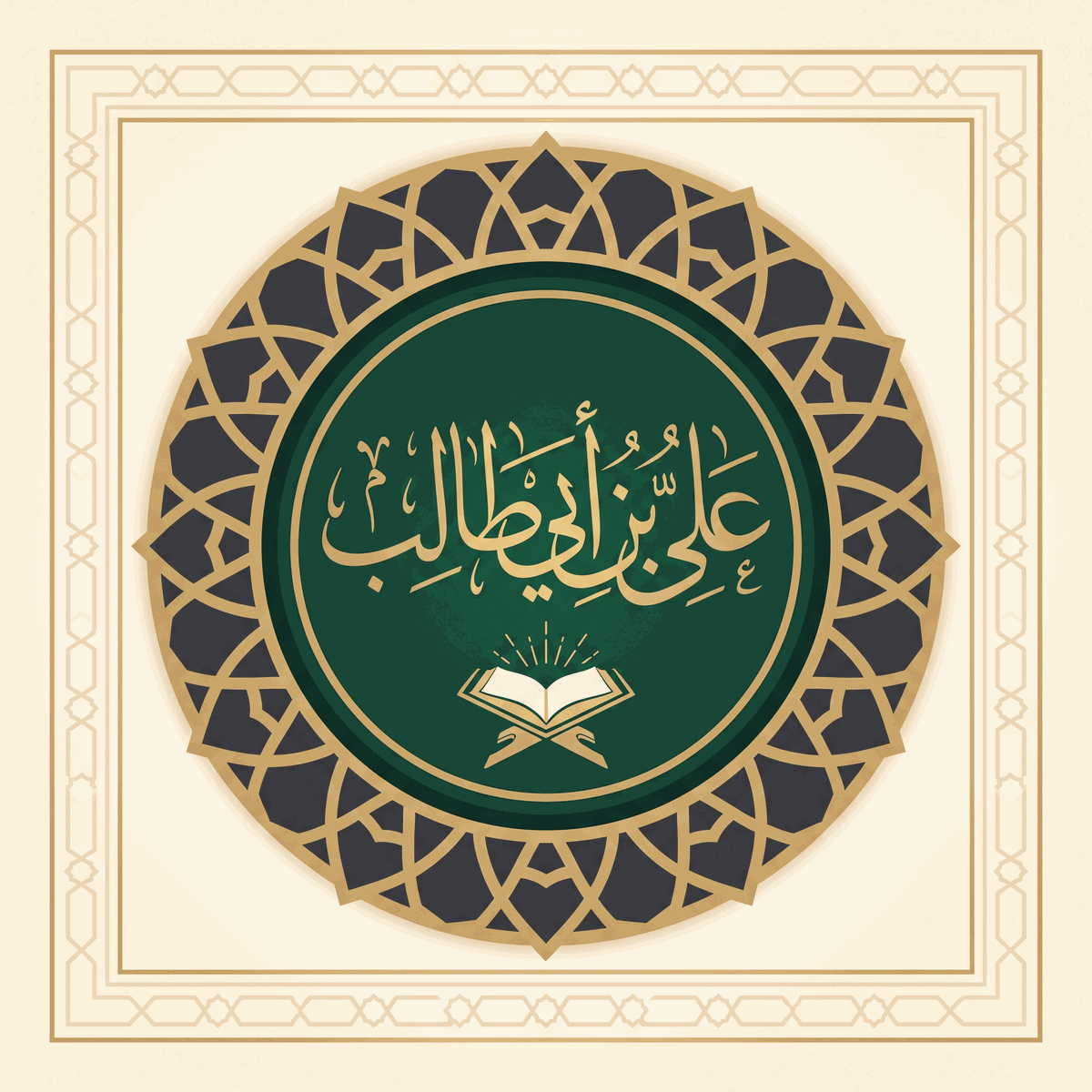
Who was Sayyiduna Ali ibn Abi Talib (RA), and why does his legacy hold such a profound place in the hearts of believers across the world? Many Muslims seek to understand how the Prophet Muhammad ﷺ’s cousin and son-in-law combined unmatched bravery on the battlefield with deep scholarship, personal piety, and administrative justice. From becoming the first youth to accept Islam to serving as the fourth Rightly-Guided Caliph (Al-Khulafa ar-Rashidun), his noble life offers timeless guidance on standing firm in faith, acting with wisdom, and seeking the pleasure of Allah above all else.
Early Life and Acceptance of Islam
Ali ibn Abi Talib (RA) was born in Mecca approximately twenty-three years before the Hijrah. He was the son of Abu Talib, the paternal uncle of Prophet Muhammad ﷺ who protected the Prophet during the most difficult early years of his mission. Due to a period of financial hardship in Mecca, Prophet Muhammad ﷺ took young Ali into his own household to relieve his uncle’s burden. Growing up under the direct care and moral guidance of the Messenger of Allah, Ali absorbed the highest virtues of truthfulness and nobility long before revelation descended.
When Prophet Muhammad ﷺ received the first revelations of the Qur'an, Ali was only around ten years old. Upon witnessing the Prophet and Sayyidatuna Khadijah (RA) in prayer, he inquired about their worship. Hearing the message of Tawhid (Monotheism), Ali embraced Islam without hesitation, becoming the very first child and youth to accept the faith. During the grueling three-year boycott imposed on the clan of Banu Hashim in the valley of Abu Talib, young Ali remained steadfast alongside the Prophet, enduring severe hunger and isolation with unwavering patience.
Heroism and Devotion in the Prophet’s Era
One of the most famous demonstrations of Ali’s courage occurred during the night of the Hijrah (migration to Medina). When pagan conspirators surrounded the house of the Prophet ﷺ intent on assassinating him, the Prophet instructed Ali to sleep in his bed covered with his green mantle. Ali willingly put his life on the line so the Prophet could escape safely. In classical tafsir, scholars often connect such selflessness to the divine praise described in the Qur'an: "And among the people is he who sells his soul seeking the pleasure of Allah" (Qur'an, Al-Baqarah 2:207). Before leaving Mecca himself, Ali also ensured that all goods and trusts deposited with the Prophet were faithfully returned to their owners.
After migrating to Medina, the bond between the Prophet ﷺ and Ali deepened. In the second year after Hijrah, the Prophet gave his beloved daughter, Sayyidatuna Fatima (RA), in marriage to Ali. From this blessed union came Imam al-Hasan (RA) and Imam al-Husayn (RA), the revered leaders of the youth of Paradise.
Ali was also a central figure in defending the Muslim community. At the Battle of Khaybar, when previous attempts to breach the fortress proved difficult, the Prophet ﷺ announced: "Tomorrow I will give the banner to a man who loves Allah and His Messenger, and whom Allah and His Messenger love." The next morning, the Prophet called for Ali, cured his eye ailment with his blessed saliva, and handed him the standard. Ali led the believers to a decisive victory (Sahih al-Bukhari, Hadith 3706).
His spiritual proximity to the Messenger of Allah was further highlighted during the Expedition of Tabuk, when the Prophet instructed Ali to remain in Medina to care for the community. When Ali expressed sadness at missing the expedition, the Prophet reassured him: "Are you not pleased that you are to me in the position that Harun (Aaron) was to Musa (Moses), except that there is no prophet after me?" (Sahih al-Bukhari, Hadith 4416).
Depth of Knowledge and Spiritual Character
Sayyiduna Ali (RA) was widely recognized among the Sahabah for his extraordinary intellect, legal acumen, and mastery of the Qur'an. He possessed a precise understanding of the context behind divine revelations and was consulted by major companions, including Sayyiduna Umar ibn al-Khattab (RA), on complex judicial matters. Sunni scholarship has long honored Ali as one of the paramount authorities in Islamic jurisprudence (fiqh) and Quranic exegesis.
Despite his status and accomplishments, Ali’s personal life was characterized by extreme asceticism (zuhd) and humility. He earned his living through physical labor, wore simple garments, and distributed much of his wealth to the poor and needy. His nights were spent in lengthy prayers and contemplation, exemplifying the balance between active worldly duty and deep spiritual attachment to Allah.
His spiritual standing among believers is reflected in authentic Hadiths. The Prophet ﷺ stated regarding Ali: "Only a believer loves you, and only a hypocrite hates you" (Sahih Muslim, Hadith 78). This love for Ali is a foundational mark of affection shared across mainstream Sunni orthodoxy.
Caliphate and Leadership During Trial
Following the tragic martyrdom of the third Caliph, Sayyiduna Uthman ibn Affan (RA), in 35 AH (656 CE), the companions in Medina turned to Ali ibn Abi Talib (RA) and pledged allegiance to him as the fourth Caliph of Islam. Ali accepted the responsibility during a period of intense grief and internal division within the Ummah.
During his five-year caliphate, Ali governed from Kufa in Iraq. He focused on preserving the core principles of Islamic justice, protecting the public treasury (Bayt al-Mal), and upholding political accountability. He insisted that public funds be distributed strictly on the basis of need and equity, refusing special treatment even for his own family members. Mainstream Sunni historians emphasize that throughout the civil strife (Fitnah) of that era, Ali acted with profound sincerity, seeking only reconciliation, the preservation of the Shari'ah, and the unity of believers.
In the month of Ramadan in 40 AH (661 CE), while entering the mosque in Kufa to lead the congregational Fajr prayer, Ali was struck with a poisoned sword by an extremist assassin, Abd al-Rahman ibn Muljam. He succumbed to his wounds two days later, achieving the noble status of martyrdom (shahadah) and completing a life entirely dedicated to Allah.
Legacy
The legacy of Sayyiduna Ali ibn Abi Talib (RA) remains a beacon of light for Muslims worldwide. He demonstrated that true strength lies not merely in physical courage, but in submission to divine truth, adherence to justice under pressure, and devotion to the Sunnah of Prophet Muhammad ﷺ. For contemporary believers—including the vibrant Muslim community in Mauritius—Sayyiduna Ali serves as an everlasting model of how to blend deep knowledge with active service, standing firm upon principle while treating all creation with dignity and compassion.
Sources
- Sahih al-Bukhari
- Sahih Muslim
- Sunan at-Tirmidhi
- Al-Bidayah wan-Nihayah by Ibn Kathir
- https://sunnah.com/bukhari:3706
- https://sunnah.com/muslim:78