
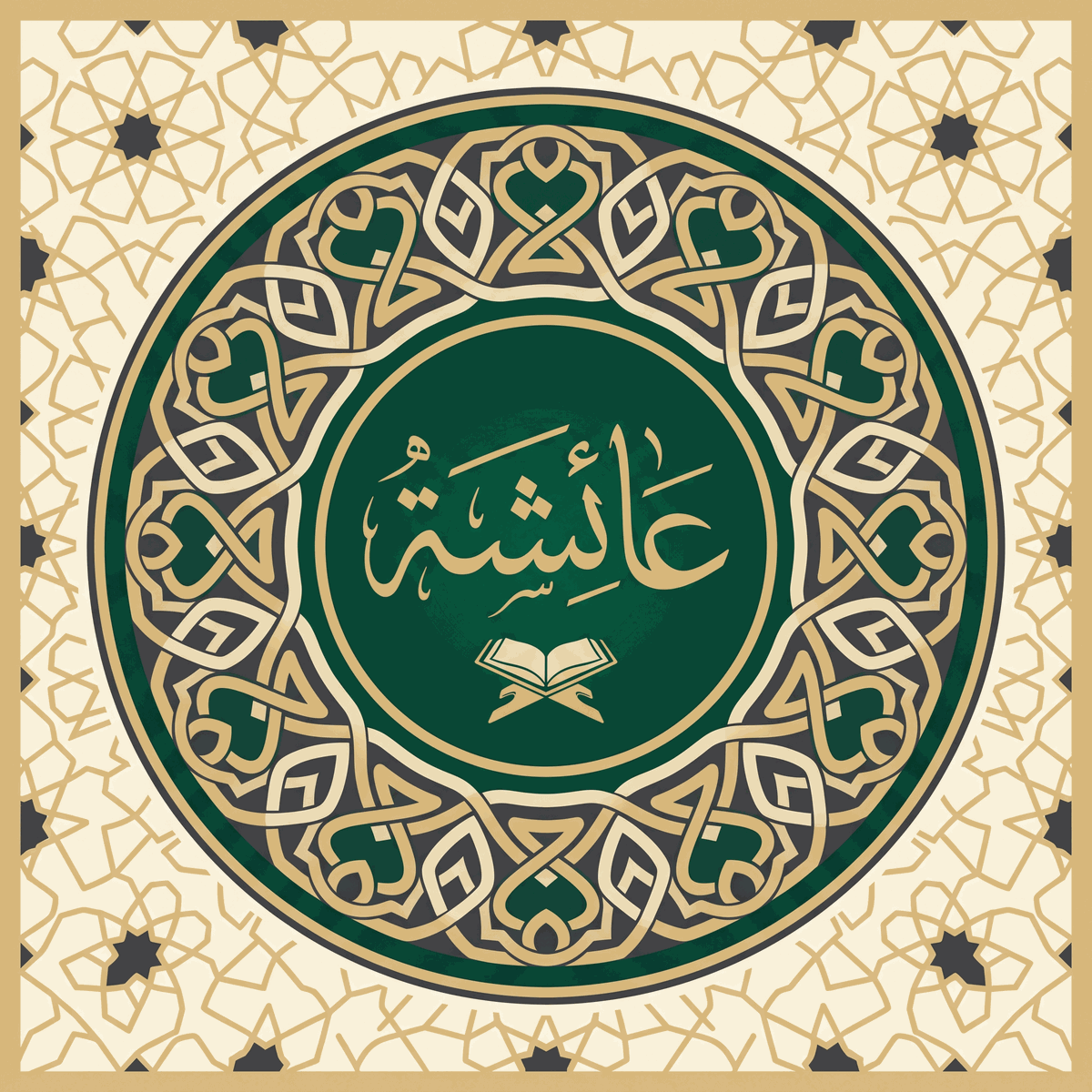
How did a brilliant young woman living in 7th-century Medina become one of the greatest legal scholars and traditionists in human history? For Muslims seeking to understand the foundations of Islamic jurisprudence and Hadith science, the life of Aisha bint Abi Bakr (RA) provides an inspiring answer. Recognized across the Ummah as "Umm al-Mu'minin" (Mother of the Believers), her extraordinary intellect, sharp memory, and deep devotion helped preserve the heart of the prophetic tradition for all generations.
Early Life and Growing Up in the Light of Revelation
Aisha bint Abi Bakr (RA) was born in Mecca into a household steeped in faith, truthfulness, and devotion to Islam. Her father, Abu Bakr al-Siddiq (RA), was the closest companion to Prophet Muhammad ﷺ and the first adult male to embrace Islam. Growing up in an environment where divine revelation was actively descending, Aisha (RA) absorbed the core principles and spiritual habits of Islam from her earliest childhood.
Unlike many of her peers, Aisha (RA) grew up knowing only an Islamic world view. She possessed a keen mind and an insatiable intellectual curiosity, observing the early struggles of the Muslim community in Mecca and the historic Migration (Hijrah) to Medina. These early experiences nurtured her sharp critical thinking skills and prepared her for a central leadership role in the preservation of Islamic knowledge.
Mother of the Believers and Life with the Prophet ﷺ
In Medina, Aisha (RA) married Prophet Muhammad ﷺ, joining his household and receiving the sacred title of Mother of the Believers. The Qur'an established the elevated status of the Prophet's wives, declaring: "The Prophet is closer to the believers than their own selves, and his wives are their mothers" (Qur'an, Al-Ahzab 33:6). Their modest residence adjacent to the Prophet’s Mosque became a vibrant hub of learning, spiritual devotion, and personal counsel.
Within this intimate setting, Aisha (RA) observed the Messenger of Allah ﷺ in his daily family life and private worship. She witnessed how he prayed during the quiet hours of the night, how he maintained kindness and patience with his family, and how he applied divine guidance to practical matters. The Prophet ﷺ held profound affection for her, praising her exceptional mind and spiritual character. In a well-known narration, he mentioned that her virtue among women was like tharid (a distinguished dish) compared to ordinary food (Sahih al-Bukhari, Hadith 3769).
A Master Scholar, Jurist, and Narrator of Hadith
Aisha (RA) stands as one of the most prolific preservers of prophetic traditions in Islamic history. She transmitted 2,210 authentic hadiths, placing her among the top seven narrators alongside prominent figures like Abu Hurairah (RA) and Abdullah ibn Umar (RA). Because of her unique location inside the prophetic household, she preserved essential details regarding ritual purity, family ethics, private worship, and personal hygiene that were otherwise inaccessible to public observation.
Beyond memorizing texts, Aisha (RA) was a legal scholar (faqihah) of the highest caliber. She evaluated textual context, reconciled apparent contradictions, and derived legal rulings with remarkable analytical rigor. Senior companions frequently consulted her when complex legal or theological issues arose. Abu Musa al-Ash'ari (RA) reported: "Never did a hadith prove difficult for us—the companions of the Messenger of Allah ﷺ—except that we asked Aisha about it and found that she had knowledge regarding it" (Sunan al-Tirmidhi, Hadith 3883).
Her analytical precision was so distinct that the 8th-century scholar Imam Badr al-Din al-Zarkashi authored a celebrated book titled Al-Ijaba li-Irad Ma Istadrakathu 'A'isha 'ala al-Sahaba ("The Corrective: Aisha's Rectification of the Companions"). In this work, he cataloged dozens of instances where Aisha (RA) clarified legal nuances or corrected slight misunderstandings made by other Sahaba, illustrating her unmatched grasp of Qur'anic logic and prophetic precedent.
Her Teaching Legacy and Impact on Islamic Jurisprudence
Following the passing of Prophet Muhammad ﷺ, Aisha (RA) lived for more than four decades, serving as a primary spiritual authority for the growing Islamic world. Caliphs such as Umar ibn al-Khattab (RA) and Uthman ibn al-Affan (RA) sought her legal rulings on inheritance law, ritual matters, and public governance. Scholars, judges, and seekers of knowledge from across Arabia, North Africa, and Iraq travelled to Medina specifically to study at her feet.
Teaching from behind a curtain to maintain modesty, Aisha (RA) trained a vast network of male and female scholars who carried her methodology across generations. Among her most celebrated students were her nephew Urwa ibn al-Zubayr, her nephew Qasim ibn Muhammad ibn Abi Bakr, Masruq ibn al-Ajda', and the eminent female scholar Amra bint Abd al-Rahman. Through these brilliant pupils, Aisha's legal reasoning deeply influenced the founding jurists of the major Sunni schools of thought, including the Hanafi and Maliki traditions.
Her intellectual mastery extended far beyond religious jurisprudence. She was renowned for her expertise in Arabic poetry, genealogy, tribal history, and classical medicine. When asked how she acquired her deep medical knowledge, her nephew Urwa recalled that she paid close attention to the physicians who visited Prophet Muhammad ﷺ during his illnesses, demonstrating her lifelong habit of rigorous observation and learning.
Legacy: The Teacher of the Ummah
Aisha (RA) passed away in Medina during the holy month of Ramadan in 58 AH (around 678 CE) at approximately 64 years of age. As per her final wishes, she was buried at night in the cemetery of Jannat al-Baqi', with Abu Hurairah (RA) leading her funeral prayer in the presence of a vast gathering of companions and followers.
The legacy of Aisha (RA) remains a glowing beacon for Muslims worldwide. She proved that scholarship, spiritual devotion, and social leadership are core pillars of womanhood in Islam. Classical scholar Imam al-Zuhri famously stated: "If the knowledge of Aisha were gathered and compared to the knowledge of all other women, Aisha's knowledge would surpass them."
For Muslims today in Mauritius and across the globe, Mother Aisha (RA) exemplifies the transformative power of divine knowledge combined with noble character. Her life serves as an enduring reminder that true distinction comes from devotion to Allah, commitment to truth, and lifelong dedication to teaching and serving others.
Sources
- Sahih al-Bukhari, Hadith 3769
- Sunan al-Tirmidhi, Hadith 3883
- Imam al-Zarkashi, Al-Ijaba li-Irad Ma Istadrakathu 'A'isha 'ala al-Sahaba
- https://yaqeeninstitute.org/read/paper/the-age-of-aisha-ra-rejecting-historical-revisionism-and-modernist-presumptions